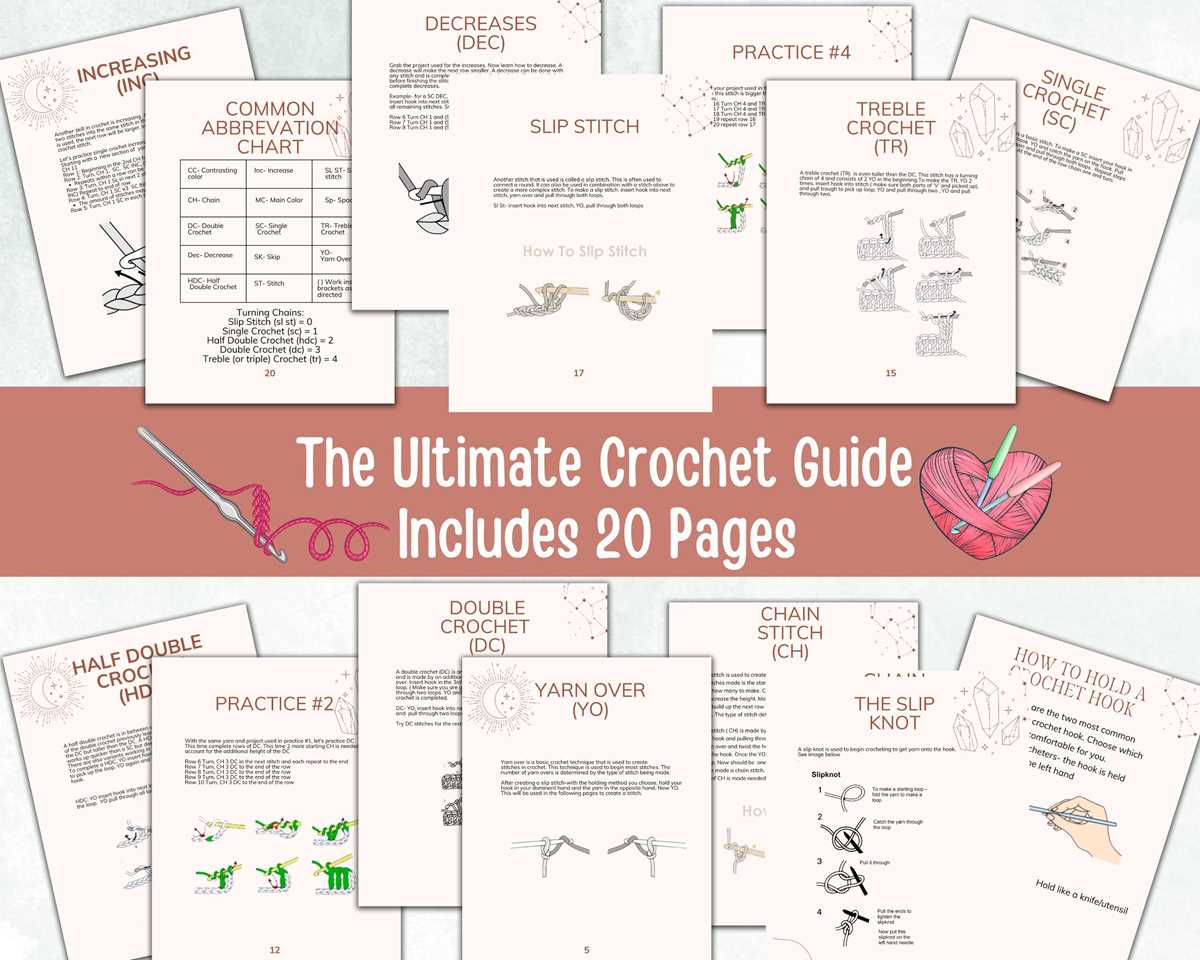
Download a one-page reference sheet with clear diagrams of the chain, single loop, half double, double, and slip methods, formatted at 300 DPI in PDF. Print at 100% scale on A4 or US Letter paper and keep margins at 0.5 inches to prevent clipped symbols.
Core Techniques and How to Practice Them
Use medium-weight yarn (category 4) and a 5.0 mm hook for first samples. This combination provides visible loops without splitting fibers. Create a foundation chain of 20 loops and practice each technique across separate rows to compare height and texture.
- Chain – forms the base; keep tension loose enough to insert the hook easily.
- Single loop method – insert hook under both top strands; produces a dense fabric.
- Half double – yarn over once before insertion; medium height structure.
- Double – yarn over once, pull through two loops twice; taller and more flexible fabric.
- Slip method – joins rounds and moves yarn without adding height.
Measure a 10 x 10 cm swatch after completing at least 12 rows. Count the number of loops and rows within that square to track tension consistency. If edges curl, reduce hook size by 0.5 mm; if fabric feels stiff, increase hook size slightly.
How to Read Diagrams and Abbreviations
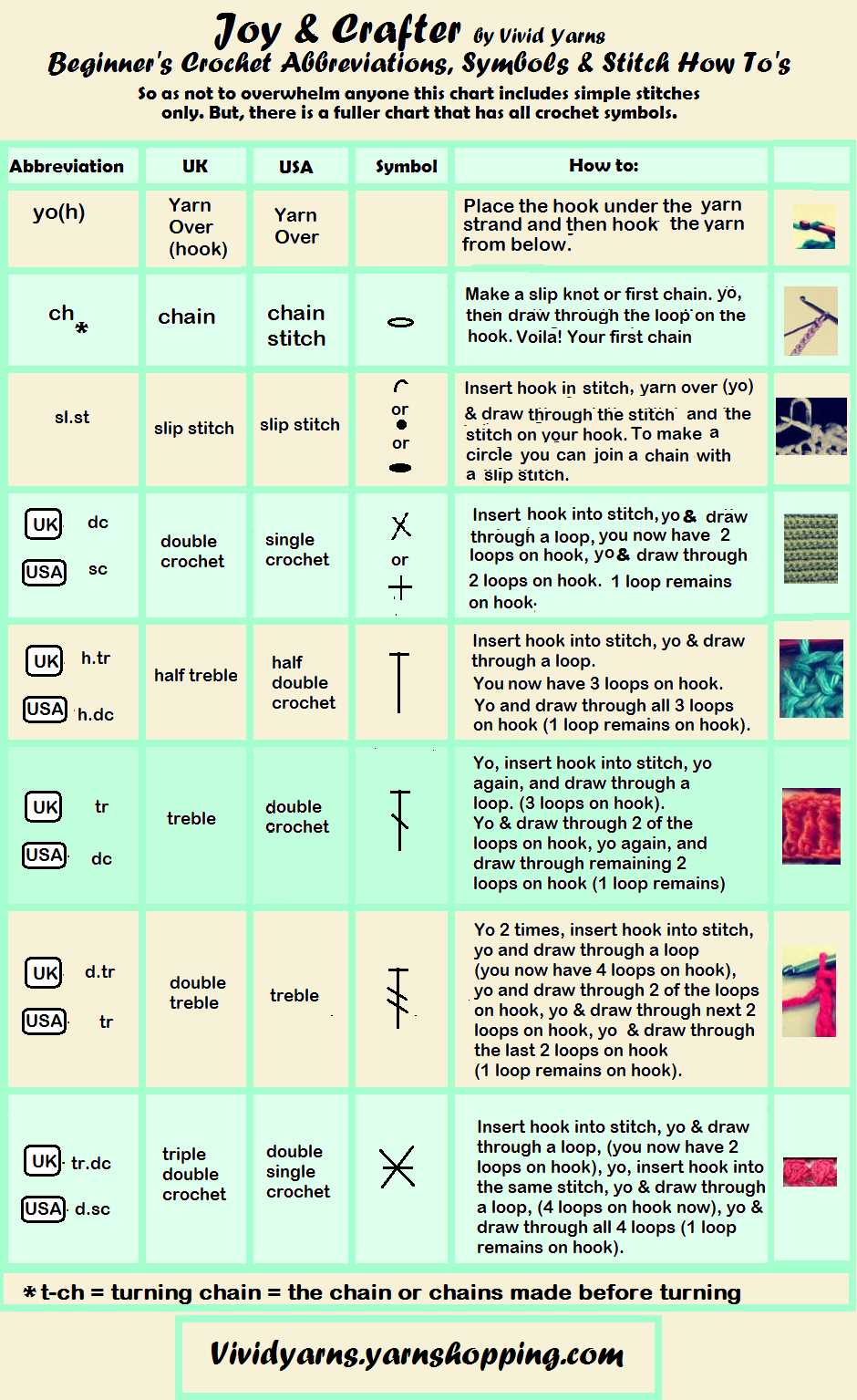
Focus on standard US terms such as ch (chain), sc (single), hdc (half double), dc (double), and sl st (slip). Symbols in charts represent the same actions visually; for example, a small oval stands for a chain, while a T-shape with one crossbar indicates a double method.
Printing and Organizing Reference Sheets
Store instruction sheets in transparent sleeves inside a binder. Place one technique per page with a small swatch stapled or clipped beside it for tactile comparison. Use grayscale graphics to reduce ink usage and ensure lines remain sharp after multiple copies.
Common Mistakes and Corrections
- Uneven edges – count loops at the end of each row.
- Twisted foundation – keep the starting chain flat before working the first row.
- Inconsistent tension – wrap yarn around fingers the same way for every row.
Practice 15–20 minutes per session, focusing on one technique at a time. Consistent repetition with clear visual references builds muscle memory and improves stitch uniformity.
Beginner Printable Crochet Stitch Guide
Print a single-page reference chart that shows chain, single, half double, double, and slip techniques with step-by-step diagrams at 300 DPI resolution; keep scaling at 100% and margins at 0.5 inches to preserve symbol clarity and row alignment.
Use medium-weight yarn and a 5.0 mm hook to practice each loop structure on separate 15 x 15 cm swatches. This size allows accurate row counting and tension checks without wasting materials. Record hook size, yarn type, and loop count directly on the sheet for quick comparison during future projects.
Arrange the reference layout so each technique includes three components: a written abbreviation in US terms, a symbol diagram, and a close-up drawing of hook placement. Position diagrams to the right of the text to match right-handed motion flow; mirror layout if working left-handed.
Laminate the instruction sheet or place it in a transparent sleeve to protect against yarn fibers and repeated handling. Mark practice repetitions with a dry-erase pen and wipe clean after each session to track progress without reprinting copies.
Limit each practice session to one loop structure for 20 minutes, repeating at least 10 rows while counting loops at row ends. Consistent measurement of a 10 x 10 cm square improves tension control and reduces uneven edges in finished fabric.