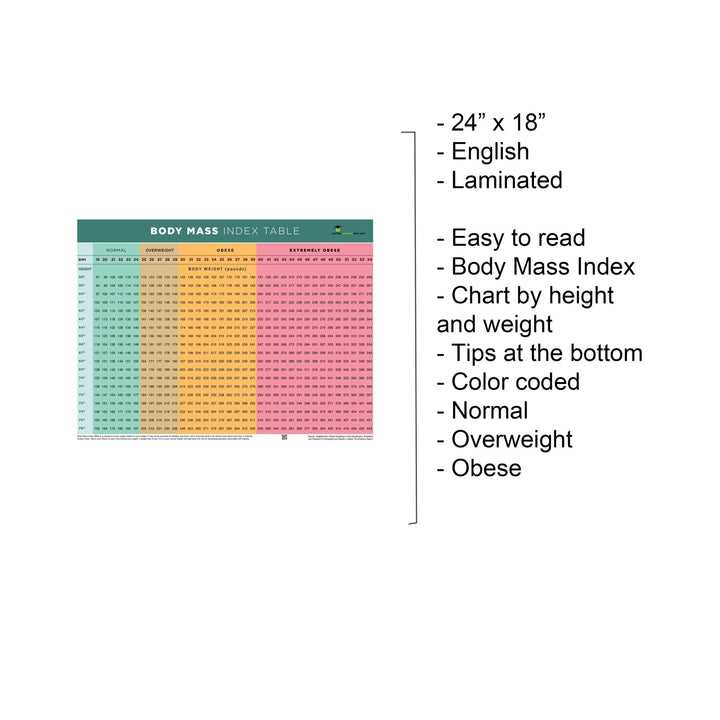
Download a ready-to-use weight status table that matches height in centimeters or inches with body mass index values and standard categories. Use it to compare your measurements against established ranges: 18.5–24.9 for normal weight, 25.0–29.9 for overweight, and 30.0 and above for obesity. For adults, the same numeric thresholds apply to men and women.
Measure height without shoes and record weight in light clothing for accurate comparison. If using metric units, calculate the index as weight in kilograms divided by height in meters squared. For imperial units, multiply weight in pounds by 703 and divide by height in inches squared. Then locate the value in the reference grid to determine the category.
For children and teens aged 2–19, use age- and sex-specific percentile tables rather than fixed cutoffs. Under the 5th percentile indicates underweight, 5th to 84th percentile reflects a healthy range, 85th to 94th percentile signals overweight, and the 95th percentile or higher corresponds to obesity. Keep a printed reference sheet at home or in a clinic to track changes over time and support regular monitoring.
Printable BMI Chart for Height and Weight Reference
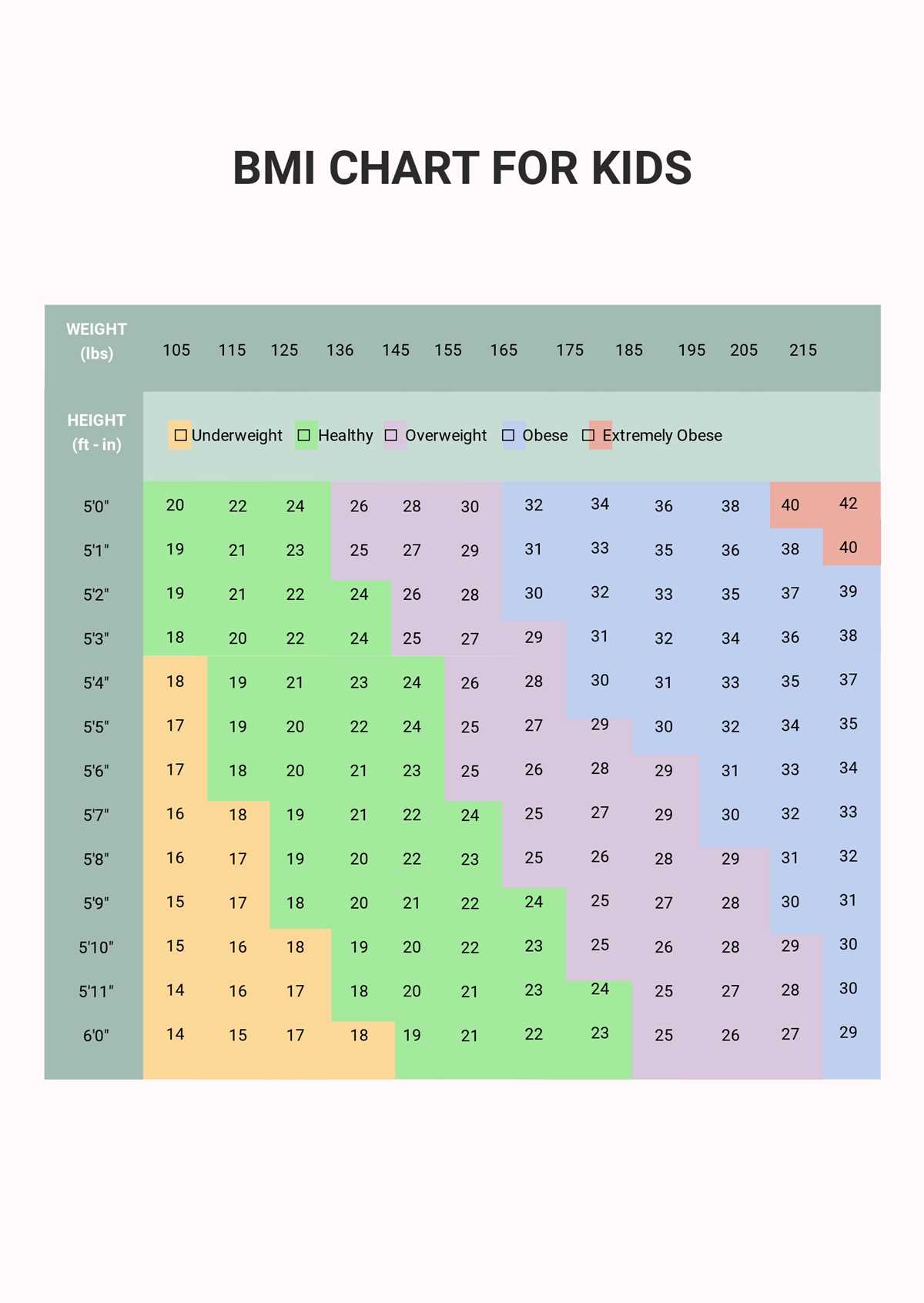
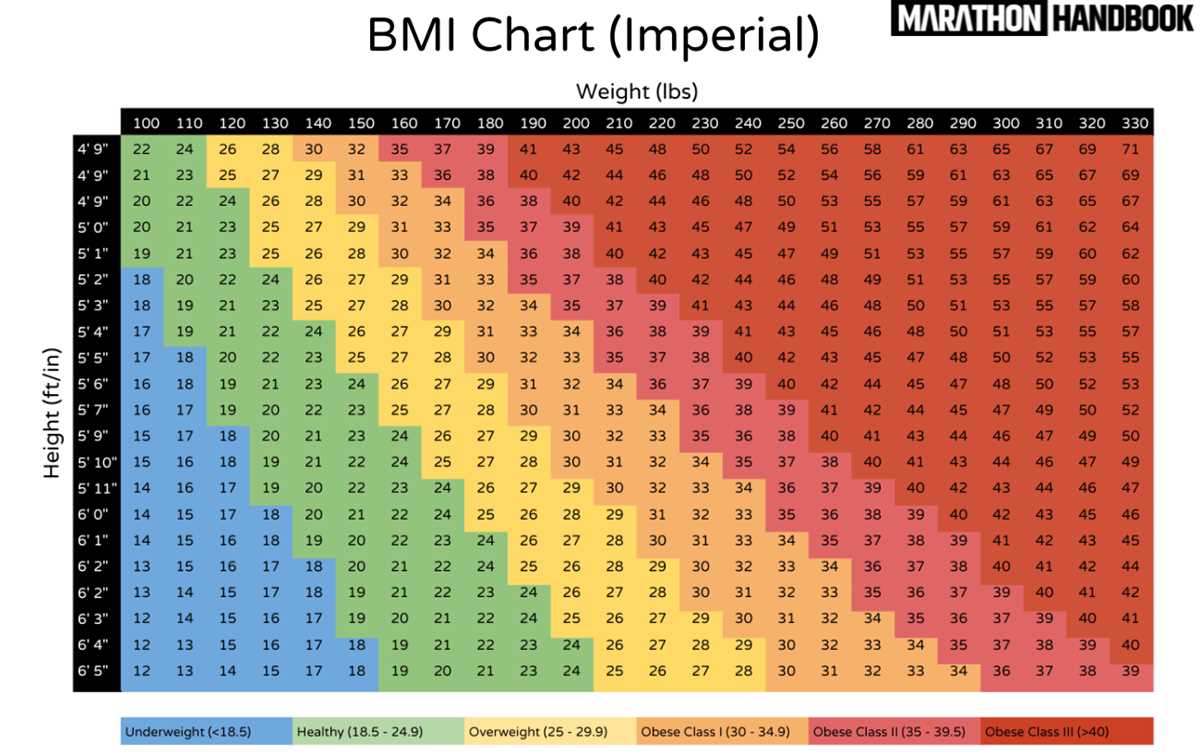
Use a height-to-weight reference table that lists body mass index values in rows by height and columns by weight so you can locate your number without manual calculation. Choose a version that includes both metric (cm, kg) and imperial (in, lb) units to avoid conversion errors.
Select a layout where height increases in 1 cm or 1 inch increments and weight steps are no larger than 1–2 kg or 2–5 lb. Smaller intervals allow more precise classification, especially near category thresholds such as 18.5, 25.0, and 30.0.
Check that the grid clearly marks standard adult ranges:
- Below 18.5 – underweight
- 18.5–24.9 – normal range
- 25.0–29.9 – overweight
- 30.0–34.9 – obesity class I
- 35.0–39.9 – obesity class II
- 40.0 and above – obesity class III
Place the sheet on a wall or clipboard in examination rooms, gyms, or home offices so measurements can be compared immediately after weighing. Record date, height, weight, and index value in a logbook to monitor trends across weeks or months.
For metric calculation, divide weight in kilograms by height in meters squared. Example: 72 kg and 1.75 m equals 72 ÷ (1.75 × 1.75) = 23.5. For imperial units, multiply pounds by 703 and divide by inches squared. Example: 180 lb and 70 in equals (180 × 703) ÷ (70 × 70) = 25.8.
Keep separate percentile tables for children and adolescents aged 2–19. These use age- and sex-specific percentiles rather than fixed numeric cutoffs. Compare the calculated index to growth percentiles to determine weight status.
Print on A4 or Letter size with high-contrast shading for each category so boundaries at 18.5, 25.0, 30.0, and 35.0 are visually distinct. Laminate copies used in clinics to prevent wear and allow dry-erase markers for temporary notes.
Review measurements at consistent intervals, such as every 4–6 weeks, using the same scale and stadiometer. Consistent technique reduces measurement variation and improves tracking accuracy.
How to Choose the Correct BMI Chart Format for Adults and Children
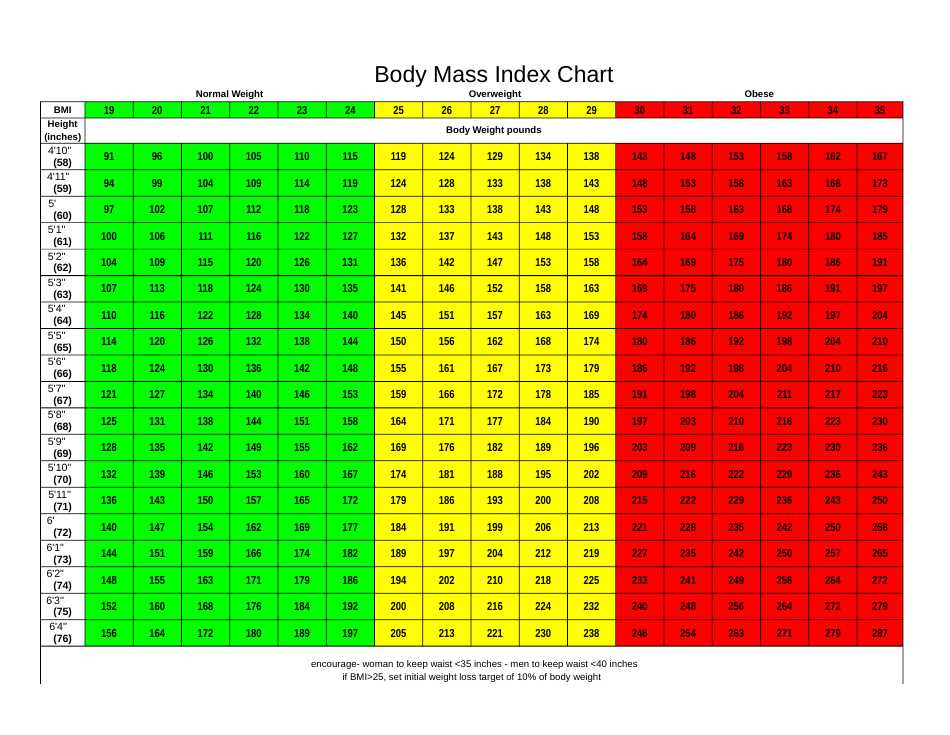
Select an adult reference table with fixed numeric cutoffs: 18.5, 25.0, 30.0, 35.0, and 40.0. Ensure the grid aligns height on one axis and weight on the other with small measurement increments, and confirm it supports the unit system you use daily–centimeters and kilograms or inches and pounds. Avoid pediatric percentile sheets for adults, as age adjustments are not applied after 20 years.
For children and teens aged 2–19, use age- and sex-specific percentile graphs rather than a single static grid. The correct format plots age in months or years on the horizontal axis and index values on the vertical axis, with percentile curves such as the 5th, 50th, 85th, and 95th. This structure accounts for growth patterns and body composition changes during development, which fixed adult thresholds do not capture.
Choose a layout that clearly labels measurement steps, category ranges, and calculation formulas. In clinical settings, larger fonts and shaded category bands reduce reading errors; for home use, a compact one-page sheet with metric and imperial formulas helps avoid conversion mistakes.