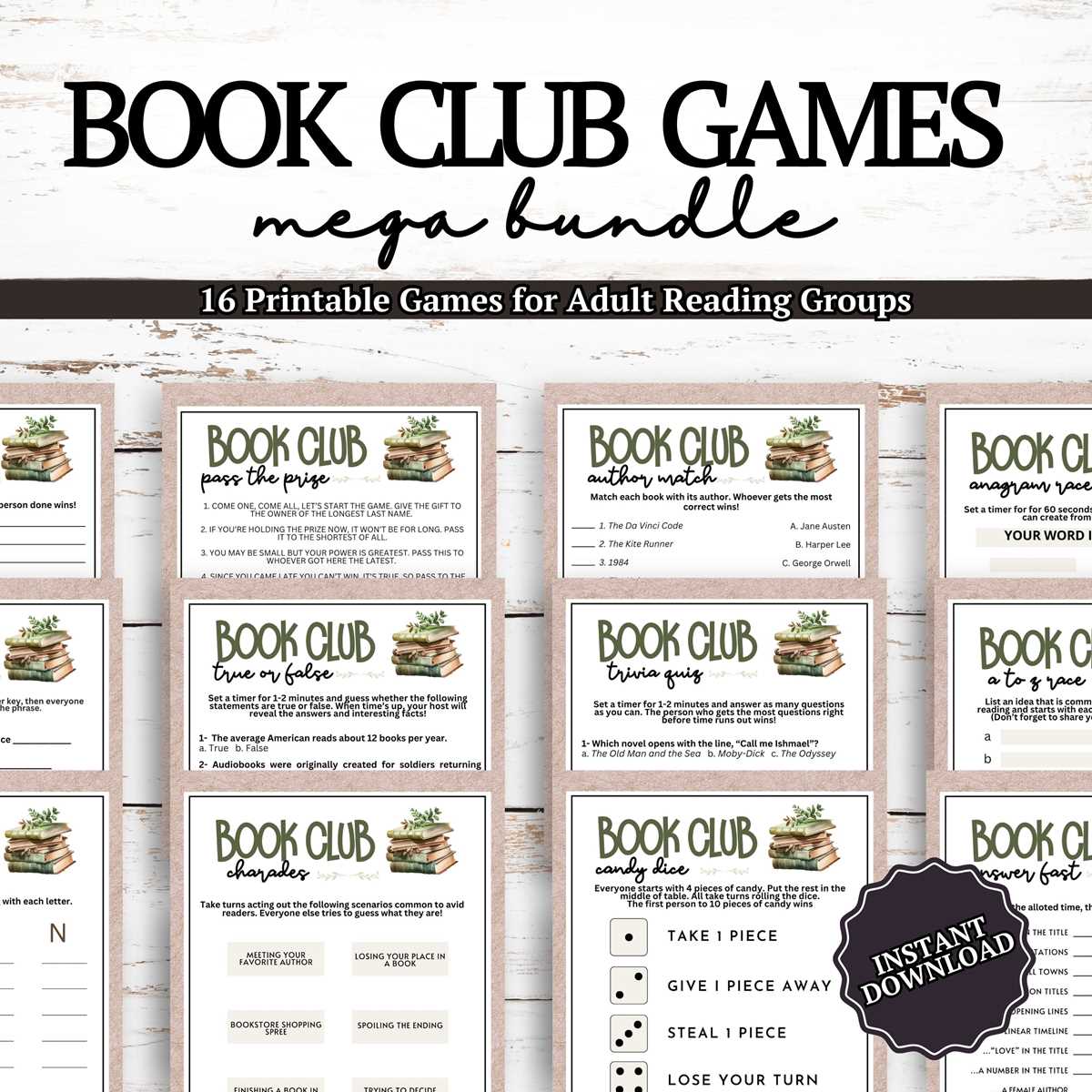
Download ready-made activity sheets in PDF format and prepare 1–2 copies per participant to structure your next reading group session with clear tasks and timed rounds.
Include literary trivia cards with 10–15 fact-based questions about plot details, characters, and author background. Limit each card to one question and provide a separate answer key to simplify scoring. Use 12–14 pt fonts and high-contrast layouts so text remains readable under indoor lighting.
Add discussion prompt worksheets featuring open-ended questions that require text references, such as page numbers or quoted lines. Allocate space for short written responses; a half-page per participant keeps conversation focused and reduces repetition during group sharing.
Prepare themed bingo boards based on motifs, settings, or character traits. A 5×5 grid works well for groups of 6–12 participants. Mark the center square as a free space to maintain pace. Print on 120 gsm paper to prevent ink bleed-through during repeated use.
Store all materials in labeled digital folders by title and meeting date so they can be reused or adapted for future gatherings without recreating content from scratch.
Activity Sheets for Reading Group Meetings
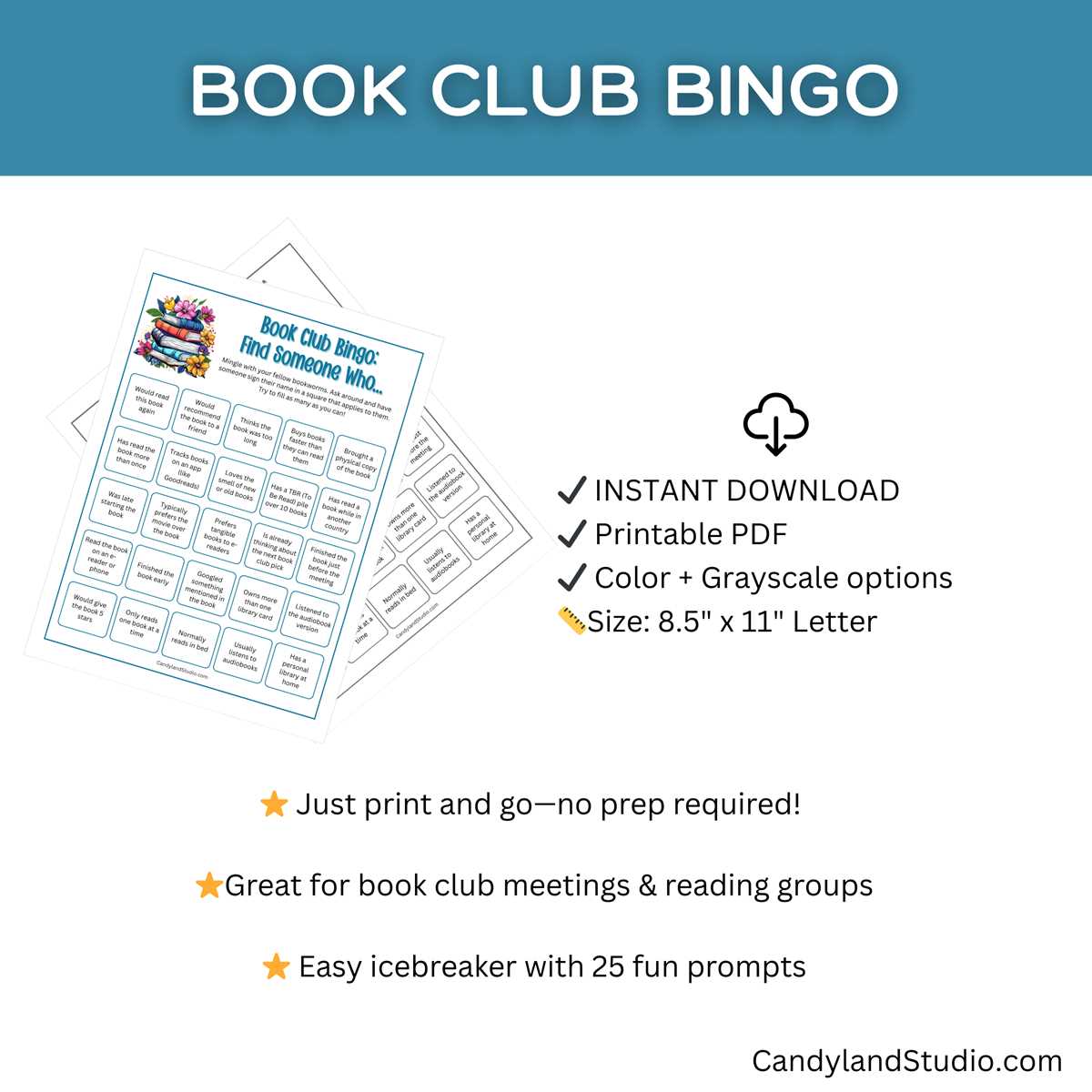
Prepare themed activity pages in PDF format and bring one set per participant to structure a 60–90 minute discussion with timed rounds and clear scoring rules.
Use the following formats to keep interaction focused and measurable:
- Literary trivia cards with 15 short questions, 30 seconds per response, 1 point for each correct answer.
- Quote matching sheets where participants connect 10 excerpts to the correct character or chapter.
- Reading bingo boards with a 5×5 grid based on themes, symbols, or plot events.
- Character ranking forms that require written justification in 2–3 sentences.
Print materials on A4 or Letter size paper with 12–14 pt fonts and wide margins for notes. Use grayscale to reduce ink usage and laminate master copies for reuse. Store digital files by title and date so future meetings can reuse trivia sets, prompt lists, and scorecards without redesigning content.