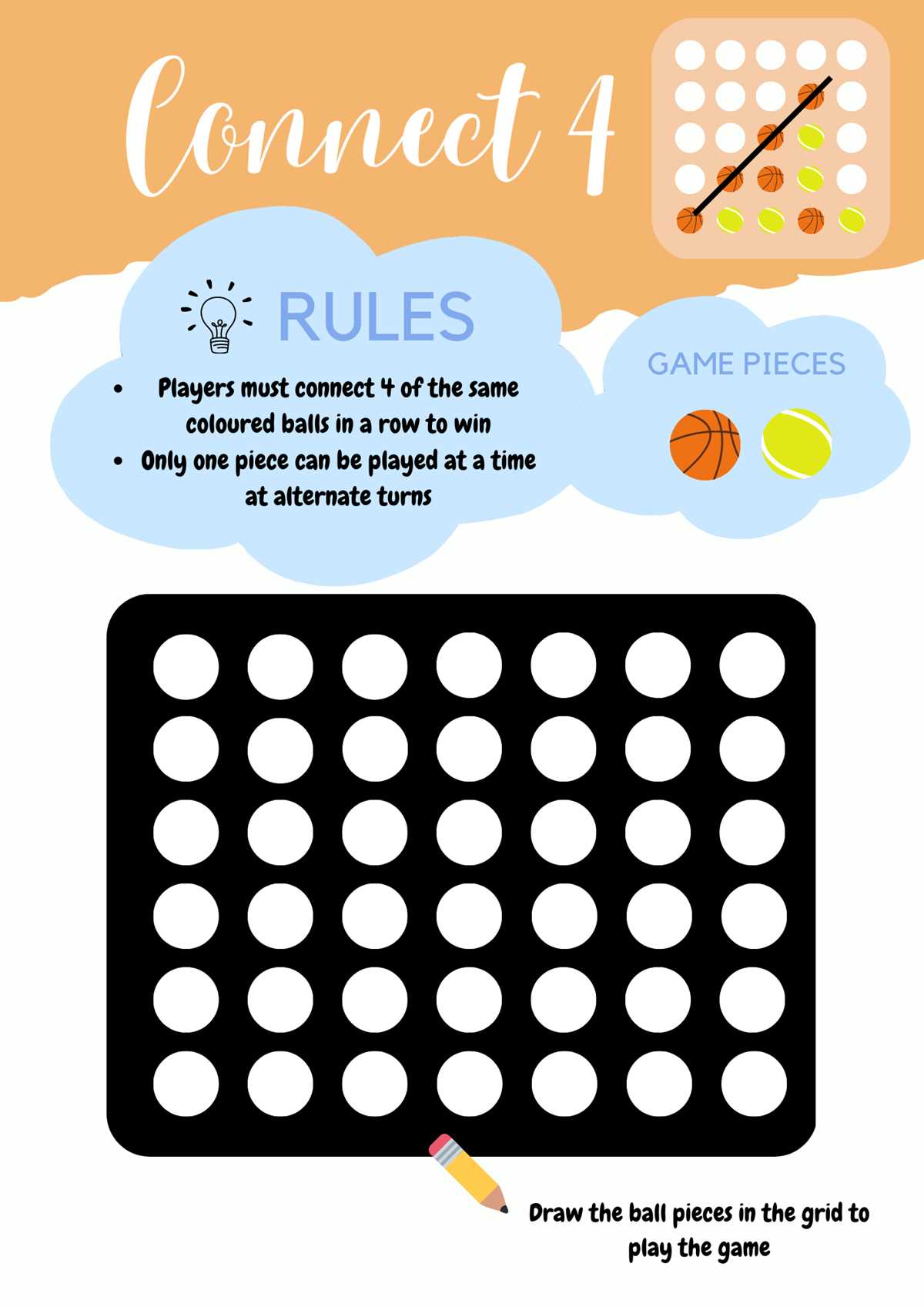
If you’re looking to set up a quick yet engaging activity, creating a board for the popular two-player strategy game can be done in a few simple steps. This game involves placing discs into a grid with the goal of aligning four of the same color in a row, whether horizontally, vertically, or diagonally. It’s an ideal way to keep friends or family entertained during any casual gathering.
To make your own setup, you can easily find downloadable versions of the grid, which are perfect for printing and cutting out. Simply print it on regular paper or cardstock for durability. If you prefer a more reusable option, laminating the sheet allows you to use dry-erase markers to track each move, cutting down on the need for extra pieces. The game is simple enough for beginners to pick up quickly but also provides ample room for strategic depth as players become more familiar with the rules.
For the discs, you can use coins, bottle caps, or any small, round objects in two different colors. If you don’t have access to these items, try using colored paper cut into small circles. The game becomes even more engaging when players develop their own tactics and approaches to block their opponent and plan ahead for their next move. This printable version offers flexibility, making it easy to play almost anywhere, whether at home or on the go.
How to Set Up a Grid Game: A Complete Guide
Choose your game setup carefully. A traditional board features a 7×6 grid, where two players alternate placing pieces. To start, prepare the necessary materials–either a pre-drawn grid or create your own on paper. Use two distinct sets of colored counters to ensure easy identification during gameplay. The goal is to line up four of your pieces vertically, horizontally, or diagonally before your opponent.
To make the game challenging, modify the grid’s dimensions. A smaller grid (e.g., 4×4) speeds up gameplay, perfect for younger players or those short on time. Alternatively, increase the grid size (e.g., 10×10) to add complexity and strategic depth. If you’re using printouts, ensure the grid lines are clear and each player can track their moves without confusion.
Preparation is key for a smooth experience. Mark the top of the grid with column numbers or letters so players can easily identify where to drop their pieces. You can print out templates available online or design your own using basic drawing tools. Some versions come with instructions or scoring options–check for additional features depending on what you prefer.
- Use markers like coins or paperclips if you don’t have tokens on hand.
- Customize your grids with designs for themed events, like holidays or team-based challenges.
- For advanced play, introduce house rules such as limited moves per turn or rotating the grid orientation after every round.
HTML
How to Create Your Own Connect 4 Game Board
To craft a custom board, begin with a simple grid layout. Use a table with 6 rows and 7 columns. Each cell in the table will represent a space for players to drop their pieces. Ensure the table is large enough to be clearly visible when printed, adjusting dimensions according to the paper size. You can use any graphic software, like Adobe Illustrator or Microsoft Word, to design this structure, or even hand-draw it on paper if you prefer a DIY approach. Each cell should be large enough to fit a circle, which is used for player markers.
Once your grid is ready, add two visual elements for gameplay: colored pieces and labels. For the pieces, use circles or discs that will fit inside the cells, and make sure each player has a distinct color. You can design these pieces digitally and insert them into each cell, or print separate pieces to place manually. Add instructions or labels around the grid for clarity, such as “Player 1” and “Player 2” spots to differentiate the pieces. This design approach will ensure your board is both functional and visually appealing.