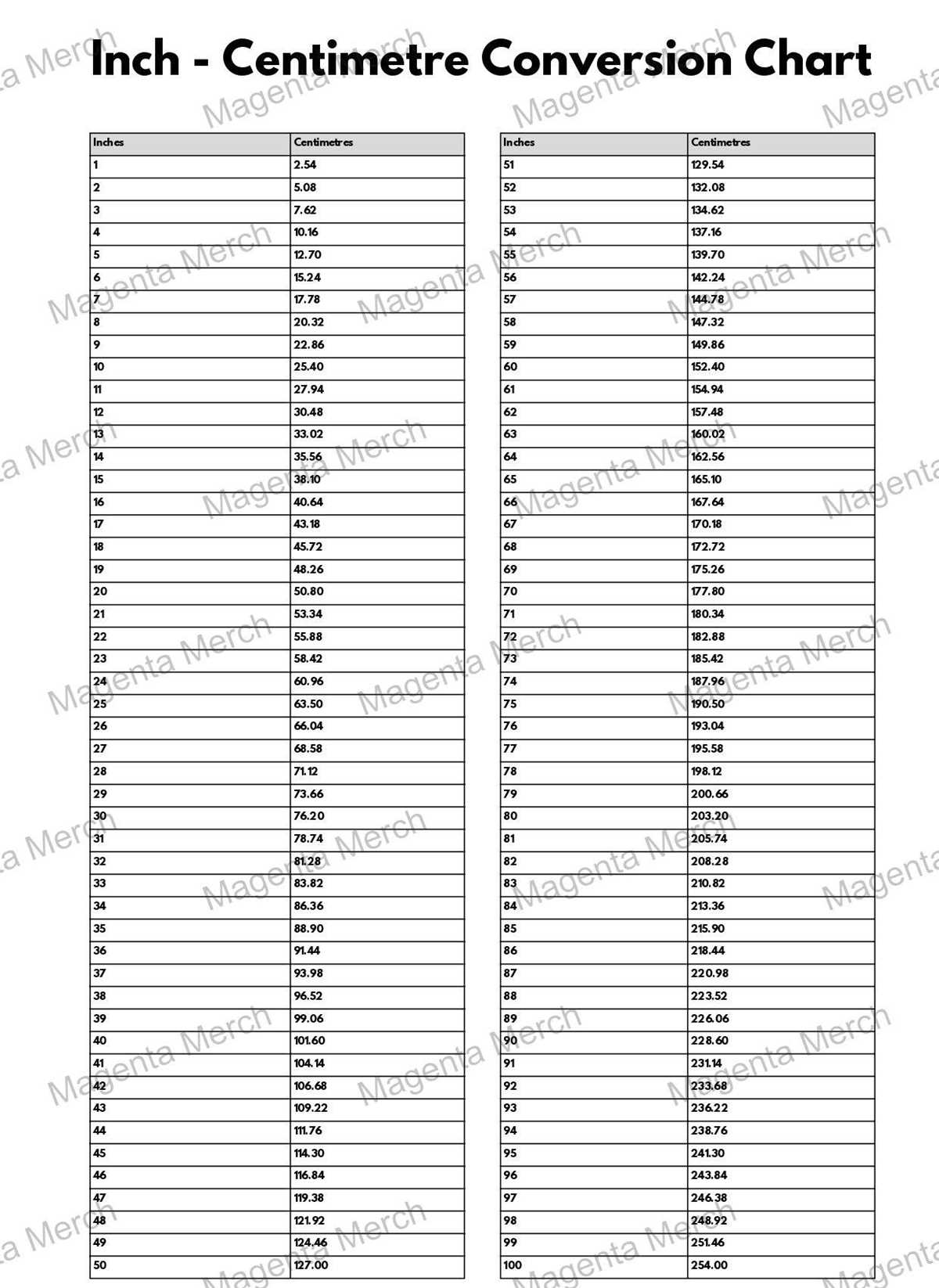
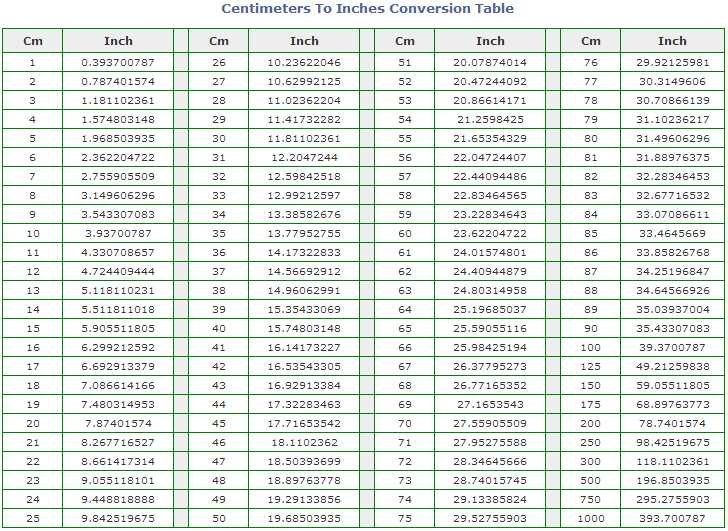
Use a letter size PDF table listing centimeter values from 1 to 200 with corresponding imperial measurements rounded to two decimal places for quick reference in workshops, classrooms, and sewing rooms.
Table Structure and Accuracy
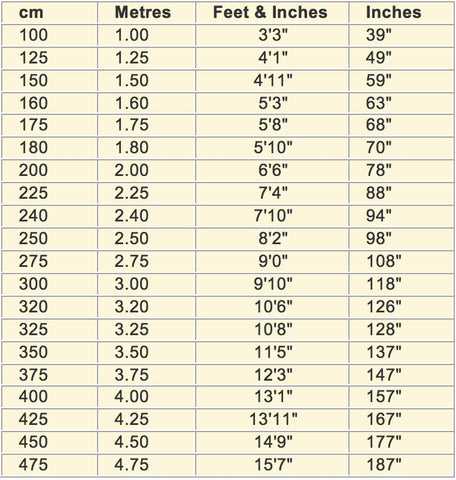
Apply the formula 1 cm = 0.3937 in and multiply centimeter values by 0.3937 to obtain precise results. For example, 10 cm equals 3.94 in, 50 cm equals 19.69 in, and 100 cm equals 39.37 in. Keep two decimal places for practical tasks and four decimals for technical drawings.
- 1 cm → 0.39 in
- 5 cm → 1.97 in
- 25 cm → 9.84 in
- 75 cm → 29.53 in
- 150 cm → 59.06 in
Arrange data in two vertical columns with centimeter values on the left and imperial equivalents on the right. Use 11–12 pt font for readability and 0.5 pt grid lines for clean separation.
Paper Size and Scaling
Set document dimensions to 8.5×11 inches with 0.5-inch margins. Print at 100% scale to maintain proportional spacing between rows. For wall display, enlarge to 11×17 inches while preserving column alignment.
Use Cases and Practical Tips
Keep the reference sheet near measuring tools in tailoring studios, carpentry shops, and classrooms. Highlight common ranges such as 10–100 cm for clothing sizes or furniture measurements.
Durability Options
- Print on 24–28 lb paper to reduce curl.
- Laminate with 3–5 mil film for workshop use.
- Mount on foam board for wall placement.
Update the table annually to confirm rounding accuracy and ensure consistent formatting across reprints.
Conversion Chart CM to Inches Printable
Print a centimeter to imperial length reference sheet at 100% scale on 8.5×11 inch paper using 300 DPI resolution to keep numbers sharp and columns aligned.
Apply the fixed ratio 1 cm = 0.3937 in for all calculations. Multiply the metric value by 0.3937 to obtain the imperial result. For technical tasks, retain four decimal places; for everyday measuring, round to two decimals.
Include a table covering at least 1–200 cm. Common reference points should appear clearly: 10 cm = 3.94 in, 30 cm = 11.81 in, 50 cm = 19.69 in, 100 cm = 39.37 in, 150 cm = 59.06 in, 200 cm = 78.74 in.
Arrange data in two vertical columns with metric units on the left and imperial equivalents on the right. Use 11–12 pt sans-serif font and 0.5 pt grid lines to separate rows without crowding the layout.
Keep margins at 0.5 inches to prevent trimming on home printers. Avoid automatic scaling in print settings; disable “fit to page” to maintain correct proportions.
For workshop walls, enlarge the document to 11×17 inch format and increase font size by 25%. Maintain consistent row spacing so values remain readable from at least six feet away.
Print on 24–28 lb paper stock to reduce curling. Laminate with 3–5 mil film if placing near cutting tables, sewing stations, or power tools where moisture or dust is present.
Review the numeric table annually and verify sample calculations with a calculator to confirm rounding consistency across the entire reference sheet.