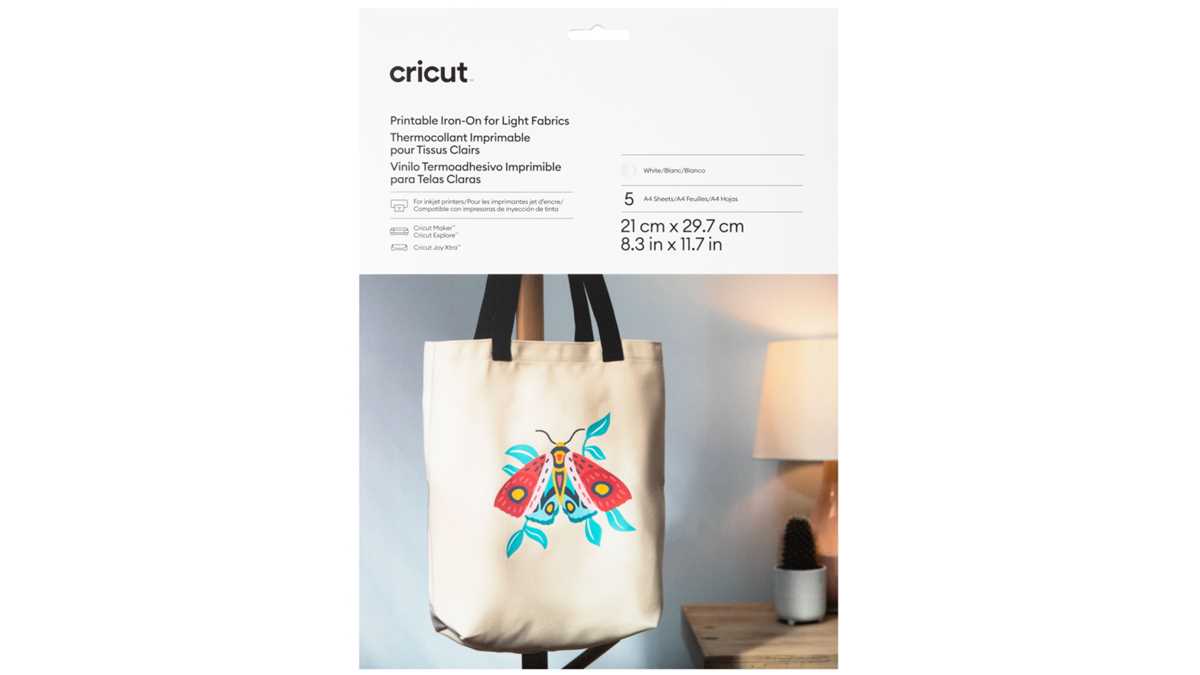
Use an inkjet-compatible heat transfer sheet with a desktop cutting plotter and press it at 305°F for 10–15 seconds per section with medium pressure to achieve sharp, long-lasting graphics on cotton garments.
Materials, Tools, and File Preparation
- Transfer media: Inkjet heat-applied polyurethane film, light-fabric or dark-fabric type depending on garment color.
- Printer: Inkjet only; pigment ink improves wash resistance compared to dye ink.
- Cutter: Desktop plotter with fine-point blade (45° blade works for most films).
- Press: Clamshell or swing-away heat press; household press can be used but requires longer dwell time.
- Fabric: 100% cotton or cotton/poly blends (up to 60% polyester). Avoid nylon unless the film is rated for low temperature.
Design at 300 DPI in RGB color mode. Mirror the artwork before printing if the film requires face-down application. Add a 0.04–0.08 in bleed around shapes to prevent white edges after cutting. For dark garments, do not mirror unless specified by the manufacturer.
Printer and Cutter Settings
- Select “Photo Paper” or “Matte Presentation Paper” in printer settings to increase ink density.
- Disable high-speed mode to reduce banding.
- Allow the sheet to dry 10–15 minutes before loading onto the cutting mat.
- Blade depth: 1–2 (thin films), pressure: 120–160 gf, speed: 5–8 cm/s as a baseline; run a small test cut.
Application Process and Durability Control
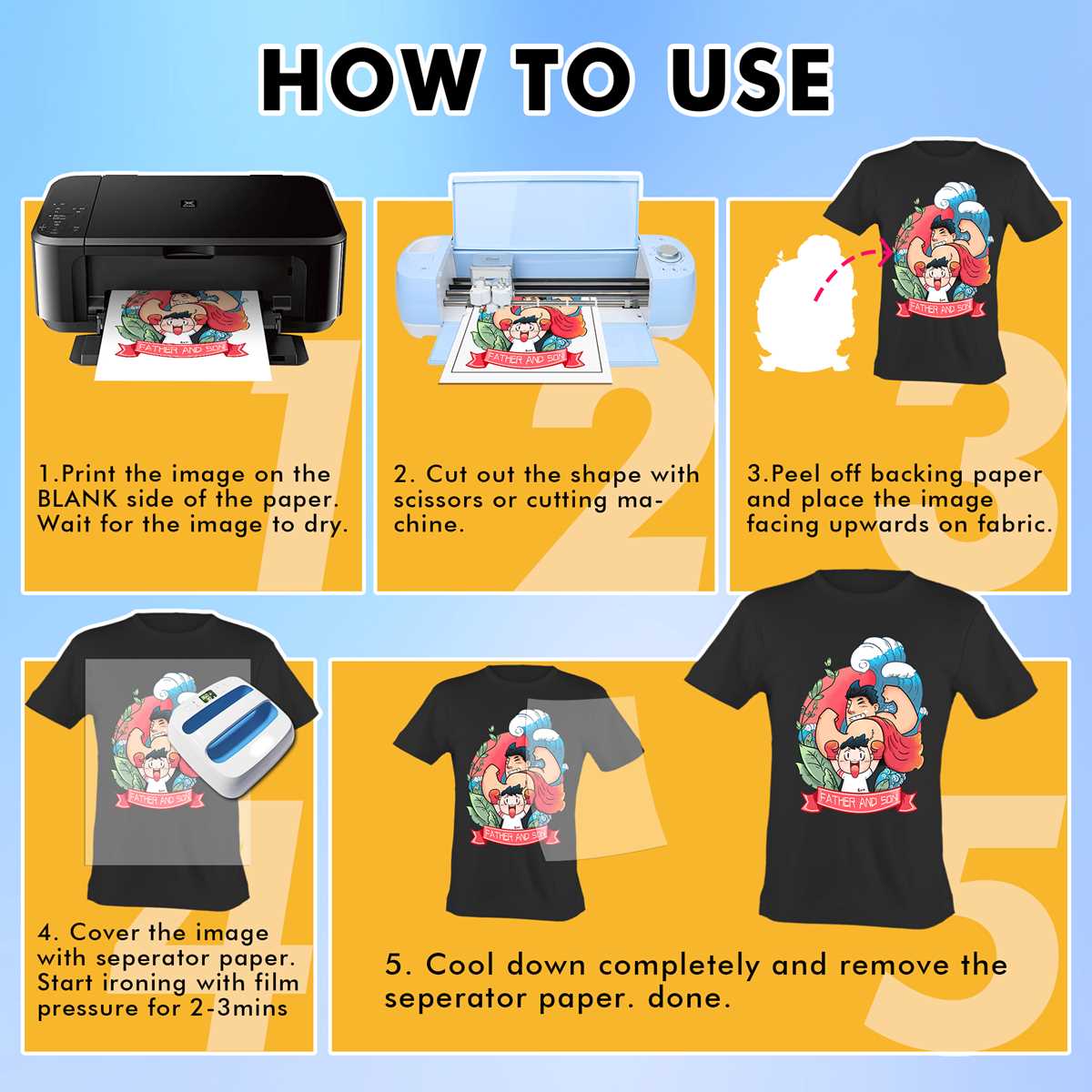
Pre-press the garment for 3–5 seconds to remove moisture and wrinkles. Position the trimmed graphic carrier-side up. Cover with a Teflon sheet or parchment paper.
Heat and Pressure Guidelines
- Temperature: 300–310°F (149–155°C) for cotton.
- Time: 10–15 seconds per area; overlap sections for large prints.
- Pressure: Medium to firm (approx. 40–60 psi on a press).
- Peel: Warm peel for most light-fabric films; cold peel for dark-fabric versions.
After peeling, press again for 5 seconds with a protective sheet to seal edges. Wait 24 hours before washing. Turn garments inside out, wash at 86°F (30°C), avoid fabric softener, and air dry or tumble on low.
Common Issues and Fixes
- Cracking after wash: Increase pressure or extend dwell time by 3–5 seconds.
- Faded colors: Switch to pigment ink and higher quality print mode.
- Lifting edges: Repress with firm pressure and verify the fabric blend is within film specifications.
- Visible cut lines: Adjust blade depth and ensure clean, sharp blade.
Store unused sheets flat in a dry area at 60–75°F. Seal opened packs in a plastic bag to prevent humidity exposure, which can affect print quality and adhesion.
Heat-Transfer Film for Inkjet Fabric Graphics
Choose an inkjet-compatible heat-applied polyurethane sheet rated for 300–310°F and use a fine-point blade set to low depth to prevent cutting through the carrier layer. Set print quality to high resolution (300 DPI) and disable draft mode to avoid banding on detailed artwork.
Use pigment-based ink for better wash resistance and deeper blacks; dye ink can bleed on dark garments and fade after 5–7 wash cycles. Allow the printed sheet to dry at least 10 minutes before loading it onto the cutting mat to reduce smudging and edge lifting during contour cutting.
Mirror the design only if the material requires face-down application on light fabrics. For dark textiles, trim close to the artwork because these sheets usually have an opaque backing that remains around the graphic. Keep a bleed of 1–2 mm around complex shapes to prevent white halos after trimming.
Preheat the garment for 3–5 seconds to remove moisture, then press at 305°F with medium to firm pressure for 10–15 seconds per section. Overlap each press area by about 1 cm to maintain uniform adhesion across large prints. Use a Teflon sheet or parchment paper as a barrier to avoid scorching.
Peel according to the manufacturer’s instructions: some films require warm removal, others need full cooling before lifting the carrier. If edges lift, repress for 5–7 seconds with slightly higher pressure rather than increasing temperature.
Wait 24 hours before washing. Turn the garment inside out, wash at 30°C without fabric softener, and air dry or tumble on low heat. Store unused sheets flat in a sealed bag at 18–24°C with low humidity to preserve coating quality and prevent curling.