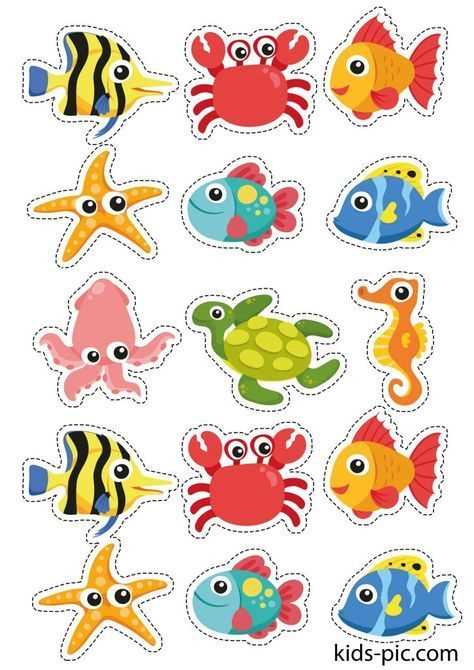
Choose thick paper between 200–250 gsm and simple ocean life outlines with bold contour lines to make shaping easier for children aged 4–8. Select designs with minimal internal details for preschoolers and more intricate illustrations for older students who can handle finer scissor control.
Selecting and Preparing Marine Animal Templates
Download PDF files formatted for A4 or US Letter and verify that scaling is set to 100% before sending them to the printer. Disable page fitting options to prevent distortion of proportions, especially for species with recognizable silhouettes such as sharks or starfish.
- Use black ink only for clear borders.
- Print on matte cardstock to reduce glare during coloring.
- Provide child-safe scissors with rounded tips.
- Pre-trim large margins to help younger children focus on the main shape.
Offer a mix of fish, turtles, octopus, crabs, and whales so children can compare body structures. Include at least one example with fins, one with tentacles, and one with a shell to broaden fine motor practice.
Craft and Learning Activities with Underwater Animal Shapes
Create layered wall displays by attaching finished figures to blue poster board backgrounds. Add strips of green paper as kelp and small white circles as bubbles. This transforms simple outlines into themed classroom décor tied to ocean studies units.
- Color the figures using wax crayons or watercolor pencils.
- Trim along the outer contour carefully.
- Glue each figure onto contrasting construction paper.
- Label species names beneath each image for vocabulary reinforcement.
Turn the shapes into puppets by securing wooden sticks or paper straws on the reverse side with strong adhesive tape. Use them for storytelling sessions focused on habitats, food chains, and conservation topics.
Storage and Reuse Tips
Laminate selected templates before distribution to allow repeated tracing with dry-erase markers. Store sorted designs in labeled folders by difficulty level or species type to simplify lesson planning.
Adapting for Different Age Groups
For toddlers, provide pre-colored figures ready for trimming practice. For children over nine, supply blank outlines and ask them to research realistic color patterns before decorating. This adds a research component to the craft task.
Safety and Classroom Management
Limit group size to four students per table and supervise scissor use closely. Collect scraps immediately after trimming to prevent slipping hazards. Keep glue quantities small to avoid wrinkling the paper surface.
Cut Out Printable Sea Creatures for Crafts and Learning
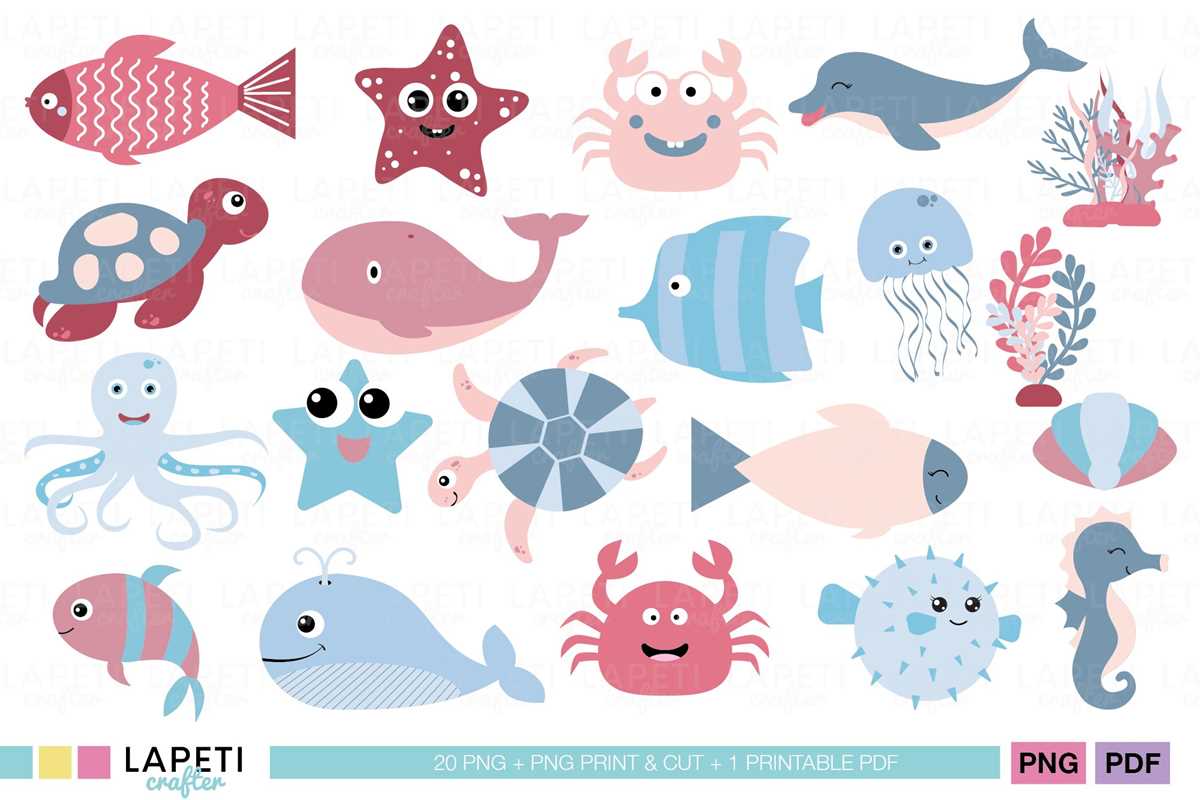
Use thick cardstock at 220 gsm and large marine animal outlines with bold borders to help children trim shapes accurately and safely. Select simple fish, turtle, crab, and dolphin silhouettes for ages 4–6, and add more detailed octopus or coral reef animals for ages 7–10 to develop finer motor control and attention to detail.
After shaping the figures, attach them to blue poster paper and add labeled habitat zones such as coral reef, open water, and ocean floor to connect craft work with science lessons. Encourage students to color species realistically using reference photos, then write one fact beneath each figure about diet or body structure. This approach combines hand skills with vocabulary building, classification practice, and visual memory reinforcement within a single classroom activity.