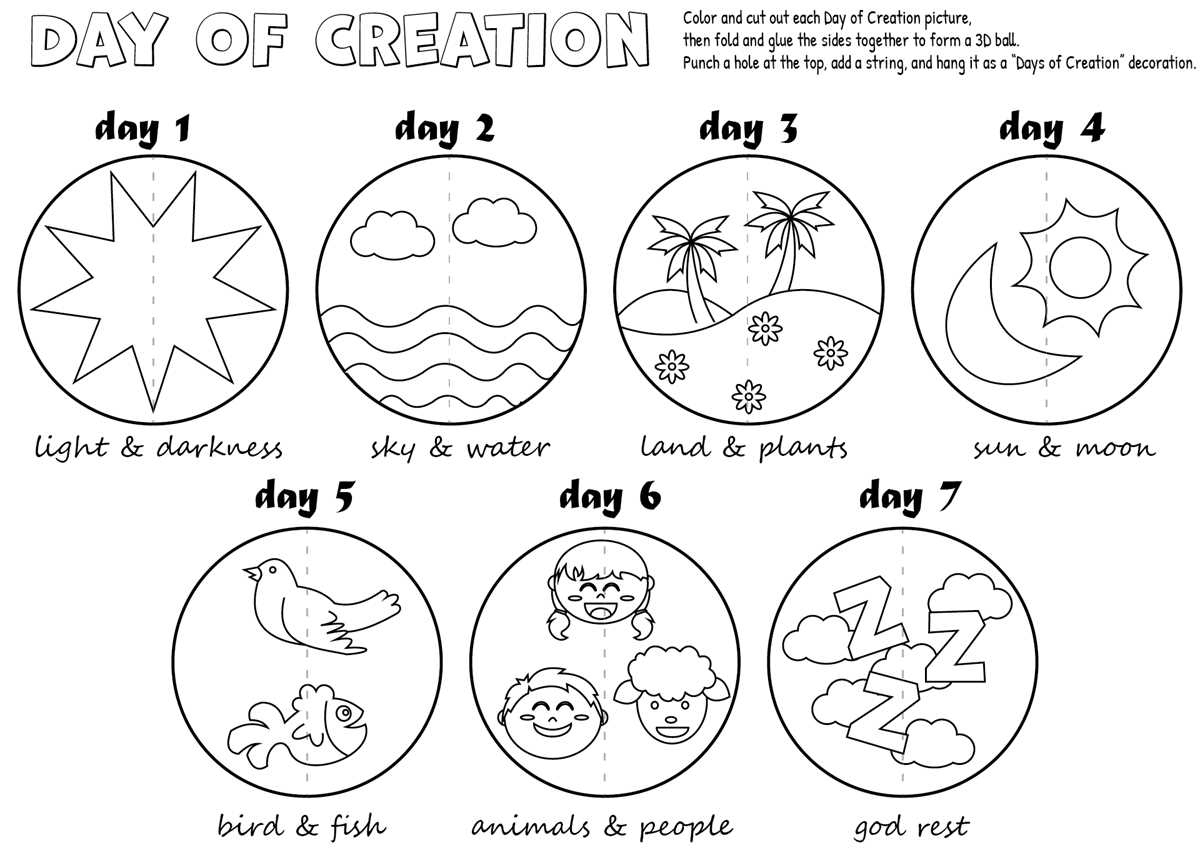
Teach the seven biblical stages in clear chronological order, assigning one stage per lesson and pairing it with a themed coloring sheet or sequencing card set. Begin with light and darkness, then move through sky, land and plants, celestial bodies, animals, and finally humanity and rest.
Use large-format handouts with bold outlines for younger children ages 4–6, keeping text limited to short captions of 5–8 words. For ages 7–9, include fill-in-the-blank summaries and matching exercises that connect each stage with its key elements.
Organize materials into a one-week plan, covering one stage per session and reviewing all seven on the final day through ordering cards and short memory verses from Genesis 1. Provide separate answer guides to allow independent correction and reinforce accurate sequencing.
Print at full scale on A4 or US Letter with 12–14 pt fonts for readability and allow at least 1 cm margins for cutting and mounting on poster boards. Store completed pages in a binder arranged chronologically to help children visualize the full biblical account from start to finish.
Days of Creation Printable
Organize the seven biblical stages in strict chronological sequence, presenting one stage per lesson and reviewing the full order at the end of the week. Keep visual materials consistent in layout so children can easily compare each stage.
Include structured components in each lesson sheet:
- A large central illustration for coloring
- A short caption of 1–2 simple sentences
- A key vocabulary box with 3–5 terms
- A small sequencing number in the corner
Adapt complexity by age group. For ages 4–6, use bold outlines and single-word labels such as light, sky, land, sun, animals, people, rest. For ages 7–9, add short comprehension prompts asking what was formed and how it relates to the previous stage.
Reinforce order recognition through cut-and-arrange cards. Provide seven separate panels and require learners to place them correctly without reference material before checking answers.
Integrate memory work from Genesis 1 by assigning one short verse segment per session. Limit memorization to 10–15 words at a time and review all segments on the final session.
Print materials at full scale on standard A4 or US Letter using 12–14 pt fonts. Maintain clear margins for mounting pages onto poster boards that display the full biblical sequence from beginning to rest.
Encourage reflection with brief written responses for older students, such as identifying patterns in the order of events or noting parallels between early and later stages.
Store completed pages in a binder arranged sequentially, allowing children to revisit the full account and visually track the progression across all seven stages.
How to Teach the Seven Days of Creation in Chronological Order
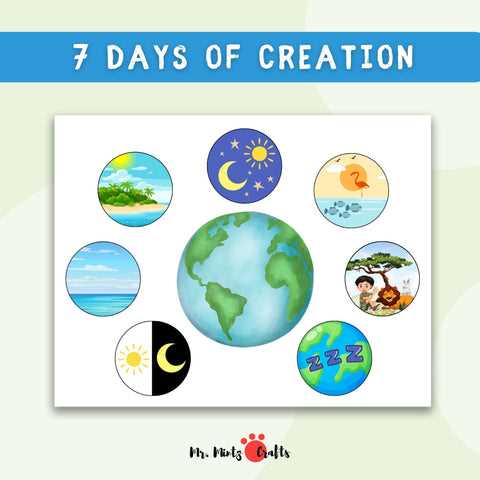
Present the Genesis sequence exactly as recorded in chapter 1, assigning one stage per lesson and reviewing the full timeline at the end of each session. Display a numbered visual chart from 1 to 7 so learners consistently associate each event with its position in the biblical order.
Group the events into two parallel sets to clarify structure: stages 1–3 form environments (light and darkness, sky and waters, land and vegetation), while stages 4–6 fill those environments (luminaries, birds and fish, animals and humans). Explain this pairing directly and ask students to match each forming stage with its corresponding filling stage.
Use short reading segments of 3–5 verses and require oral retelling without looking at the text. After reading, prompt learners with targeted questions such as What appeared first? and What was formed before living creatures? This method reinforces order recognition rather than isolated facts.
Conclude the sequence by highlighting the seventh stage of rest and discussing its distinction from the previous six. Have students summarize the entire progression aloud in under two minutes, using numbered cues only, ensuring they can reconstruct the biblical timeline independently and in correct sequence.