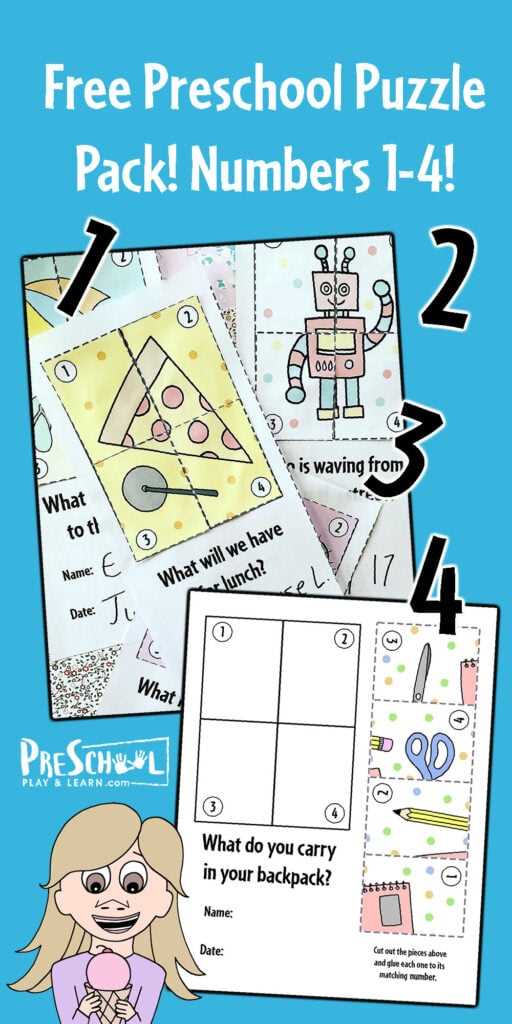
Select high-resolution PDF worksheets (300 DPI) designed for home or classroom use; this guarantees sharp outlines, accurate shapes, and clean edges after trimming. Choose sets organized by age group: 3–5 years for basic shape matching, 6–8 years for sequencing tasks, 9+ for logic-based assembly puzzles. For best results, print on 120–160 gsm paper to prevent tearing during handling.
Look for themed collections such as alphabet assembly cards, number-building strips, animal figure construction sheets, seasonal décor elements, and simple 3D models. Educational packs often include dashed guideline borders, bold contour lines (minimum 2 pt thickness), and grayscale-friendly layouts to reduce ink usage by up to 40%. Laminating finished pieces extends durability by several months of repeated use.
Prioritize structured layouts with labeled sections, alignment markers, and preview thumbnails. Files formatted for both A4 and US Letter save time by eliminating manual scaling. Editable versions in DOCX or SVG allow customization of fonts, spacing, or image size. Store templates in categorized folders–phonics, math manipulatives, fine motor practice–to maintain quick access during lesson planning.
For consistent alignment, enable printer settings at 100% scale, disable “fit to page,” and test with a single sheet before batch production. Keep child-safe scissors with rounded tips for early learners, while precision craft blades suit advanced paper modeling projects. Combining structured templates with tactile assembly tasks strengthens hand–eye coordination, spatial reasoning, and early literacy development within a single session.
Free Cut and Paste Printables
Download black-white activity sheets in PDF format sized for A4 or US Letter to avoid scaling errors during home printing. Choose files with 300 DPI resolution to keep edges sharp after trimming. For preschool use, select thick contour lines (at least 2 pt stroke width) so children can easily follow the outline with scissors. Store pages in labeled folders by skill type–alphabet assembly, number sequencing, shape matching–to speed up lesson preparation.
For literacy practice, use letter-building worksheets where learners assemble uppercase or lowercase characters from segmented parts. Prioritize sets that include tracing guides before the assembling task to reinforce muscle memory. Phonics packs should contain picture tiles with short vowel words, consonant blends, or CVC combinations. Keep image tiles no smaller than 4×4 cm for early learners to handle comfortably.
Math-oriented materials should focus on visual grouping. Select number ordering strips (1–10, 1–20), simple addition boards with detachable counters, or fraction circle segments for grades 1–3. Laminate reusable components with 80–125 micron pouches to increase durability. For classroom rotation, prepare zip bags labeled by standard (e.g., CCSS 1.OA.6 for addition within 20) to align tasks with curriculum benchmarks.
Fine motor development benefits from progressive difficulty sheets:
- Straight-line trimming for beginners (ages 3–4).
- Zigzag or wave paths for intermediate level.
- Detailed silhouettes such as animals or vehicles for advanced control.
- Glue placement markers (small dotted circles) to teach spatial accuracy.
Seasonal or thematic worksheets increase engagement without adding complexity. Examples include life cycle sequencing (butterfly, plant growth), community helper outfits to match with professions, or simple map-building tasks for basic geography skills. Keep each task limited to 5–7 movable elements to prevent cognitive overload. Provide a visual reference model in the top corner of the page to guide independent completion.
To reduce material costs, print two activity pages per sheet using printer layout settings (2 pages per side), then separate with a paper trimmer for uniform edges. Use 160–200 gsm cardstock for pieces intended for repeated classroom handling. For reusable stations, attach hook-and-loop dots instead of glue so learners can reposition components multiple times. Archive high-use templates in cloud storage with clear filenames such as “Grade1_NumberOrder_SetA_300dpi.pdf” to maintain organization across academic terms.