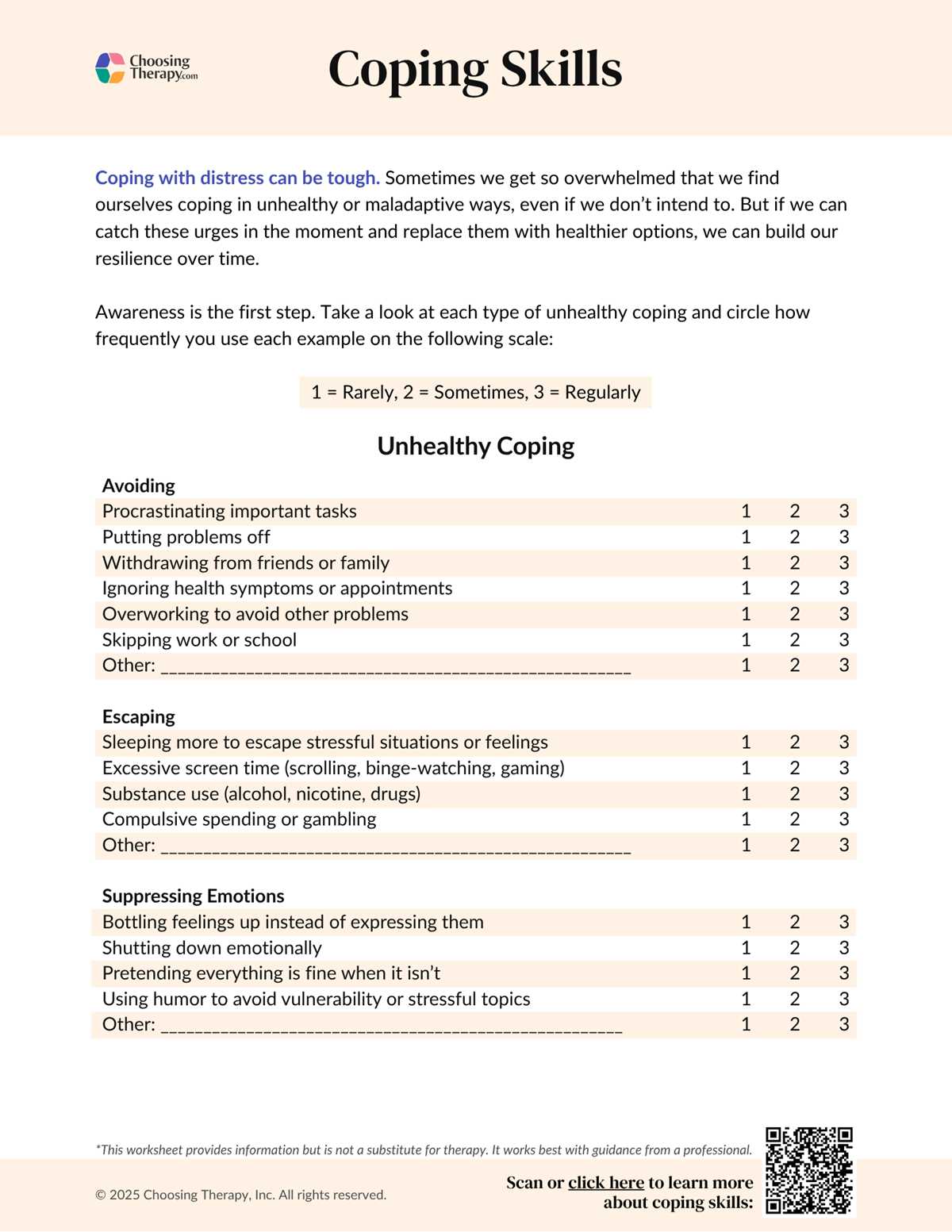
Download structured CBT-based activity sheets in PDF format and use them daily to track thoughts, emotions, and behavior patterns. Choose templates with clearly defined sections such as trigger, automatic thought, feeling intensity (0–100%), and alternative response to create measurable progress.
Select mental health exercise handouts that focus on specific areas: anxiety logs, mood tracking charts, grounding technique guides, and stress response planners. Forms that include rating scales and reflection prompts provide clearer data than blank journal pages.
Use thought record templates to challenge cognitive distortions by listing evidence supporting and contradicting a belief. Add a final column for balanced statements to encourage rational evaluation. For emotional regulation, apply 5-4-3-2-1 grounding scripts with space to document sensory details and post-exercise tension levels.
Print materials on A4 or US Letter paper at 100% scale and store them in a binder divided by theme such as anxiety, anger management, and self-reflection. Review completed forms weekly to identify recurring triggers and adjust response strategies based on documented patterns.
Free Printable Coping Skills Worksheets for Adults
Use structured CBT activity sheets in PDF format and fill them out immediately after stressful events to capture accurate data on triggers, automatic thoughts, emotion intensity, and behavioral reactions. Select forms that include 0–100 rating scales, evidence columns, and space for alternative interpretations to support cognitive restructuring.
Choose anxiety tracking templates with sections for physical symptoms such as heart rate changes, muscle tension, and breathing patterns. Add timed breathing logs using 4-4-6 or 5-5 cycles and record distress levels before and after each exercise. Reflection charts that compare feared outcomes with actual results help identify distorted predictions and reduce repetitive negative thinking.
Organize completed mental health practice sheets by date in a binder divided into mood tracking, anger regulation, and stress response categories. Review entries weekly, calculate average intensity scores, and note repeated triggers to adjust response strategies based on written records rather than memory.
How to Choose CBT Based Coping Skills Worksheets for Anxiety and Stress
Select CBT thought record templates that include structured columns labeled situation, automatic thought, emotion rating 0–100%, cognitive distortion type, evidence supporting the thought, evidence against it, and balanced alternative belief.
Avoid blank journal-style pages. Choose structured mental health forms with predefined prompts and numeric rating scales to allow measurable tracking across multiple entries.
For anxiety, prioritize templates that contain:
- Trigger description with date and time
- Body sensations checklist such as sweating, rapid heartbeat, muscle tension
- Distress intensity scale before and after intervention
- Prediction of feared outcome
- Actual outcome comparison field
For stress management, select activity sheets that focus on controllable versus uncontrollable factors and include a problem-solving grid.
- Define the stressor in one sentence
- List controllable elements
- List uncontrollable elements
- Generate three realistic action steps
- Set a completion deadline
Choose grounding exercise handouts that provide timed breathing structures such as 4-4-6 or 5-5-5 cycles and space to record emotional intensity before and after each round.
Verify that each template includes a review section asking what was learned, what changed, and what will be repeated next time. This encourages pattern recognition across weeks.
Use exposure planning forms only if they contain graded steps from least distressing to most distressing situations, each rated on a 0–10 fear scale to allow gradual progression.
Download materials in PDF at 300 DPI with clearly legible fonts and sufficient spacing for handwritten notes. Structured layout, measurable scales, and outcome comparison fields are key indicators of a strong CBT-based tool.