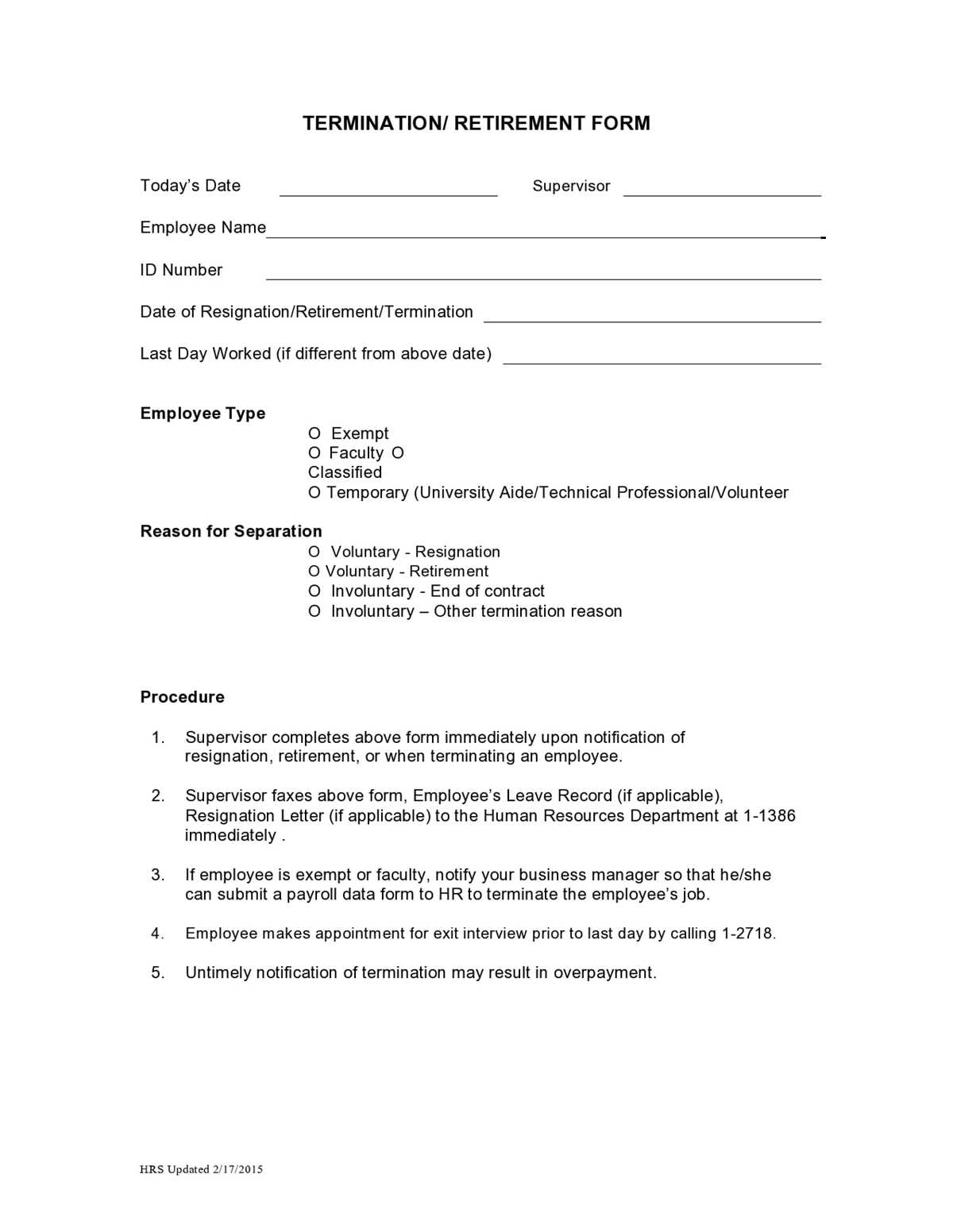
To streamline the separation process, an official template for documenting the end of an individual’s role within an organization is crucial. The following outlines the key sections and elements needed to create an accurate record of the action.
Key Elements of a Departure Record
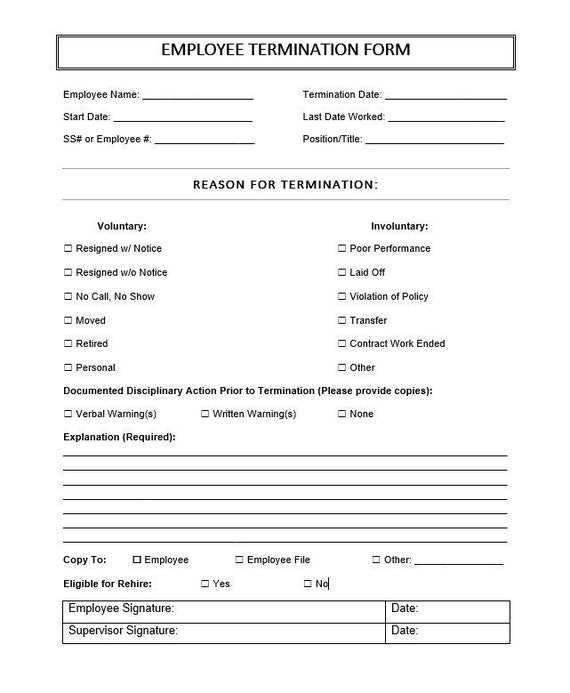
- Identification Details: Full name, job title, department, and employment dates.
- Reason for Departure: Clearly state whether the cause is voluntary or involuntary, and specify the nature of the exit (e.g., resignation, redundancy, or performance-related).
- Exit Date: The last day the individual worked, and the date when all responsibilities are officially concluded.
- Return of Company Property: List all equipment, keys, or access cards that need to be returned prior to departure.
- Final Compensation: Detail any outstanding payments or benefits that will be issued, including severance, unused vacation, or bonus payouts.
- Non-Disclosure and Non-Compete Clauses: Confirm any ongoing legal obligations that must be upheld post-departure.
- Exit Interview: Indicate if a meeting was held to discuss the reasons behind the departure and gather feedback on the employee experience.
Steps to Prepare the Record
- Gather Information: Collect the necessary details about the individual’s role, tenure, and reason for exit.
- Draft the Documentation: Fill in the sections with specific data and ensure that no items are overlooked, especially concerning company property and compensation.
- Review Legal Agreements: Cross-check any clauses that may apply to post-employment conditions.
- Have the Employee Sign: Include a space for the departing individual to confirm the contents of the document and agree to any ongoing obligations.
- Store Securely: Keep the signed document in the personnel file for future reference or potential audits.
Benefits of Maintaining a Clear Record
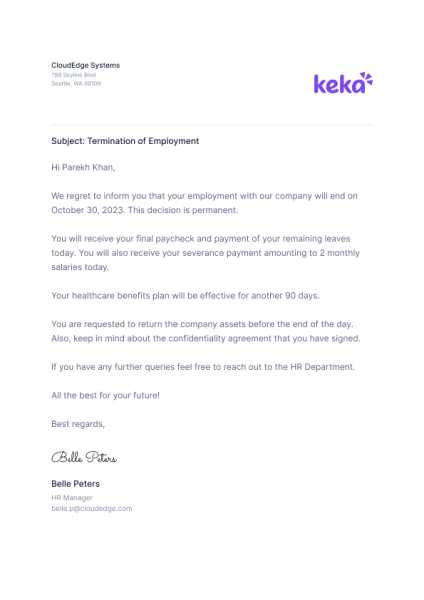
Having an official document ensures both parties have clarity regarding all aspects of the separation. It also provides legal protection for the organization in case of disputes. Clear documentation minimizes the risk of misunderstandings and ensures that all terms are formally acknowledged.
Ensure the template is regularly reviewed and updated to reflect current legal and company policy changes, adapting to new circumstances as needed.
Termination Documentation for Staff Members
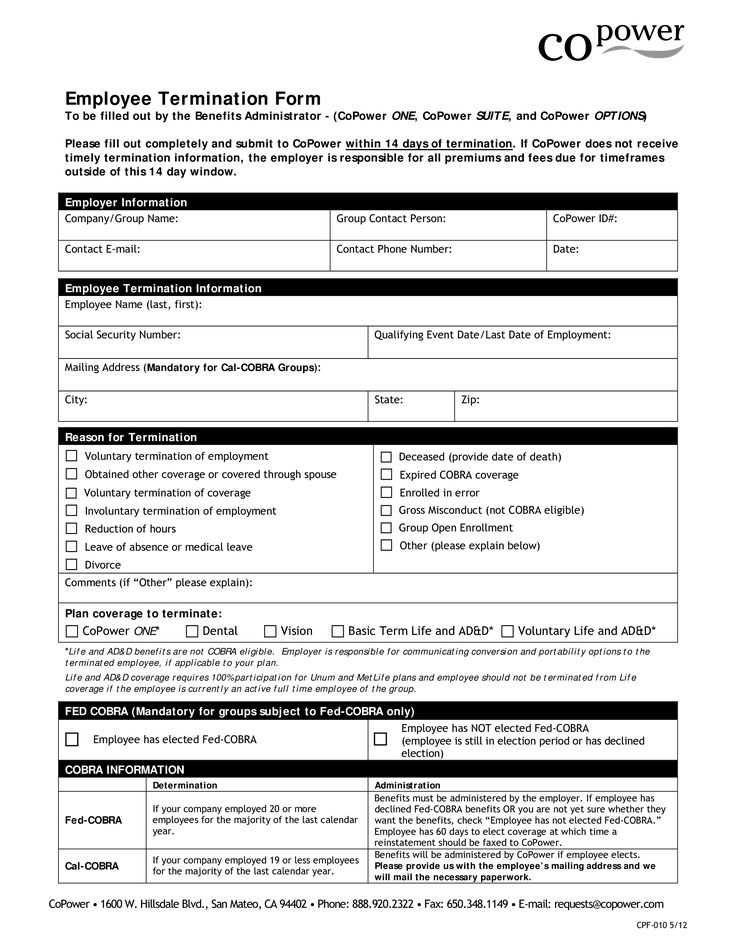
Before any personnel transition, ensure that a detailed document is prepared, capturing all necessary information regarding the end of employment. This record must include the reasons for the separation, whether voluntary or involuntary, along with key dates such as the last day of service. Always gather signatures from both the departing individual and the appropriate management to confirm agreement on the terms, safeguarding all parties involved.
For accurate record-keeping, include a section addressing company property, such as keys, equipment, and access cards, to avoid complications later. Clearly state if there are any outstanding obligations on either side, such as pending vacation days, unpaid wages, or non-compete clauses that may require attention. These details prevent any confusion in the future and ensure legal compliance.
Lastly, ensure that the document is stored securely in the employee’s personnel file. This will not only assist in potential future audits but will also help clarify any disputes or legal inquiries. Always make sure the documentation is available for both internal purposes and potential future reference, such as for benefits or claims processing.