Engaging Learning Tools for Understanding Human Perception
Explore different methods to engage children and young learners with activities designed to enhance their understanding of how we experience the world through various physical inputs. By integrating these exercises into lessons, students can grasp basic concepts related to vision, hearing, touch, taste, and smell.
Activities for Enhancing Visual Awareness
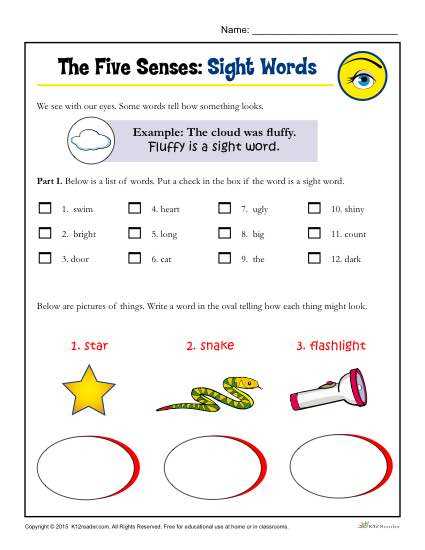
One effective way to develop visual recognition skills is through matching exercises. Use images of objects that students can identify using their sight. This method encourages learners to describe characteristics such as colors, shapes, and sizes, helping them refine their observational abilities. You can also provide them with blank images and ask them to label different visual elements they notice.
- Provide a set of pictures featuring animals, plants, and everyday objects.
- Ask students to match the objects to their descriptions based on visual traits like color, form, and pattern.
- Encourage students to describe what they see in detail to improve their vocabulary.
Exercises Focused on Auditory Perception
Sound recognition can be developed with simple listening exercises. Play different sounds from nature, animals, or instruments, and have students identify them. Alternatively, provide a list of possible sound sources and ask them to match the sounds they hear to the correct item. This type of activity sharpens auditory discrimination, allowing learners to differentiate between various frequencies, volumes, and tones.
- Use recordings of bird calls, water flowing, or different musical instruments.
- Encourage students to describe the sound’s characteristics–whether it is loud, soft, sharp, or soothing.
- Use audio clips with overlapping sounds to develop their ability to focus on specific noises.
Touch-Based Exploration Activities
To stimulate tactile awareness, try tactile boxes filled with different objects. Blindfold the learners and let them explore various materials, like fabric, rough stones, or smooth balls, inside the box. They must describe what they feel, using appropriate terminology for textures and temperatures. These exercises foster the development of language related to the sense of touch.
- Fill a box with items of different textures, such as cotton balls, sandpaper, and smooth plastic.
- Ask students to reach inside, feel the object, and describe it using adjectives.
- Incorporate temperature variations like warm and cold objects to engage another aspect of tactile sensation.
Activities for Engaging with Other Senses
Incorporating a variety of sensory experiences helps deepen learners’ understanding of how their bodies interact with the world. These exercises encourage critical thinking and creativity while enhancing vocabulary and descriptive skills.
Smell and Taste Exploration
For smell-related exercises, provide students with various scents like vanilla, citrus, or lavender. They can smell each item and match it to a list of possible sources. Similarly, for taste, have a selection of sweet, sour, salty, and bitter foods. Students should identify each taste and categorize them accordingly. Activities involving these senses strengthen their ability to differentiate and articulate flavor profiles.
- Provide jars of scents such as lemon peel, mint leaves, or herbs.
- For taste, offer samples like sugar, lemon juice, or salt, and ask learners to describe each flavor.
- Encourage students to make connections between taste and smell by discussing how they are often experienced together.
Combining Multiple Sensory Inputs
Combining exercises that engage multiple senses at once creates an enriching learning experience. For example, ask students to listen to the sound of a bell, smell a flower, and then describe what they see and feel in a picture of the scene. These kinds of multi-sensory tasks help to integrate various sensory inputs and develop a more comprehensive understanding of the world around us.
- Use sensory bins with different textures, sounds, and smells to encourage exploration.
- Ask students to recall or describe their sensory experiences as a group activity.
- Invite students to draw or create a scene based on their combined sensory experience.
Encouraging Reflection and Self-Assessment
After completing these exercises, encourage students to reflect on their experience. Provide them with guided questions such as, “Which sensation was easiest for you to identify?” or “Which sensory input do you think you use the most throughout your day?” This reflection helps students consolidate their learning and become more aware of the importance of sensory awareness in everyday life.
Incorporating these hands-on activities into lessons will help young learners build a strong foundation of sensory awareness while also developing their descriptive language and observational skills. These interactive methods support a deeper connection to the world around them, providing an engaging way to learn about human perception.
Exploring Sensory Activities for Kids
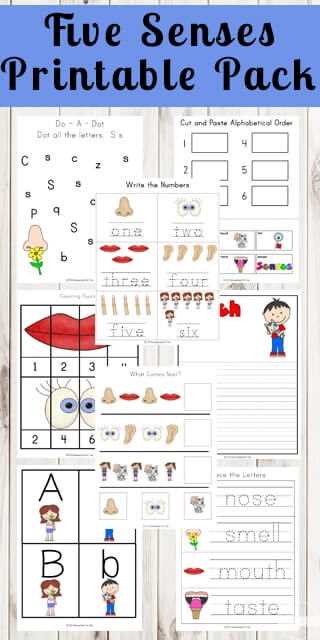
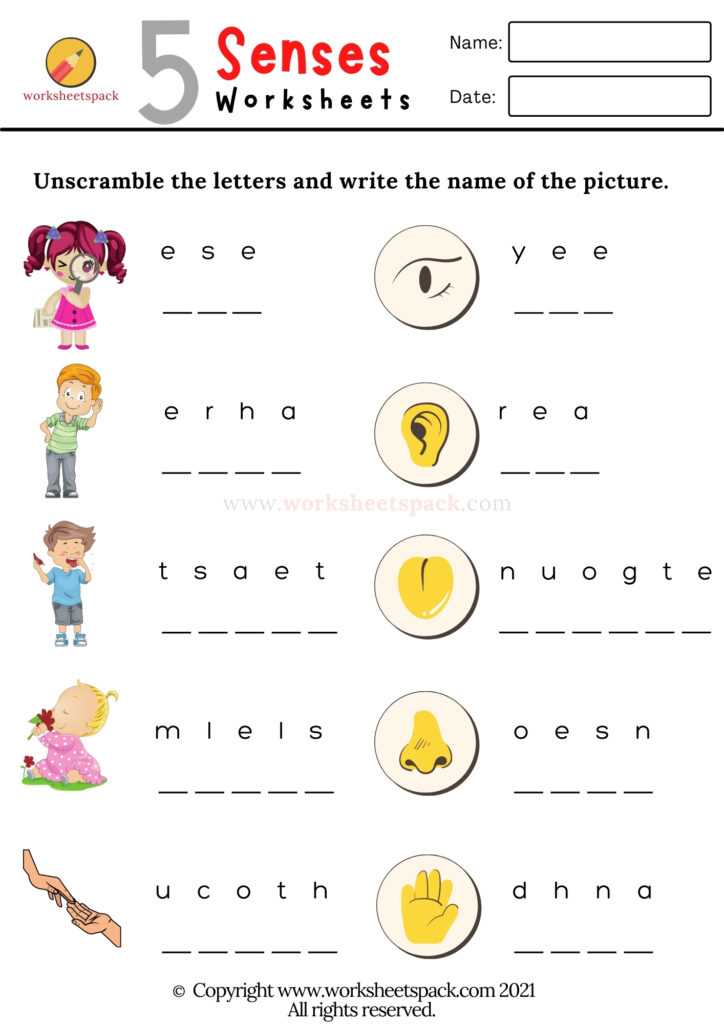
Using activities focused on sensory exploration helps young learners make connections between their surroundings and their cognitive development. These exercises are excellent for boosting awareness of how different stimuli affect perception. Activities such as identifying objects through touch or associating sounds with their sources encourage children to use their mind and body together. Printable sheets with matching exercises work well to pair images with corresponding sensory experiences, which improves understanding of how the senses work in harmony.
Incorporating these exercises into everyday learning offers a structured approach to recognizing physical and environmental cues. For instance, an activity might include identifying various scents, sounds, or textures while prompting kids to categorize them based on whether they’re familiar or new. This simple categorization deepens comprehension and adds an interactive element to sensory education. It is an excellent way for children to practice labeling what they feel, hear, or see, encouraging them to articulate their observations.
To engage multiple senses simultaneously, some activities incorporate both visual and tactile tasks. For example, having students match a picture of a fruit to its texture or taste heightens the impact of the activity. This type of exercise not only reinforces the concept but also makes it memorable by combining sensory experiences that are easily relatable. Engaging multiple senses ensures retention and encourages children to pay closer attention to details.
These interactive activities also provide opportunities for improving motor skills and coordination, especially when children are asked to complete tasks involving drawing, tracing, or even interacting with objects of different shapes and sizes. This hands-on approach not only reinforces sensory recognition but also supports fine motor development. Teachers or parents can create simple games that challenge children to recall and identify sensory information, which makes learning both fun and impactful.