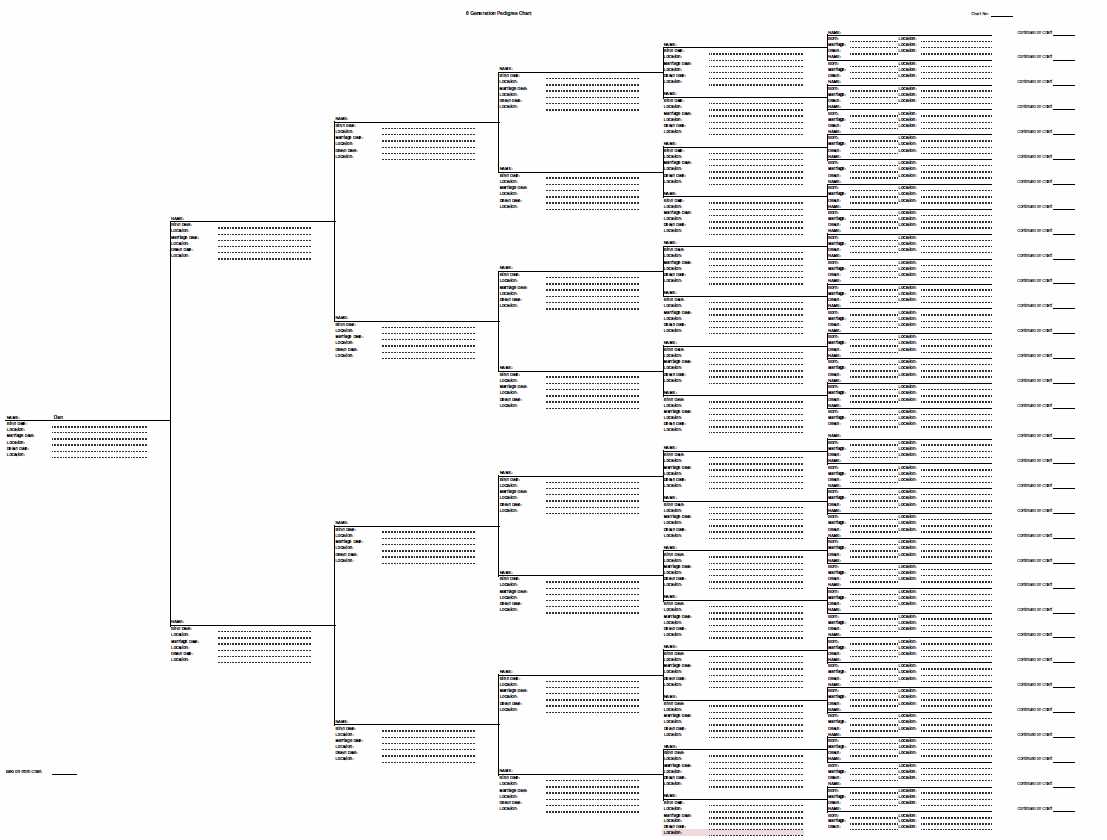
Start by organizing your family research with structured templates designed to help trace ancestors through generations. A clear, organized document simplifies the process and ensures all relevant data is captured in one place. For example, use forms that allow for easy input of dates, names, and locations related to each family member, helping you build a more accurate family tree.
Choosing the Right Template for Your Research
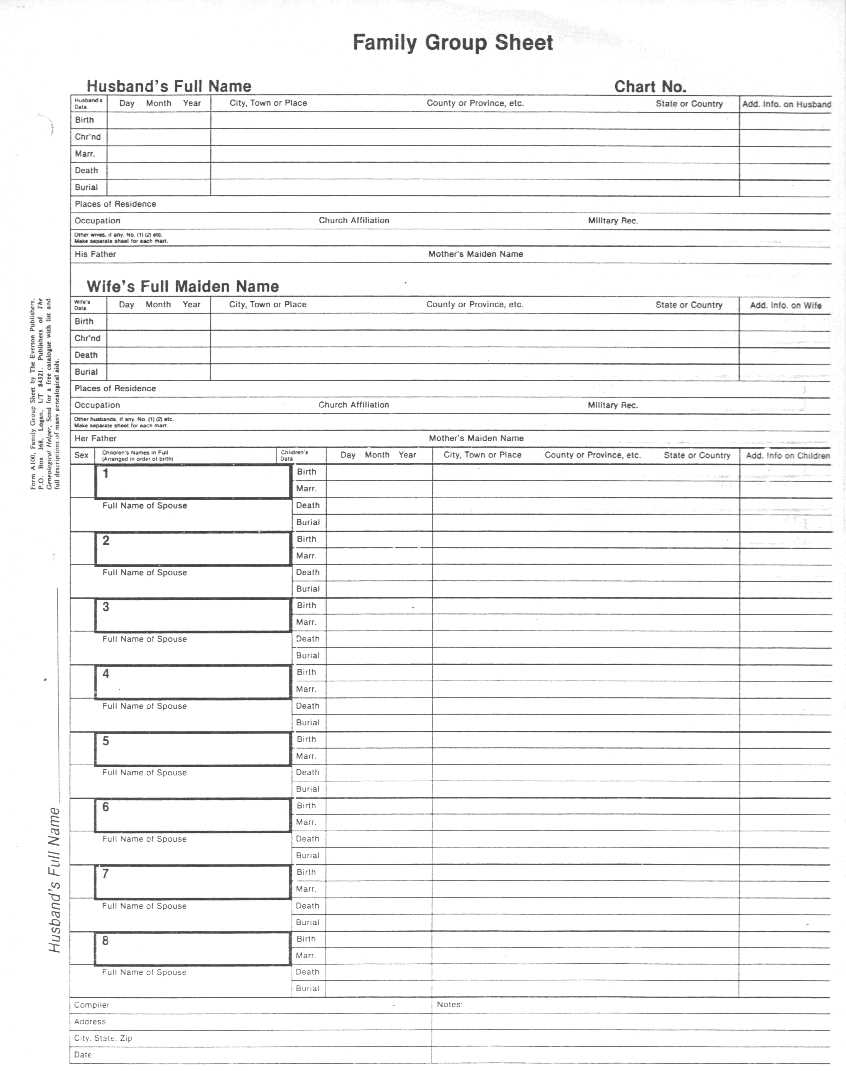
Select templates tailored to your needs. If you are researching direct ancestors, a straightforward family group sheet works well to record parents and children. For broader exploration, opt for an extended chart that allows you to include multiple generations. Many templates offer spaces for additional notes, which can be invaluable for preserving unique details like occupations or migration paths.
Benefits of Organized Documentation for Family Research
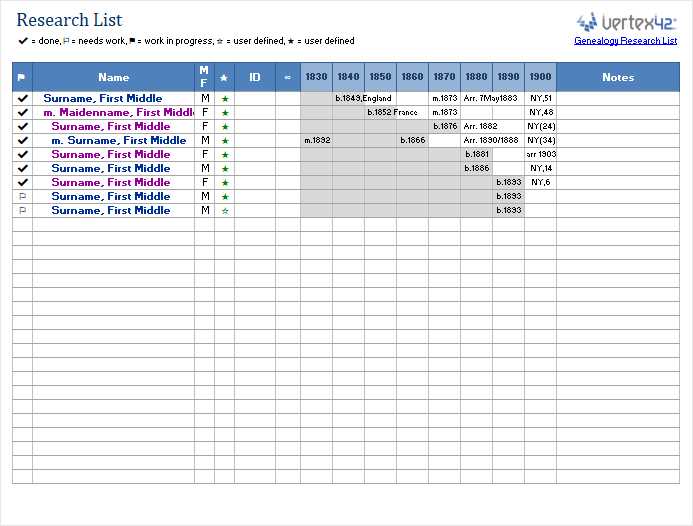
Using a structured approach brings clarity to your research process. Not only do organized documents ensure consistency across your records, but they also make sharing your findings easier with others, whether it’s with relatives or collaborators. Templates also help to avoid errors, ensuring that you don’t accidentally skip important information as your tree grows.
Additionally, having these materials on hand helps keep your research focused and efficient, so you can avoid feeling overwhelmed by the vast amount of data you may encounter. By regularly updating these forms as you make new discoveries, you’ll create a robust and clear representation of your family’s past.
How to Organize Family Member Information Using Structured Templates
For efficient tracking of personal family history, start with a template that includes fields for basic personal details such as names, birth dates, and locations. This structure will help prevent missing crucial data and streamline the research process. It’s also helpful to have spaces for additional notes where you can record unique family anecdotes or events.
After gathering basic data, consider extending your recordkeeping system with additional sections for more complex information. These may include occupation history, places of residence, and details about extended relatives. This expanded structure ensures a more thorough family profile over multiple generations.
Incorporating Detailed Information to Enrich Your Family Tree
When tracking your ancestors, make sure to include not just dates and names, but also social context. For example, note the family’s occupation, migration paths, and historical events they may have been part of. These details enrich your understanding of their lives and help preserve history in a deeper way.
It’s also important to consider the various sources of information you may have. A well-organized record can include citations for each piece of data, ensuring that your work remains accurate and verifiable. Whether the source is an oral history, government document, or newspaper article, documenting the origin of each piece of information is a good practice.
Another key factor is the space provided for the inclusion of spouse and children details. This ensures that your tree remains consistent as you move from one generation to the next. It also helps you identify potential gaps in your research that need to be addressed, such as missing family members or incomplete records.
Maintaining Consistency Across Multiple Generations
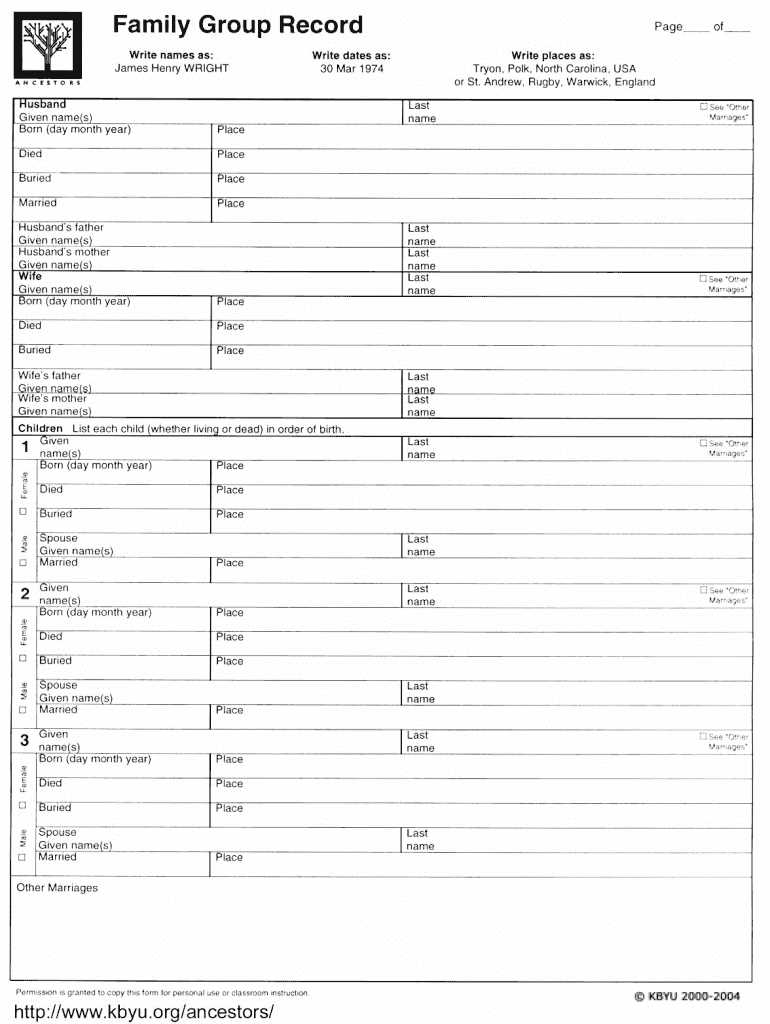
By using a uniform template for every family member, you can easily compare data from different generations. This consistency helps when building connections between distant relatives, and ensures your family tree looks cohesive. Keep your documents organized chronologically, as this will help you track progress and fill in missing details over time.
As you gather more information, regularly update your documents. These records will evolve over time as you uncover new facts and make corrections. By staying organized, you can make sure your family tree continues to grow accurately and comprehensively.
Finally, when you’ve completed your family records, consider printing copies for safekeeping or sharing with others. It’s always a good idea to create backups, especially if your research spans many generations. These copies can also be used to collaborate with others, helping you share findings and potentially discover new family connections.