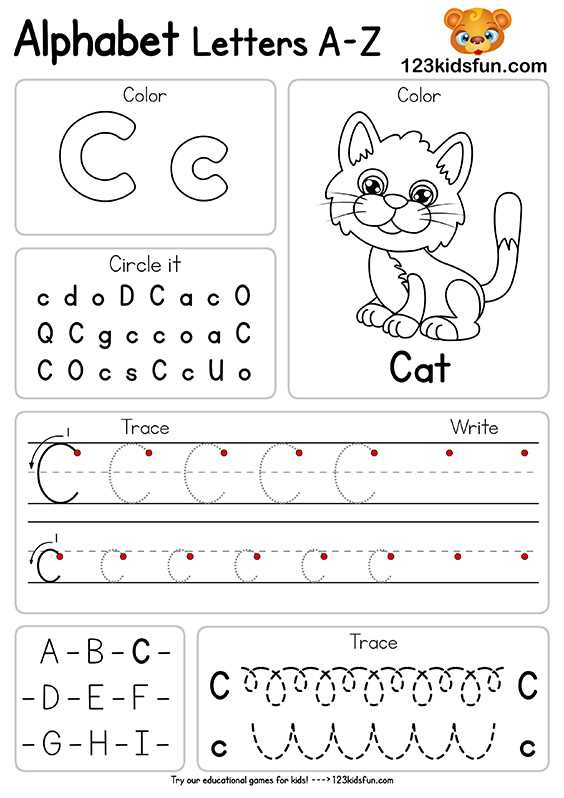
Introduce your little one to the shape and sound of “C” with engaging activities designed to reinforce recognition and writing skills. Simple exercises can make all the difference in establishing a strong foundation for early literacy. These fun-filled pages encourage hands-on learning, combining both visual and motor skills to improve your child’s ability to trace and identify the letter.
For effective learning, focus on exercises that not only ask children to trace the character but also incorporate familiar objects starting with “C,” like cat, car, and cup. This helps them connect the letter to real-world items, making it more memorable and meaningful. With each repetition, the child will strengthen their grip and hand-eye coordination, making writing the letter much easier and more natural.
Incorporating different types of activities, such as connecting dots or coloring pictures of “C” shaped objects, allows children to practice without the pressure of formal exercises. Engaging in these interactive tasks will also keep them entertained while reinforcing their learning. This combination of visual recognition and fine motor practice builds confidence, laying the groundwork for future writing and reading success.
Activities to Help Children Master the Letter C
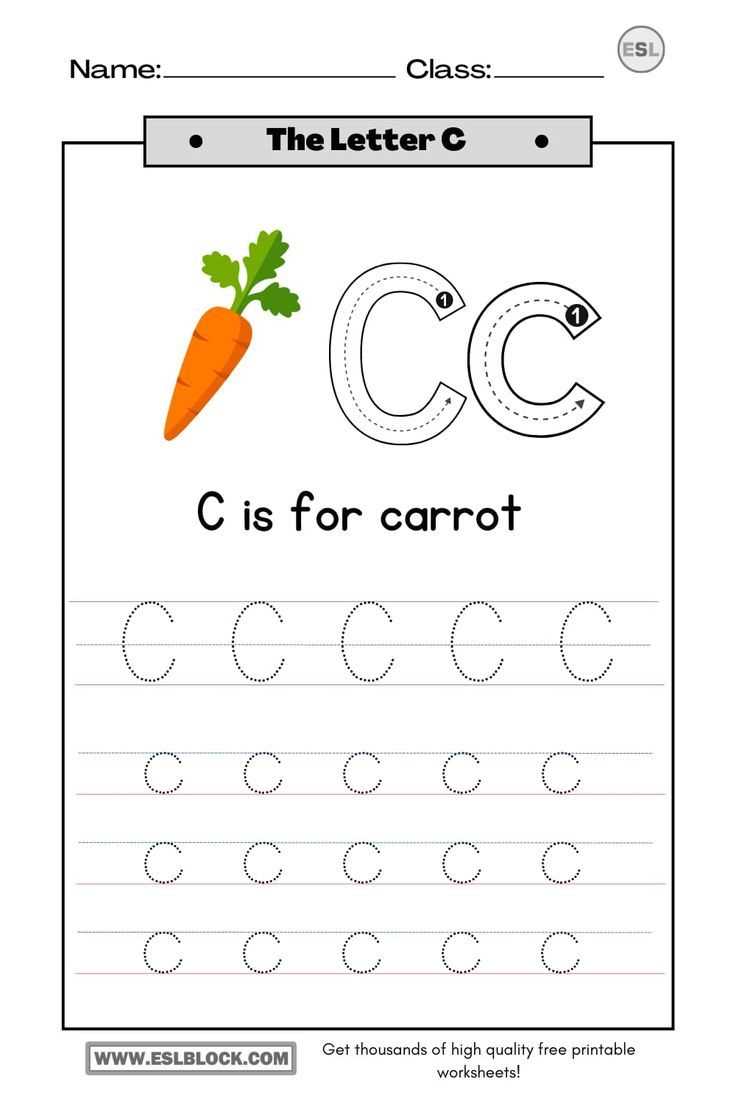
To support young learners in mastering the shape and sound of “C,” it’s important to provide engaging exercises that stimulate both recognition and production. One helpful task is tracing the outline of the character, allowing children to practice forming the symbol while associating it with its phonetic sound. This technique also enhances fine motor skills, reinforcing the connection between visual and tactile memory.
Another useful activity involves identifying objects that start with this symbol. Examples such as “cat,” “cup,” and “car” can be visually linked to the symbol, reinforcing letter-sound associations. By involving real-world objects or pictures, kids not only recognize the letter in isolation but also in the context of their daily surroundings, enhancing retention.
For deeper engagement, have children match a set of pictures with corresponding symbols. In one section, provide a range of images–such as a “coin,” “cow,” and “candle”–and encourage the child to connect each to the symbol they represent. This promotes both cognitive recognition and hand-eye coordination, reinforcing the child’s ability to distinguish and categorize visual representations of the letter.
To encourage creativity, incorporate coloring activities where children color images that prominently feature this shape. This task reinforces recognition while making learning fun. Additionally, they can draw objects that begin with this character, further cementing the sound and form through an artistic approach.
Finally, interactive games like letter scavenger hunts help children actively search for visual representations of the shape in their environment. Whether at home or in the classroom, this dynamic activity encourages exploration and contextualizes the letter in various settings, further solidifying its role in early literacy development.
How to Choose the Right Letter C Worksheet for Your Preschooler
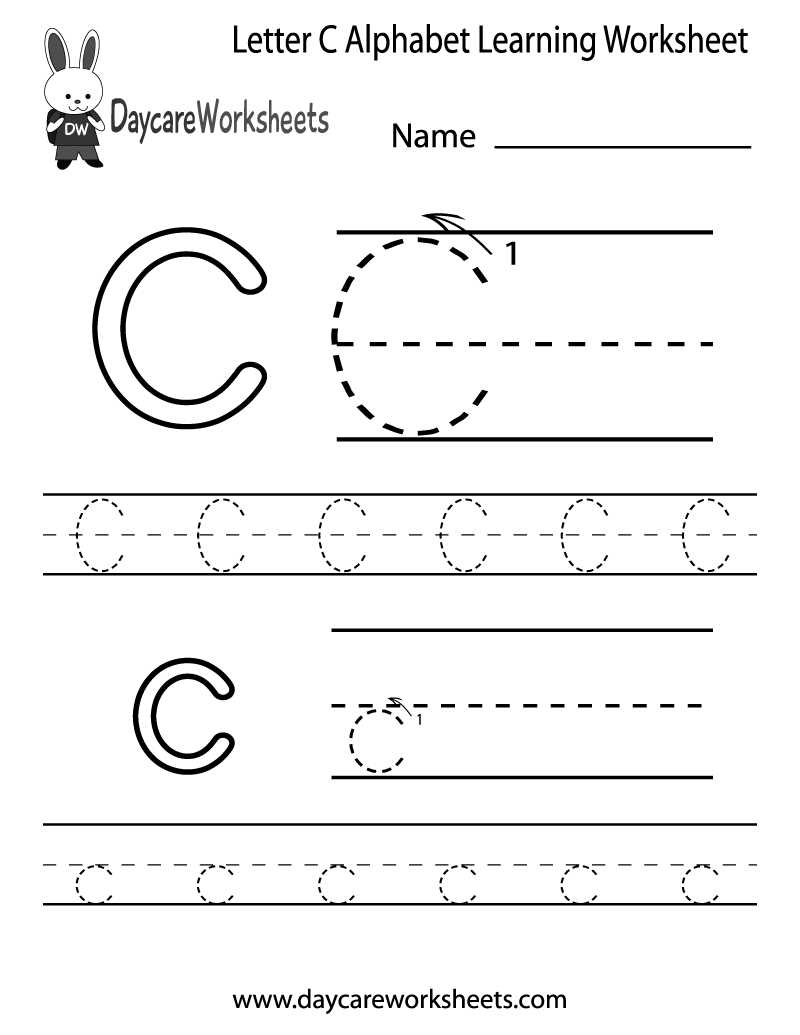
Look for activities that focus on fine motor skills, such as tracing, drawing, or connecting dots. These exercises build hand-eye coordination while reinforcing the shape of the character. Choose ones that match your child’s developmental stage to ensure they are engaging and not overwhelming.
Consider age-appropriate designs with clear, bold images. Avoid worksheets filled with too much clutter or overly complex patterns. A simple, straightforward layout with large characters and clear instructions will keep your child focused and motivated.
Ensure the content introduces the sound association with visual aids. Activities that pair the symbol with images of words that begin with “C” (like cat, cup, or car) will help reinforce the connection between visual and auditory recognition.
Look for sheets that incorporate multi-sensory elements. Options that include tracing in sand, clay, or with finger-paint can enhance learning. Engaging different senses will help make the experience memorable for your child.
Don’t forget to select activities that challenge your child without causing frustration. For example, provide tracing exercises that progress in difficulty, starting with dashed outlines and moving to solid lines. This helps them gradually gain confidence in forming the symbol independently.
Incorporate varied approaches to maintain interest. Sheets with coloring, matching, or finding hidden symbols introduce a playful element while reinforcing recognition. A mix of activities ensures that the learning process stays dynamic and enjoyable.
Make sure to choose resources that offer positive reinforcement. Activities with small rewards or feedback, like stars or stickers for completing tasks, encourage perseverance and boost confidence in early learning stages.
Lastly, always aim for balance. Opt for materials that are educational yet fun. When activities feel like games rather than tasks, your child is more likely to engage actively and retain the information presented to them.