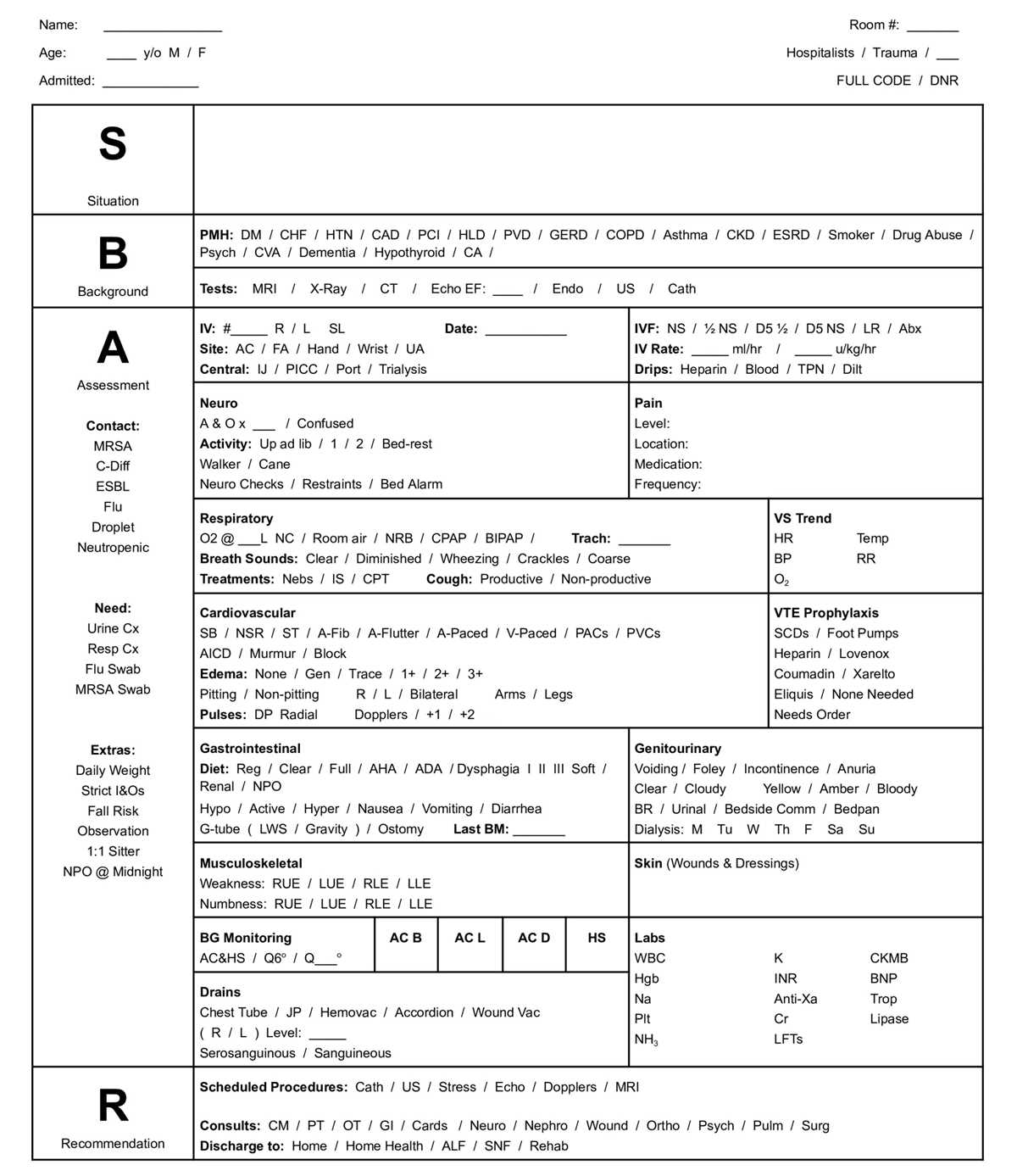
Key Aspects to Include for Streamlined Patient Documentation
When preparing a patient care form for your shifts, it’s critical to prioritize sections that offer quick access to crucial patient information. Start with key identifiers such as the patient’s full name, age, and medical record number. These basic data points ensure clarity and easy reference during shift handovers. Follow this by including emergency contact details and current health status to allow for a smooth transition between shifts. Regularly update these sections to reflect any changes in the patient’s condition, as this can greatly impact clinical decision-making.
Critical Data Sections
- Vitals: Track the patient’s current blood pressure, heart rate, temperature, respiratory rate, and oxygen saturation levels. These details are vital for monitoring and assessing trends throughout the day.
- Medications: List all ongoing treatments, including dosage and frequency, and mark any changes or new prescriptions clearly to ensure no medication errors occur.
- Lab Results: Provide a summary of any recent test results, as this can help clinicians prioritize treatments and interventions for the next shift.
- Patient Condition and Observations: Make brief notes on the patient’s current state, including any new or resolved issues, as well as behavioral changes that could indicate complications.
Time-Saving Tips for Streamlined Communication
Efficiency in clinical settings is key, especially during busy shifts. Consider incorporating a system for prioritizing critical issues using color-coding or symbols. This method allows quick identification of the patient’s needs, ensuring that the most urgent tasks are addressed first. Avoid overcomplicating the sheet with excessive data–focus on what will most impact patient care during the handover process.
Additional Considerations
- Allergies and Sensitivities: Always note any allergies to medications or food items, as well as sensitivities to medical procedures or devices.
- Patient Goals and Preferences: Include any specific requests or preferences from the patient, especially those related to care methods or family involvement.
Design Tips for Maximum Usability
When designing your care sheet, consider including sections for checkboxes or dropdowns to capture more structured information, which can save time compared to free-form writing. Use large, legible fonts and enough white space to reduce visual clutter. Organize content into logical blocks to enhance readability and reduce the risk of overlooking vital information.
With these strategies, your shift transition forms can become a reliable tool to help ensure comprehensive, accurate, and prompt patient care every day.
Optimizing Patient Care with a Structured Tracking Tool
For professionals managing multiple patients, an organized method for tracking vital information ensures nothing is overlooked. A well-structured tool can streamline patient assessments, medication administration, and shift handovers. Having a template that lists key metrics such as current conditions, medications, and any immediate changes reduces the chances of forgetting important details during busy shifts.
Tailor this resource to meet the needs of your unit. Focus on relevant sections such as vital signs, lab results, and treatment protocols. The template should be designed to capture the most significant data quickly, allowing for swift documentation and easy access to patient status updates. This cuts down on unnecessary paperwork and aids in making quick clinical decisions.
Consider creating separate columns for shift changes, highlighting the patient’s primary concerns, procedures performed, and any new orders. Ensure space for monitoring alerts or risks that require urgent attention. Having these sections readily available allows for more accurate communication between teams, reducing the risk of missed interventions or miscommunication.
After implementing this organizational framework, review the layout regularly. Feedback from the team can guide adjustments, making sure that it remains relevant and convenient under different care circumstances. Customize it as per the patient population and workload demands for the best results in care coordination.