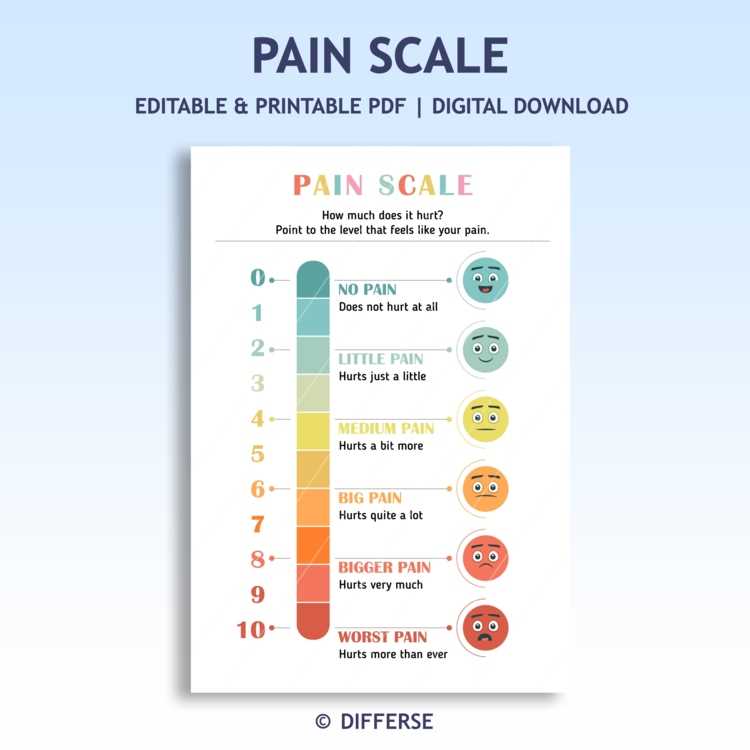
If you’re looking to track the intensity of discomfort accurately, using a numerical system is one of the easiest methods. A scale ranging from 1 to 10 can help you communicate how severe your symptoms are, providing both clarity and consistency. The key is understanding what each number represents and applying it to your personal experience.
Understanding the Scale and Its Application
A typical 1 to 10 pain intensity scale helps break down the range of discomfort. Here’s how you can interpret it:
- 1-3 (Mild): This is the low end of the spectrum. You may feel a slight discomfort or dull sensation that doesn’t interfere with daily activities.
- 4-6 (Moderate): This range indicates noticeable discomfort. It may affect your ability to focus or perform certain tasks but is still manageable.
- 7-9 (Severe): At this level, the pain becomes more intense and can significantly disrupt daily activities. It may require attention or medication to cope.
- 10 (Extreme): This is the highest level, representing unbearable discomfort that may require immediate medical attention.
Having this scale on hand allows you to evaluate and report how you’re feeling at any given moment. Whether you’re at home or seeing a healthcare provider, it’s important to assess your discomfort and communicate it effectively.
How to Use This System in Everyday Life
Using this scale can be highly beneficial when managing chronic conditions or after an injury. By rating your discomfort regularly, you can monitor changes in intensity over time. It also helps healthcare professionals assess your condition more accurately.
When tracking your discomfort levels, take note of any patterns. For example, if you rate your discomfort as a 5 during the morning but a 7 by evening, this could indicate certain triggers or activities that exacerbate it. This information is valuable when adjusting treatment plans or lifestyle habits.
Simple Ways to Record Your Ratings
Having a quick reference sheet or journal where you log your ratings can help you see trends and make more informed decisions. Whether you write it down or use a digital app, the process of recording helps you track both short-term and long-term fluctuations.
For healthcare providers, this system can assist in creating more tailored plans based on your pain levels, giving them insight into how well current treatments are working or if adjustments are necessary.
How to Use a 1 to 10 Intensity Rating for Discomfort
Using a numerical scale from 1 to 10 is a simple yet effective way to describe the severity of discomfort. To ensure accurate assessments, it’s important to understand what each number represents. For instance, a 1 indicates minimal discomfort that doesn’t interfere with daily activities, while a 10 signifies extreme, unbearable discomfort requiring immediate attention.
By regularly tracking and recording these ratings, you can monitor fluctuations in your condition over time. This method can help both you and your healthcare provider understand how well treatments are working or if changes need to be made. For example, if your discomfort level increases significantly, it might indicate a worsening condition that requires adjustments in your care plan.
Where to Find and Use a 1 to 10 Intensity Chart
There are many sources online offering downloadable resources to keep a record of your discomfort levels. These visual aids allow you to track your intensity ratings easily. Some websites even provide customizable templates, which can be tailored to your specific needs and preferences.
Once downloaded, you can print out the guide and keep it handy for daily use. Having a physical copy readily available makes it easier to assess your symptoms, especially when you’re in the middle of a flare-up or experiencing discomfort. This makes it quicker and simpler to share your symptoms with a healthcare professional during appointments.
Benefits of Tracking Discomfort with a Rating System
Tracking discomfort levels over time can provide valuable insights into how certain activities, treatments, or medications are impacting your condition. By noting the times when your discomfort is highest or lowest, you may identify patterns that will help guide future decisions. For instance, you may find that certain exercises or food items worsen your symptoms.
Recording the intensity of your discomfort also serves as an important tool for communication, especially if you struggle to express how you feel verbally. A simple number can convey a great deal of information, allowing doctors to adjust your treatment more precisely. It also helps family members or caregivers understand the severity of your situation, leading to better support and care.