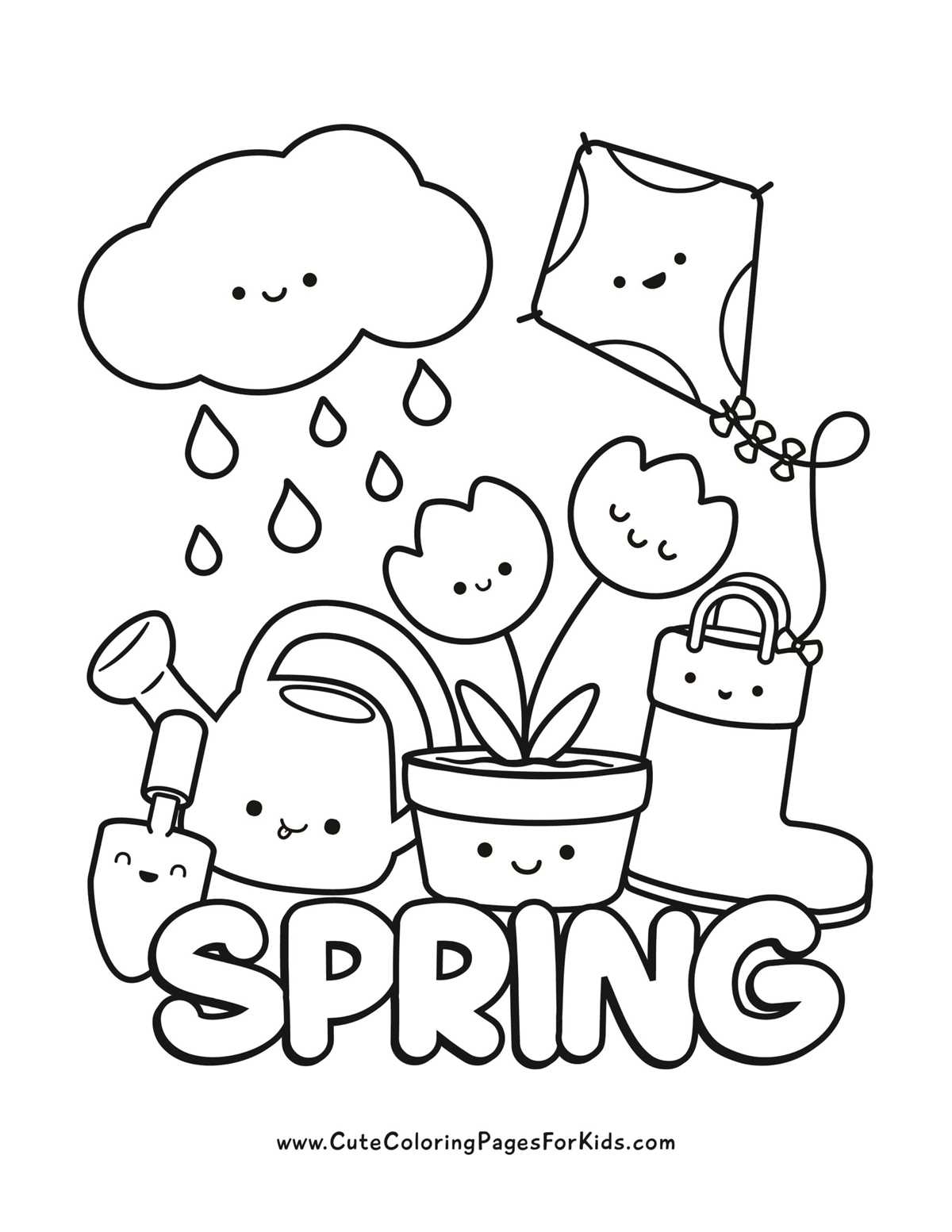
Choose line art with bold outlines and minimal tiny details so children can fill areas easily using crayons, pencils, or washable markers.
Selecting Designs That Match Skill Levels
For ages three to five, use simple shapes such as tulips, butterflies, or rain boots with wide spaces at least 8–10 mm across. Older learners enjoy scenes with gardens, kites, and animals that include moderate detail.
- Large shapes help develop hand control
- Clear borders prevent frustration
- Recognizable themes support vocabulary building
Avoid heavy shading in the original artwork. Clean outlines reproduce better on home or school printers and keep pages sharp.
Paper and Ink Settings
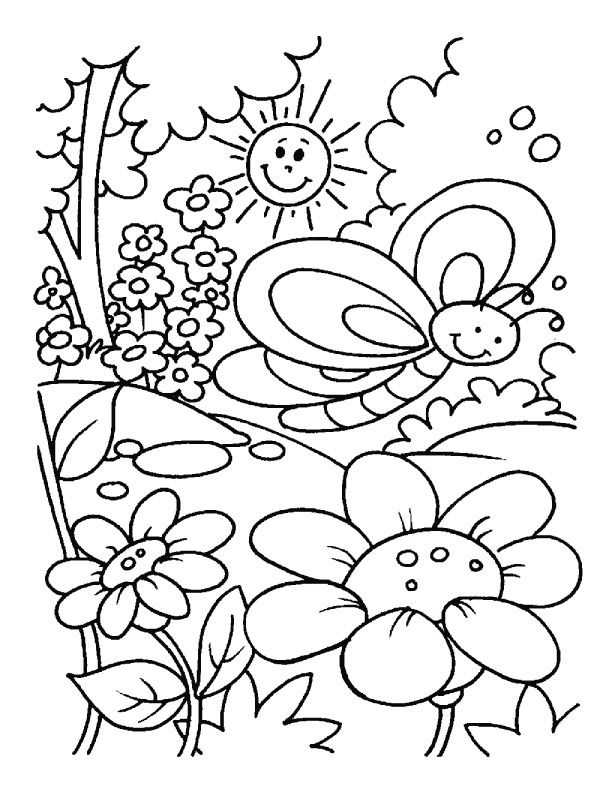
Use standard 80–100 gsm paper for everyday use. Set the printer to grayscale mode to reduce ink consumption while keeping lines dark and readable.
If using markers, switch to 120 gsm stock to prevent bleed-through onto desks.
Organizing Creative Time at Home or in Groups
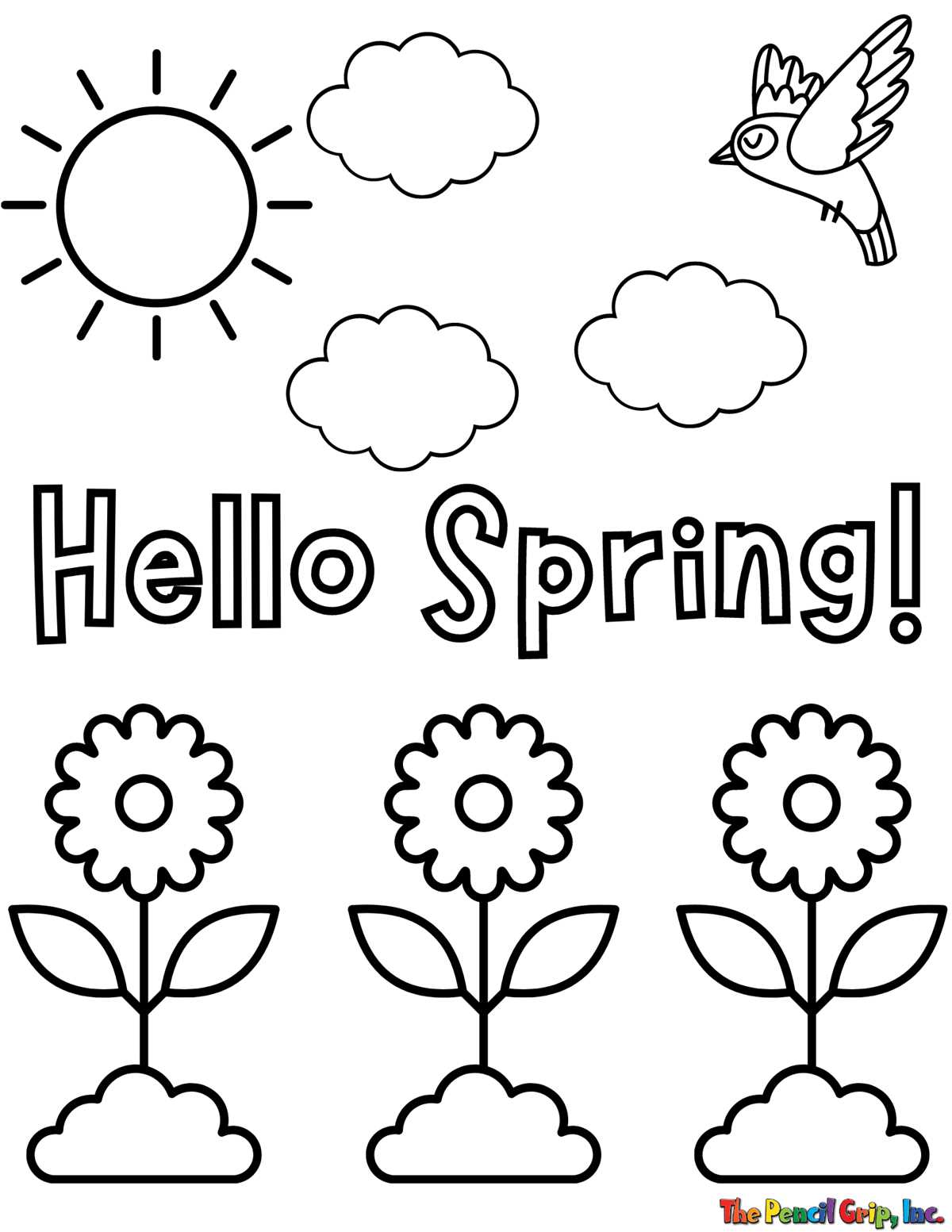
Prepare sets in advance and stack them in folders labeled by theme. This saves time during lessons and allows quick distribution.
- Give each child a clipboard or firm surface.
- Offer a limited palette of 6–8 colors to avoid clutter.
- Allow 15 minutes for filling areas, then 5 minutes for sharing work.
Adding Learning Value Beyond Art
Ask children to name objects they are filling and describe colors aloud. This ties visual activity to language practice.
Display finished sheets on a rotating wall board to create a changing gallery that keeps interest high without requiring new materials every day.
Storage and Reuse
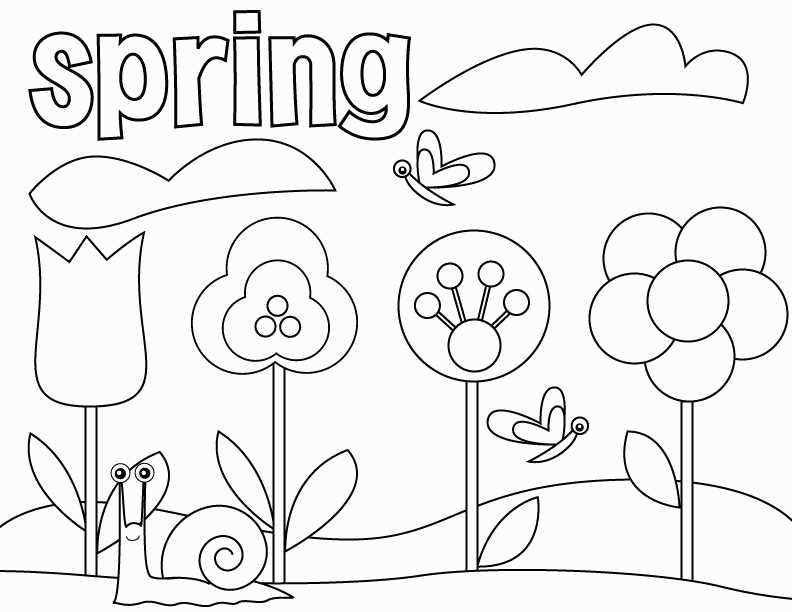
Keep digital files sorted by difficulty level so educators and parents can reprint specific themes when needed rather than searching again.
Spring Coloring Pages for Kids at Home and in the Classroom
Use simple nature themed sheets with flowers, insects, and outdoor tools to keep children focused while practicing hand control and color recognition.
Print on standard 90 gsm paper for crayons and switch to thicker stock around 120 gsm when using markers to prevent bleed-through on desks or tables.
Set up small workstations with limited supplies such as eight crayons per group, which reduces distraction and keeps attention on the activity rather than choosing materials.
Choose designs with clear outlines at least 1.5 pt thick so shapes remain visible after repeated handling and do not fade when reproduced on classroom printers.
Plan sessions for 15 to 20 minutes, followed by a short sharing time where children describe what they filled and name objects shown on the page to reinforce vocabulary.
Store unused sheets in labeled folders by difficulty level so educators and parents can quickly select age-appropriate material without sorting through large stacks.