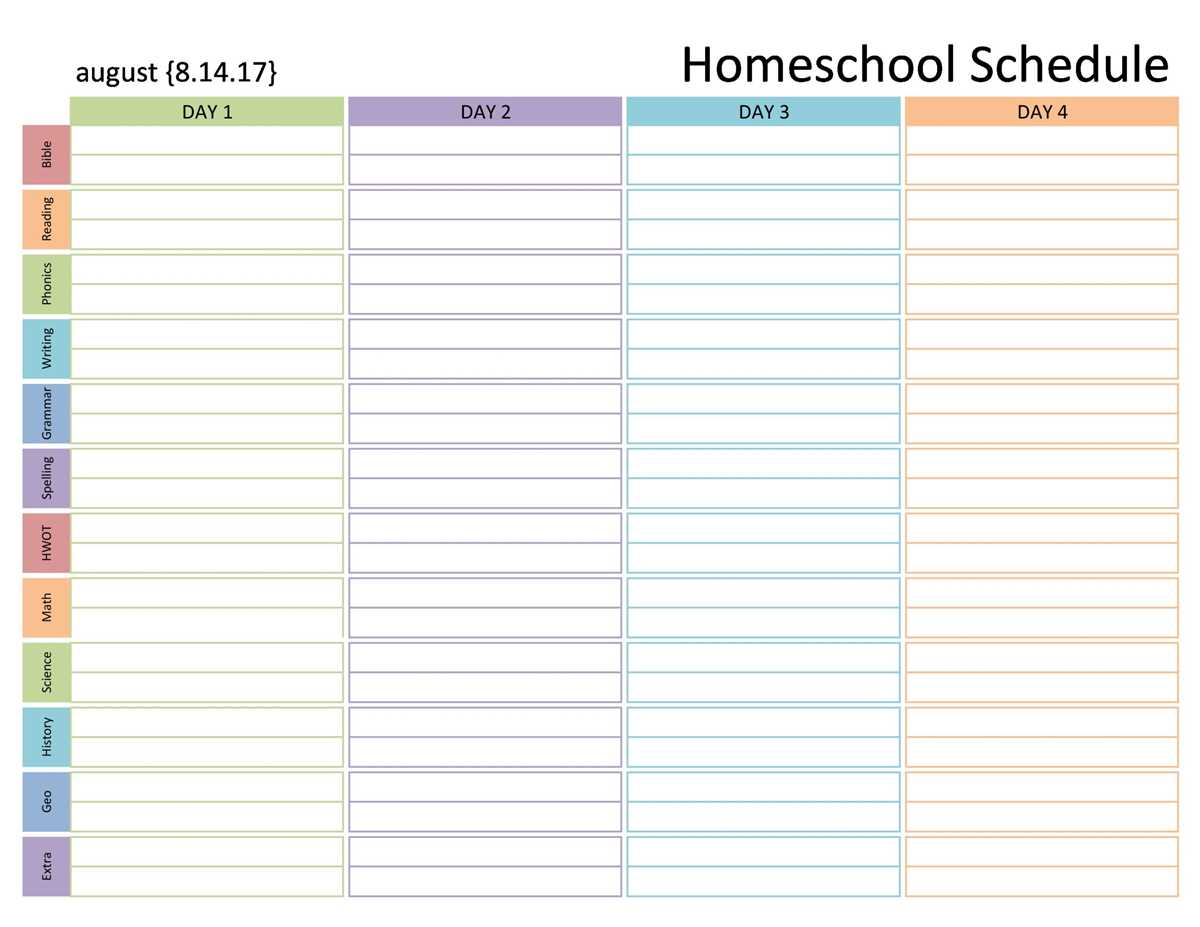
Create a structured daily plan with fixed study blocks of 25–45 minutes for elementary students and 45–60 minutes for middle grades. Insert 10–15 minute breaks after each academic block to maintain concentration. Allocate core subjects such as math and language arts to morning hours when focus levels are higher.
Use a clear weekly planner layout divided into hourly rows from 8 AM to 3 PM or adjust based on family routines. Leave at least one flexible block per day for project work, reading, or catch up tasks. Mark recurring activities such as physical exercise, music practice, and quiet reading with consistent color codes to improve visual organization.
Print the template in A4 or Letter size at 100 percent scale and use 120–160 gsm paper for durability. Laminating one master copy allows quick updates with dry erase markers without reprinting every week. Store blank copies in a labeled folder to simplify monthly planning.
Designing a Homeschool Schedule Printable for Different Grade Levels
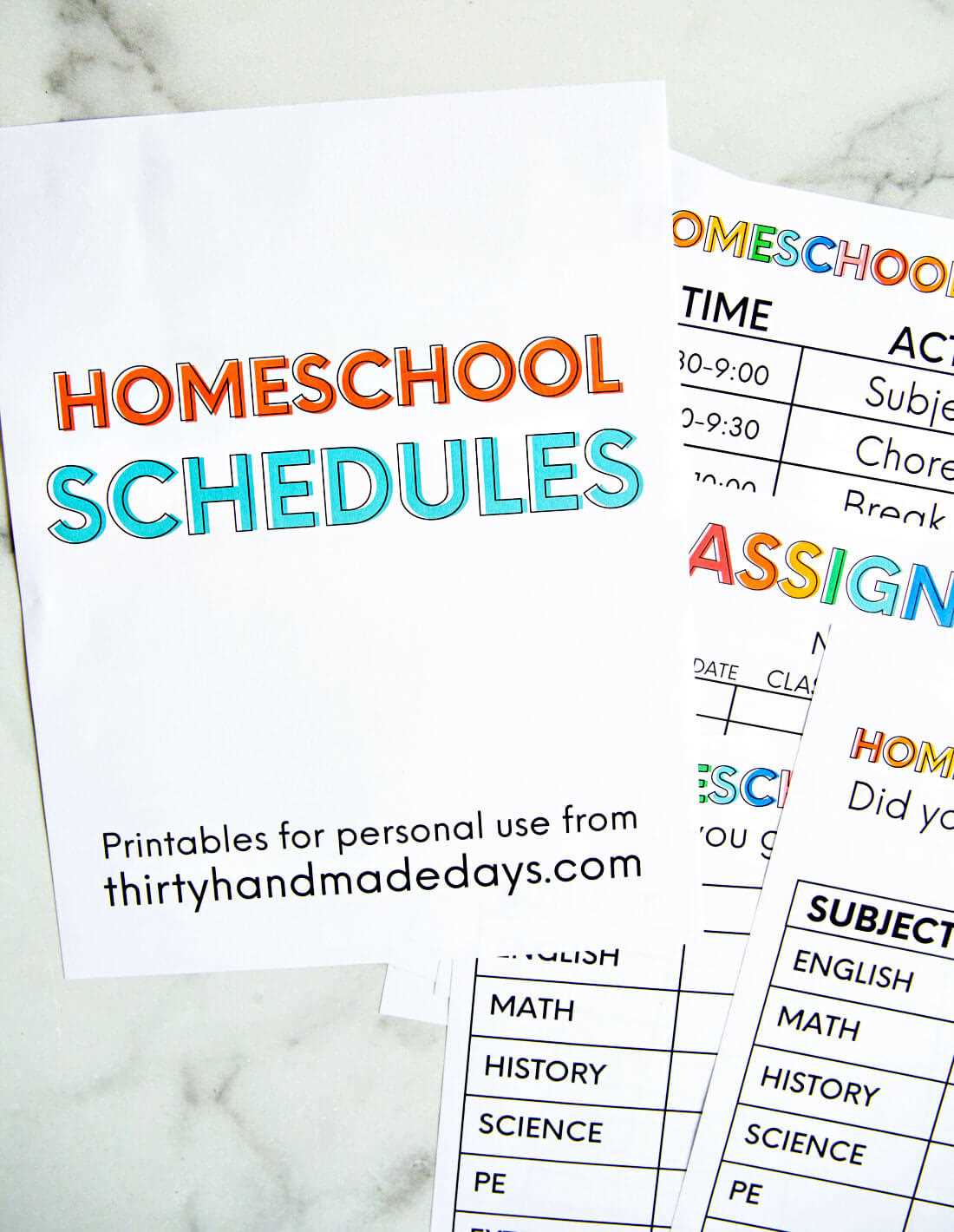
Allocate time blocks based on attention span and academic load. For early elementary learners, design a daily planner with 20–30 minute study segments and visual icons for each subject. Keep the total structured learning time between 2.5 and 3.5 hours, excluding breaks and creative play.
For upper elementary grades, expand subject blocks to 30–45 minutes and introduce a weekly overview grid that tracks assignments and reading goals. Include clearly defined start and end times to build time awareness and independent task management.
Middle school students require longer focused sessions and subject rotation across the week rather than repeating the same sequence daily. Plan 45–60 minute academic periods with short 5–10 minute transitions.
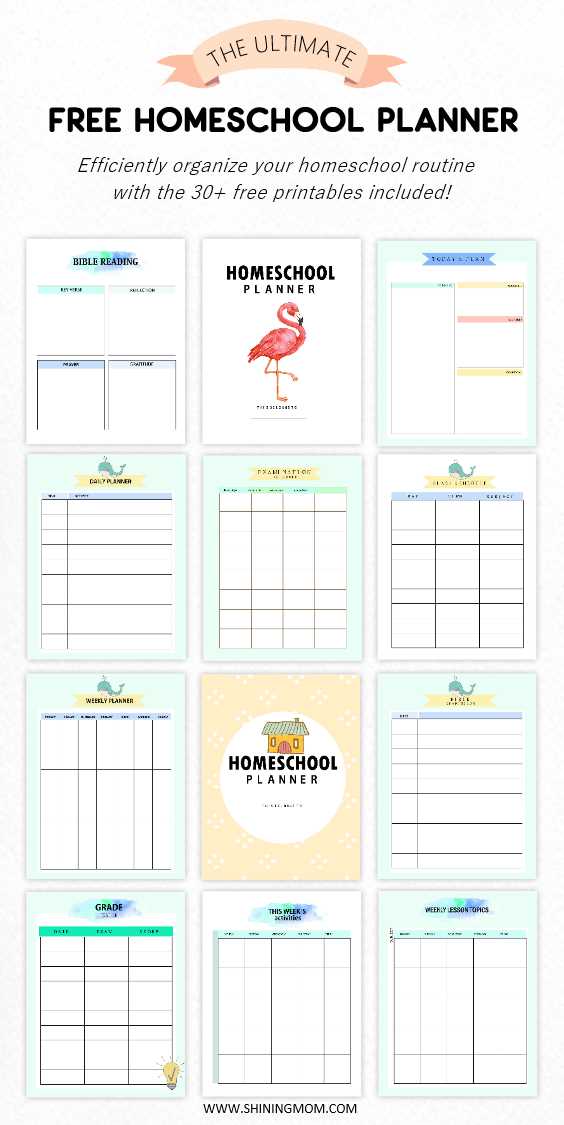
- Math and language arts in the morning for higher concentration
- Science and history before midday break
- Electives such as art or coding in the afternoon
- Physical activity scheduled at consistent times
High school learners benefit from a credit based weekly planner that mirrors traditional academic structures. Divide the page into hourly rows from 8 AM to 4 PM and allocate 60 minute sessions per core subject, leaving study halls for research and assignments.
For multi age households, create separate daily timetables on one sheet using columns for each child. Align shared subjects such as literature or physical education in overlapping blocks to reduce instructional repetition.
Leave at least one flexible slot per day labeled “Independent Study” or “Project Work” to accommodate extended tasks, assessments, or adjustments without disrupting the entire weekly layout.
Printing and Using a Homeschool Schedule Template for Daily Organization
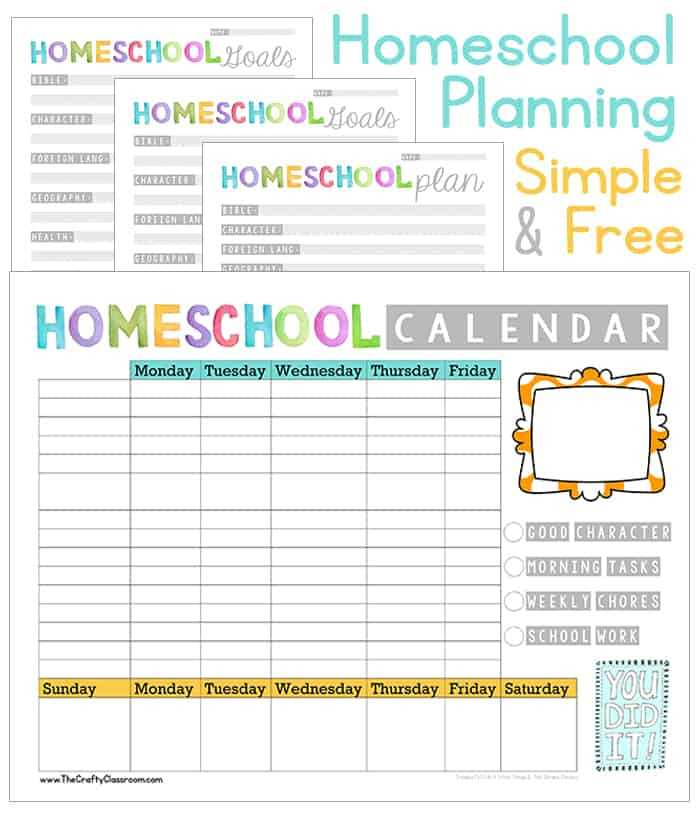
Print the planning layout at 100 percent scale on A4 or US Letter paper to preserve column width and hourly alignment. Choose 120–160 gsm stock for durability if the sheet will be handled daily. Disable automatic page scaling and check that margins are at least 0.25 inches to prevent clipped time blocks.
Laminate one master copy and use dry erase markers for recurring weekly routines such as math, reading, and science. This reduces paper use and allows quick adjustments without redesigning the entire layout. Keep a small microfiber cloth nearby for fast corrections.
Place the daily timetable at eye level near the primary study area. Use color coding for subject categories–blue for core academics, green for creative work, red for assessments–to make transitions visible at a glance. Limit the palette to three or four tones to maintain clarity.
Review the plan each morning and mark completed tasks with a simple check symbol rather than crossing out large sections. This keeps the sheet readable for end of week reflection and progress tracking.
Store blank copies in a labeled binder divided by month. Update time blocks every four to six weeks based on workload changes, seasonal activities, or new subjects, while keeping the overall structure consistent for stability.