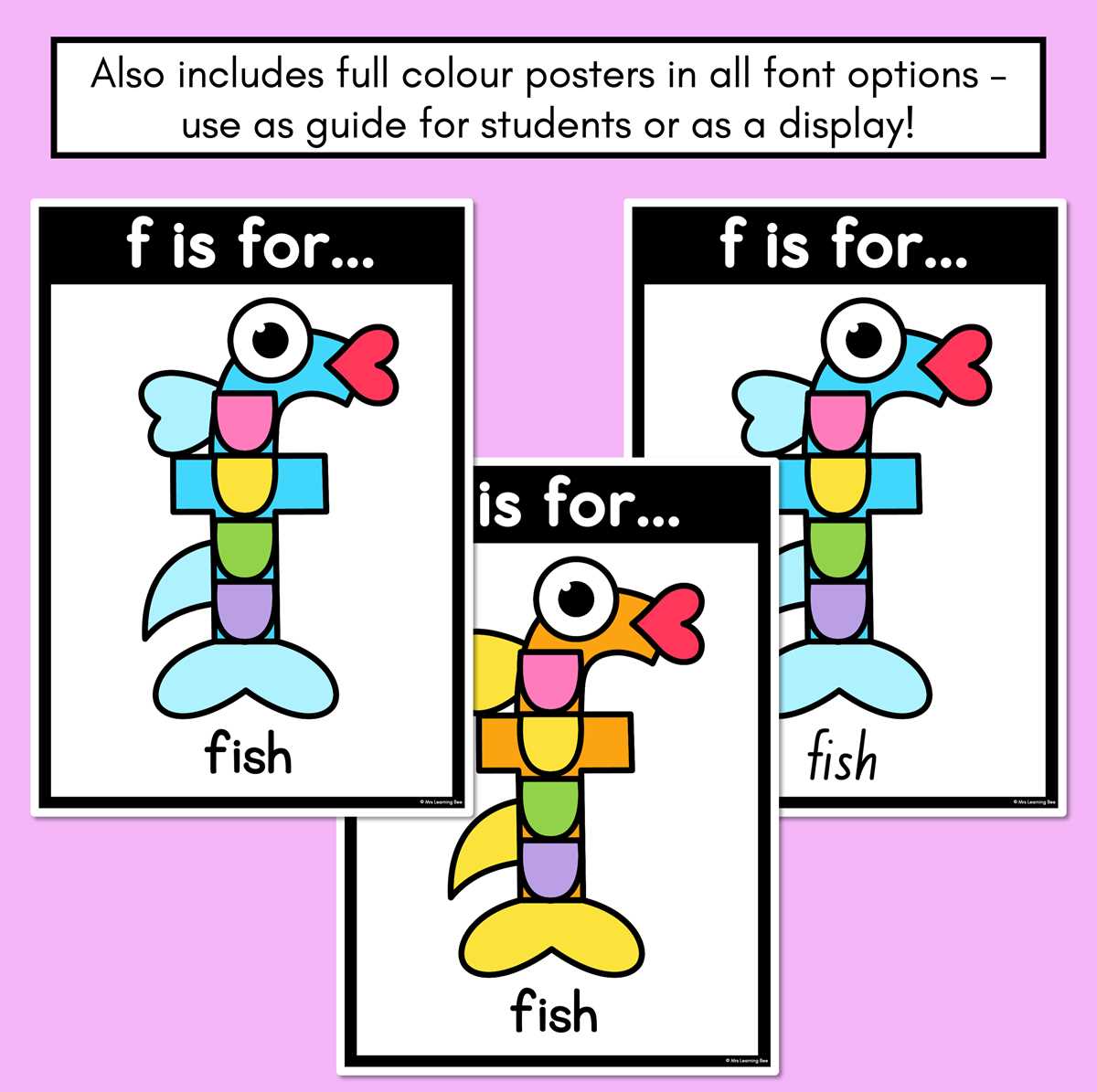
Print the template on thick paper, around 120 gsm, so children can glue pieces without the surface wrinkling or tearing.
Material Preparation and Setup
Provide safety scissors, glue sticks, and pre-cut shapes for younger learners who are still building fine motor control. Older children can cut the pieces themselves for extra practice.
- Base sheet with the large uppercase and lowercase form
- Picture elements such as fish, feather, or flower
- Tracing line for handwriting repetition
- Coloring areas to maintain attention during the lesson
Use black outlines only. This keeps ink use low and allows students to personalize the page with crayons or markers.
Cut and Paste Assembly
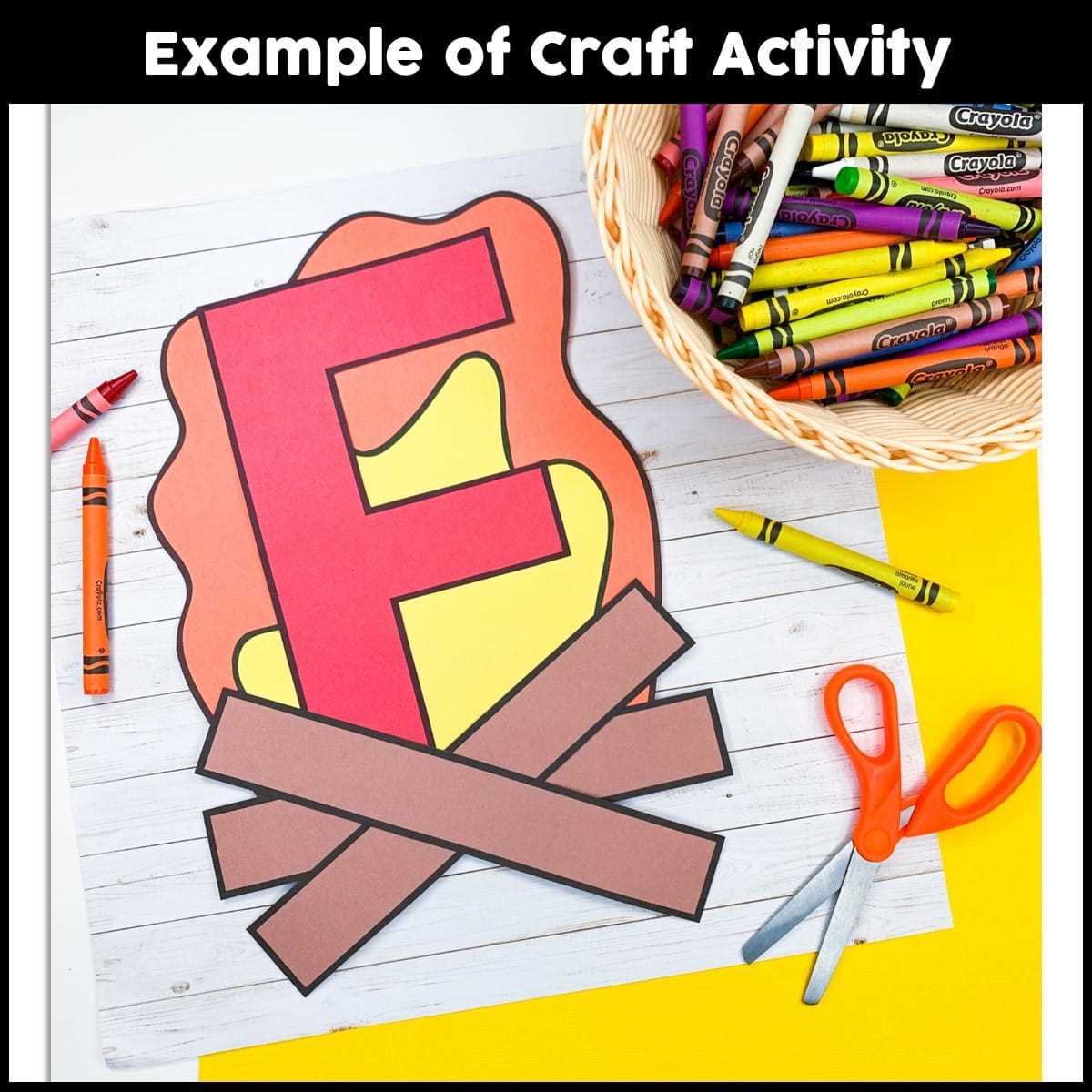
Ask children to glue images directly onto the character shape rather than around it. This builds visual association between the symbol and its sound.
Limit the number of pieces to five or six. Too many parts slow the activity and reduce focus.
Phonics Reinforcement Through Hands On Practice
Repeat the /f/ sound aloud while learners attach each image. Connect sound, motion, and sight at the same moment to strengthen recognition.
- Say the sound together three times.
- Name each object before gluing it down.
- Trace the character with a finger, then with a pencil.
- Read a short list of matching words aloud.
Classroom Management Tips
Distribute materials in small trays for groups of four students. Shared supplies reduce cleanup time and prevent lost pieces.
Allow 15–20 minutes for completion, followed by a quick review where children hold up their finished work and repeat the sound again.
Displaying Finished Work
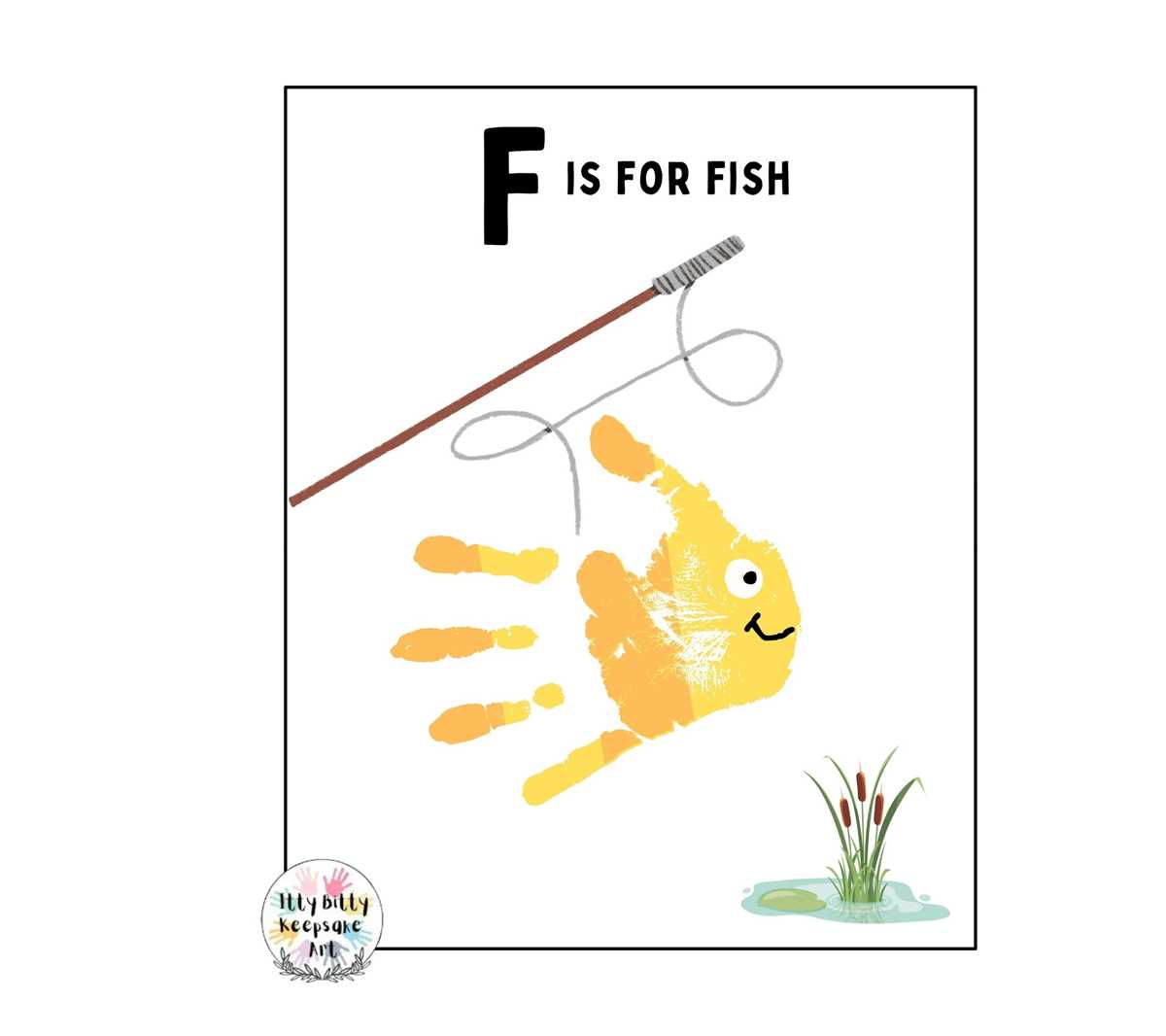
Mount completed pages on a bulletin board at child eye level. Daily exposure helps learners recall the shape and sound during future reading tasks.
Letter F Craft Template Ideas for Preschool and Kindergarten Activities
Use a bold outline of the target character on A4 paper and prepare separate picture pieces such as fish, fox, and feather so children can attach them directly onto the shape while repeating the sound aloud.
Offer pre-cut sets for ages three to four and cutting practice versions for ages five to six, adjusting difficulty by changing the size of the pieces and adding simple curved edges.
Include a tracing strip at the bottom with arrows that show stroke direction; have learners trace twice with a finger and once with a pencil to connect movement with recognition.
Finish the activity by asking each child to name their images and say three matching words, then display the pages on a wall chart for weekly review and visual reinforcement.