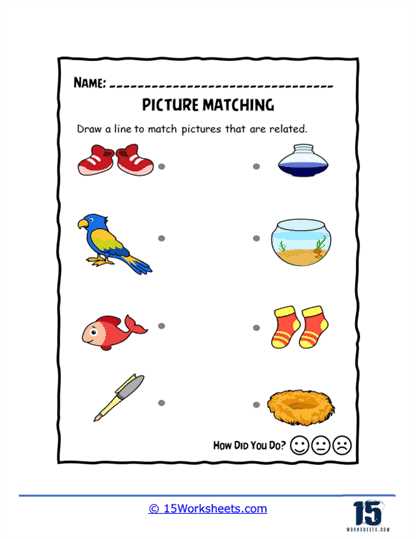
Start by selecting simple concepts like colors, shapes, or animals, and create a list of items that correspond to each concept. For instance, you could list animal names on one side and pictures of those animals on the other. This helps reinforce associations between words and images.
Printing and Preparing the Matching Activities
Once you have your list, format it clearly with one set of items on the left side of the page and the corresponding items on the right. Ensure the items are spaced out well, so children can easily draw lines or connect them without confusion.
Print the sheets using high-quality paper for durability, especially if you’ll be using them multiple times. If you want to make the activity reusable, laminate the sheets and use a dry-erase marker for easy modifications.
Making the Exercises Interactive
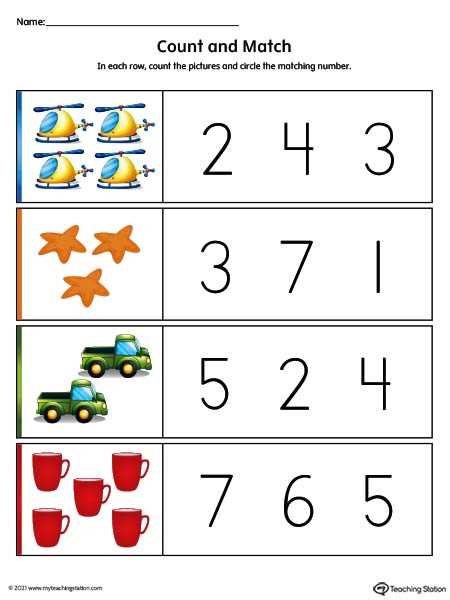
Incorporate a variety of designs and colors to make the activity more visually stimulating. Children will be more engaged when the content is playful and appealing. You can also vary the difficulty by mixing more complex pairings as children advance.
How to Use These Activities for Learning
Present the sheets in a way that encourages independent problem-solving. For example, give children the task of matching items without direct assistance, then review the results together. This method reinforces their ability to think critically and make connections.
To increase the challenge, you can time the activity to see how quickly the child can match the pairs. You can also ask questions about the items being matched to deepen the learning process–for example, “What sound does this animal make?” or “Which shape is bigger?”
Fun Variations and Games
- Timed Challenges: See how fast a child can connect all the pairs correctly.
- Memory Game: Turn the exercise into a memory match game by hiding the images or words, and have the child match them from memory.
- Group Activities: Pair children up and have them compete to match items faster while discussing the reasoning behind their choices.
These games add variety and fun to learning, making the process more enjoyable and dynamic for young learners.
Creating Engaging Learning Exercises with Visual Connections
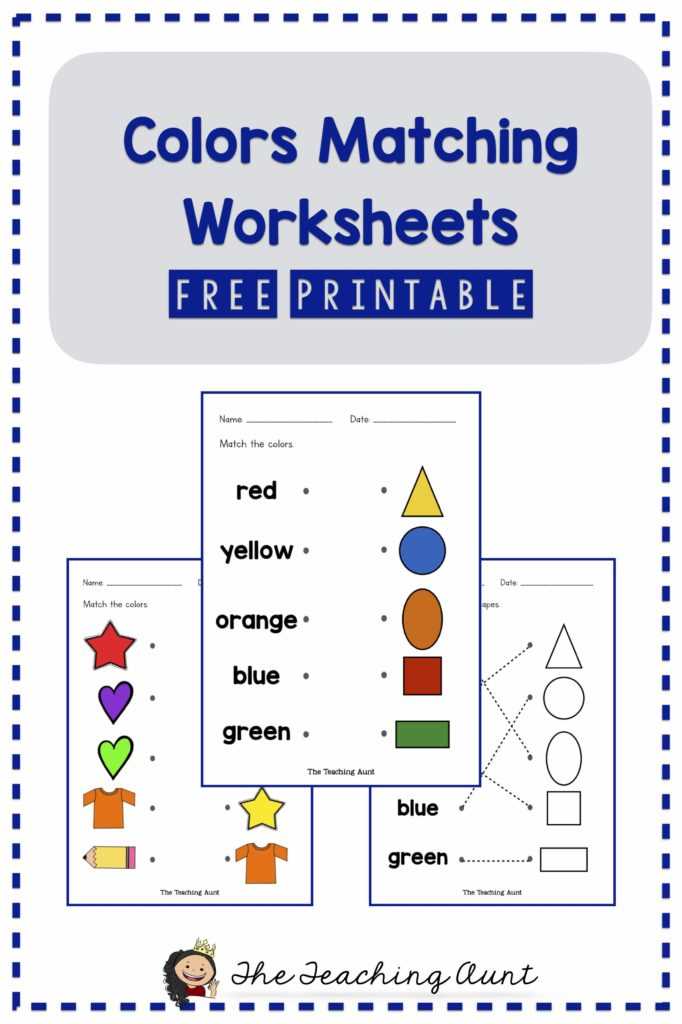
Choose a specific set of items like animals and their sounds or shapes and their names. Arrange them into two columns: one with pictures and one with words. This clear format allows children to easily match each item with its corresponding pair. Be sure to use large, legible fonts and high-quality images to ensure clarity and engagement.
Print out these materials on durable paper, ideally laminated, so that they can be reused. This method not only saves paper but also allows for easy erasing when using dry-erase markers. Lamination extends the life of the activity, making it practical for repeated use with multiple children.
If you’re introducing a new concept, such as colors or animals, include a brief description or fun fact alongside each item. This adds an educational layer to the task, helping children associate the term with an image while expanding their knowledge.
For older children or advanced learners, introduce a more challenging format. Instead of straightforward pairings, include decoys or mix up the sequence. This encourages critical thinking and helps improve memory retention by making the task less predictable.
To make the activity more dynamic, incorporate movement. For example, after matching the items on paper, children can act out what the item represents–like making animal noises or drawing shapes in the air. This approach integrates kinesthetic learning, making the exercise more interactive and fun.