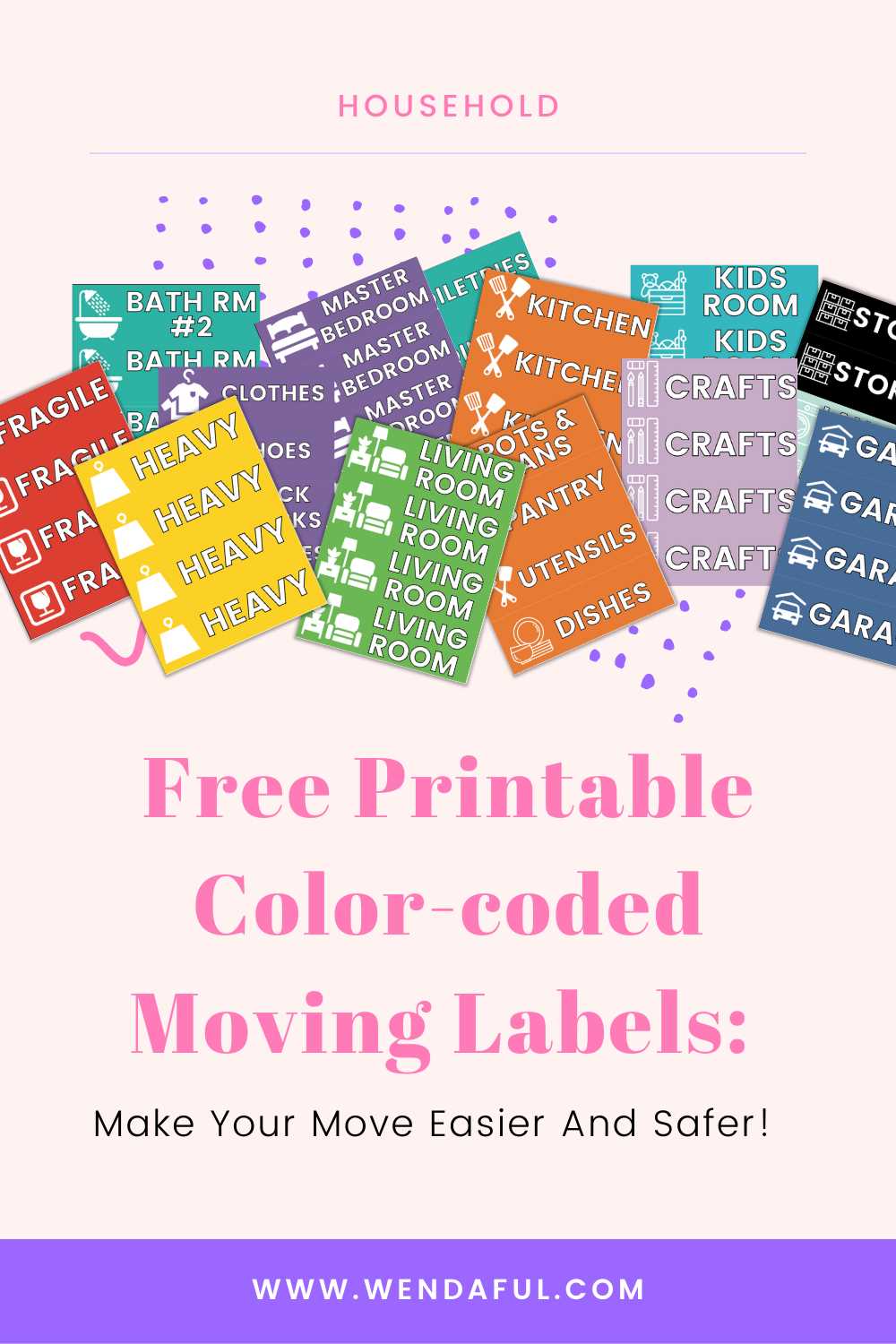
Create clear box markers before packing the first item. Assign a color and room name to each container so every package is identified at a glance. This simple step cuts unloading time and prevents mix-ups between similar cartons, especially in large homes.
Use large, bold text that can be read from at least 6–10 feet away. For most households, a 2×4 inch sticker or half-page paper tag works well. Include three data points: destination room, priority level (for example, “open first”), and special handling notes such as fragile or this side up. Consistent formatting makes sorting faster for anyone helping with the relocation.
Home printers and standard adhesive sheets are usually enough for this task. Matte paper reduces glare under indoor lighting, while bright color coding–one shade per room–helps crews place boxes correctly without asking questions. Preparing these identifiers in advance keeps packing structured and reduces the chance of lost items.
Printable Moving Labels to Organize Boxes and Speed Up Your Move
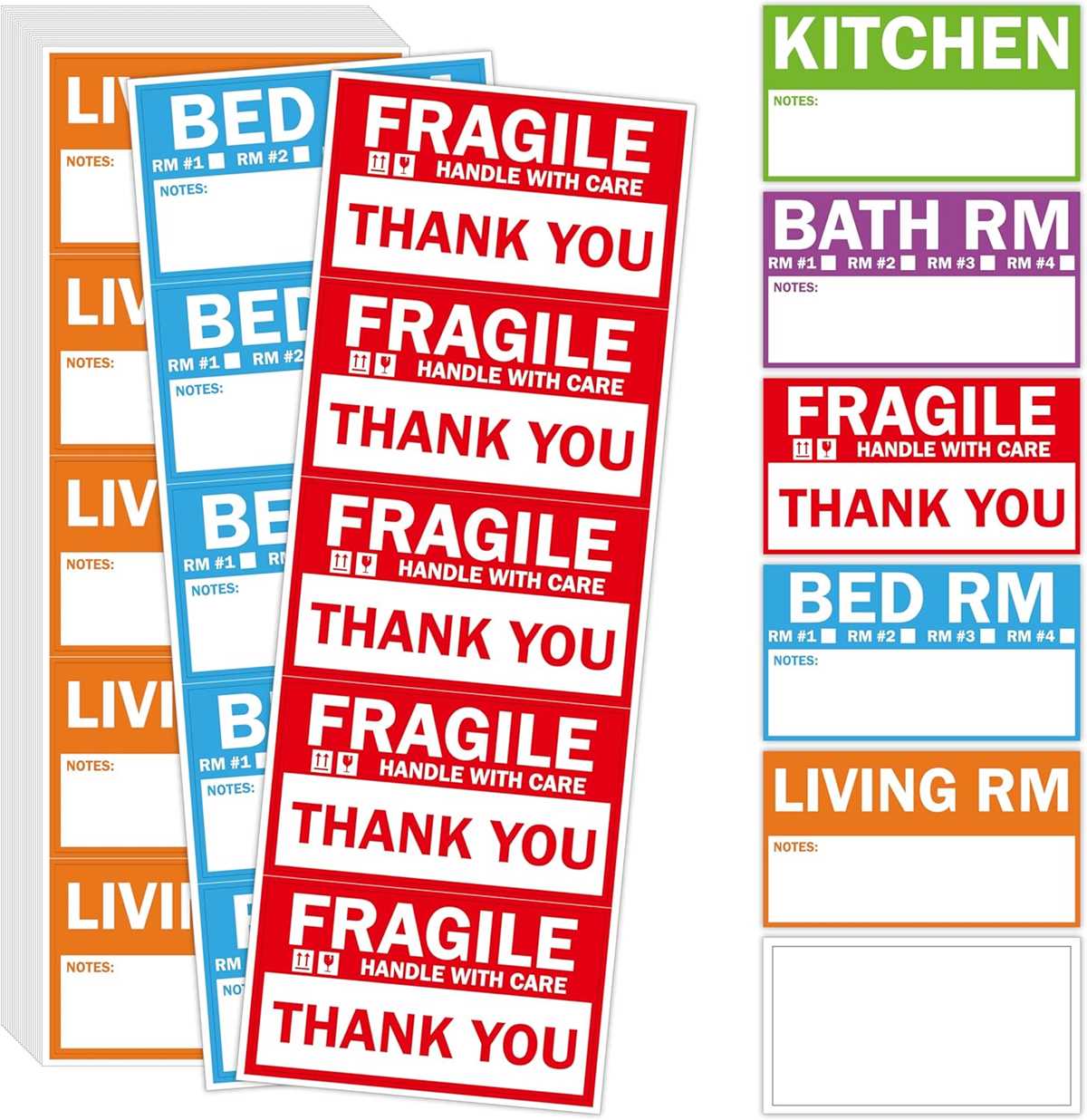
Assign a color-coded sticker to every box before sealing it. Use one color per room and place the tag on at least two adjacent sides so it remains visible in stacks. For best readability, choose bold fonts at 24–36 pt size and include short room names such as Kitchen, Bath, or Garage. Adding a small checkbox for priority items helps separate cartons that must be opened first.
Standard adhesive sheets (8.5×11 inch) typically fit 6–10 tags per page, which covers most apartments with 15–25 printed pages. Place each marker on the top corner of the box rather than the center; this keeps it visible when cartons are piled in trucks. Crews can then sort items by color within seconds, cutting unload time and reducing misplaced household goods.
How to Choose the Right Moving Label Template for Different Rooms
Select a layout based on the room’s packing complexity. Kitchens and storage areas usually need larger tags with extra note space, while bedrooms work well with compact designs that show only the destination and priority. Match the format to the number of boxes expected from each area to avoid overcrowded or oversized markings.
Use different visual structures depending on what the room contains. For high-fragility zones, pick formats that include warning fields and orientation arrows. For low-risk spaces, a simple color strip and room name is enough. Practical combinations include:
- Kitchen: large tag with fragile icon and contents line
- Bathroom: medium tag with moisture-safe ink
- Bedroom: compact tag with bold room name
- Garage or storage: wide tag with checkbox for heavy items
Keep font size above 24 pt and leave at least 0.25 inch margins so home printers do not crop the edges. If several people help with packing, choose designs with identical placement of room names and color bars; consistent positioning allows quick scanning and prevents cartons from being sent to the wrong space.