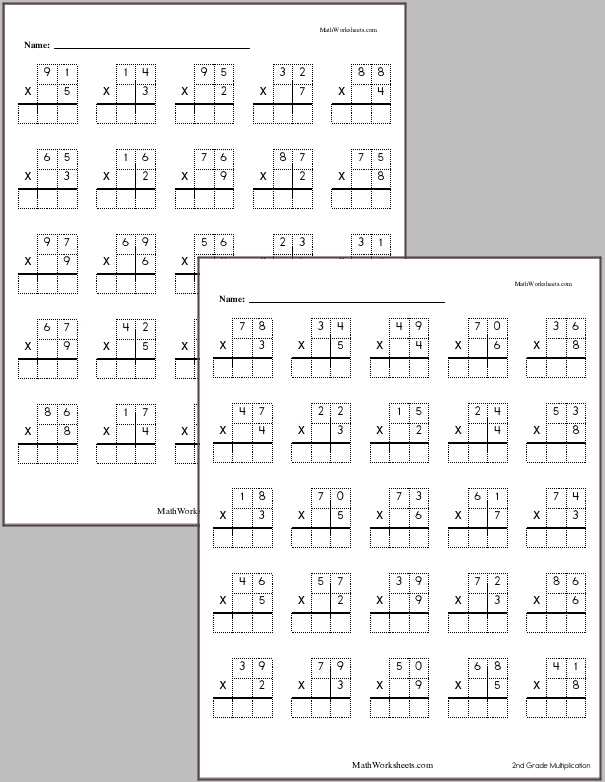
Download a math practice sheet with basic times table problems and use it for 10–15 minute daily drills. Focus on one set of facts at a time, such as 2s, 5s, or 10s, before moving to mixed exercises. Provide 20–30 problems per page to maintain attention without causing fatigue.
Use timed fact drills to build recall speed. Set a 3-minute timer and ask students to solve as many equations as possible, then review mistakes immediately. Track scores over five consecutive days to measure improvement in accuracy and response time. Keep answer keys separate and encourage self-checking with a colored pen to identify patterns in errors.
Add mixed review pages once single tables are mastered. Combine multiplication facts up to 12×12 and include 4–6 short word problems that require applying the correct operation. Store completed sheets in a binder to compare progress after two weeks of consistent arithmetic practice.
Multiplication Worksheet Free Printable
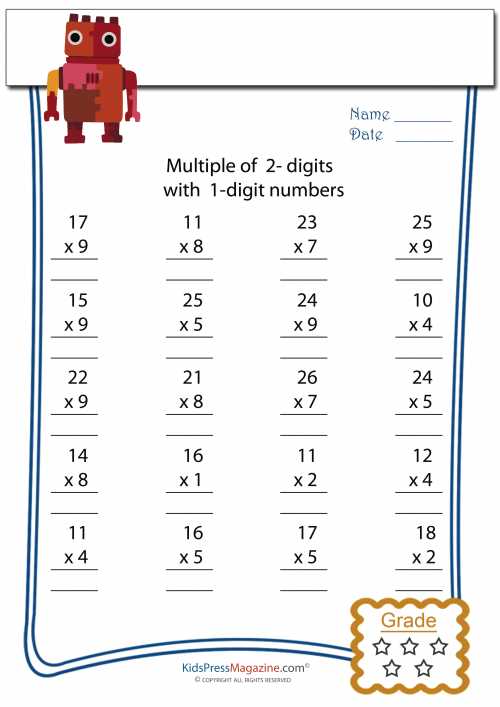
Choose a math fact practice page that targets one times table at a time and assign 25–40 problems per session. Use single-table drills for beginners and mixed sets up to 12×12 for advanced students. Print clean copies on standard paper, keep margins wide for easy marking, and provide a separate answer key for quick checking after completion.
Structure daily arithmetic drills with clear steps:
- Set a 3–5 minute timer for rapid recall practice.
- Count correct answers and record results in a progress chart.
- Review incorrect equations and rewrite each one three times.
- Add 3 short story problems that require applying times table facts.
- Repeat the same set for five consecutive days to build accuracy.
How to Choose Grade Appropriate Multiplication Fact Practice Sheets
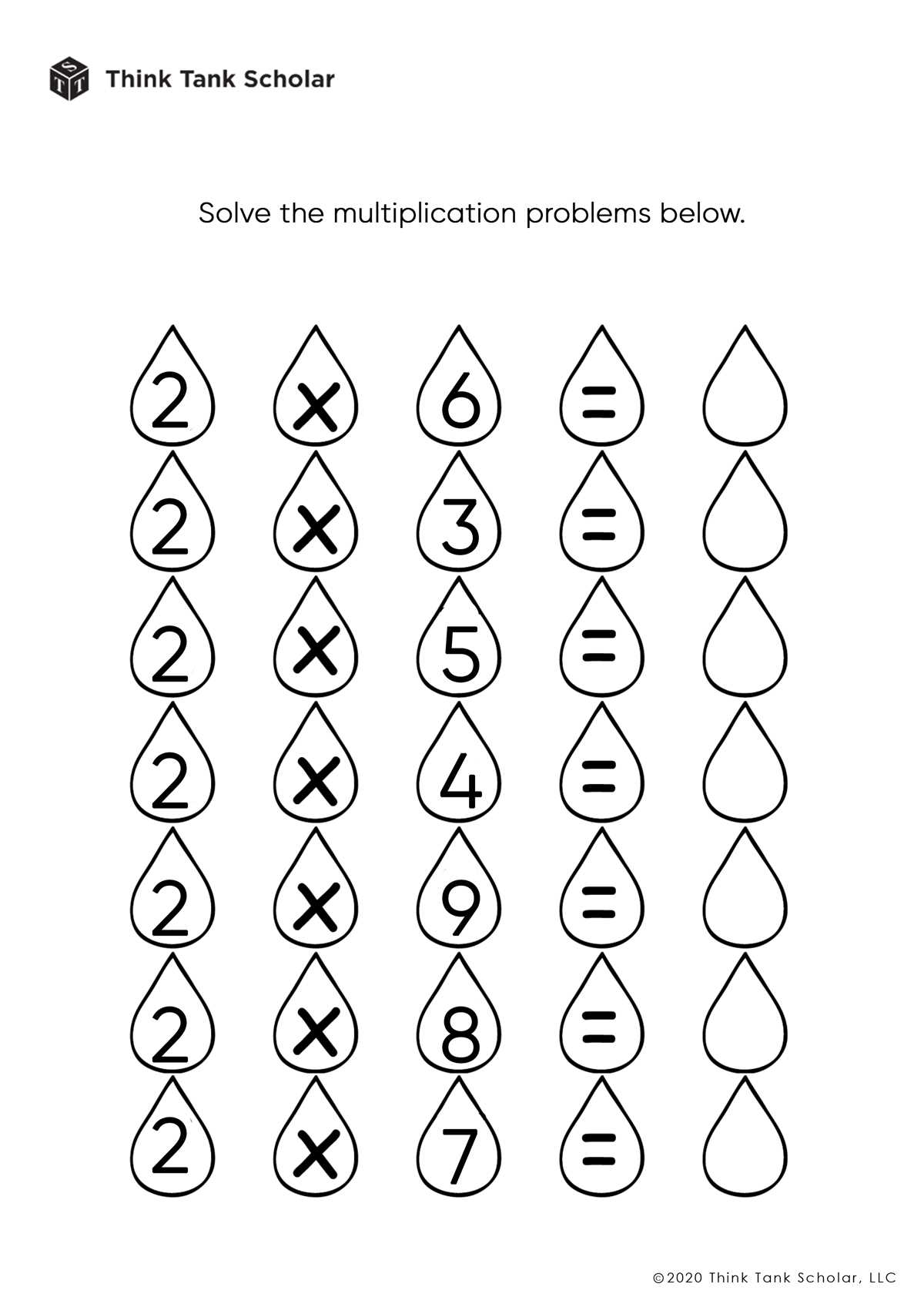
Select practice pages based on the student’s current mastery level rather than age alone. For grade 2, focus on 2s, 5s, and 10s with no more than 20 problems per page. For grade 3, include tables up to 10 with 30–40 equations. For grade 4 and above, use mixed sets through 12×12 and add short applied problems.
Check accuracy rates before increasing difficulty. If a student scores below 80% on a single-table drill, continue practicing that set for at least three more sessions. Move to mixed review only after consistent scores above 90% across five consecutive attempts.
Match layout complexity to attention span. Younger learners benefit from large spacing, clear rows, and bold numbers. Older students can handle denser grids with smaller font and tighter alignment, which allows more equations per page without distraction.
Control the number of operations shown at once. Early learners should see one table per sheet, while advanced students can work with randomized factors across all tables to strengthen recall flexibility.
Include timed drills only after students understand the concept. Begin with untimed practice to build confidence, then introduce 3-minute sessions to improve recall speed. Record both completion rate and number correct to track growth objectively.
Add applied word problems for upper elementary grades. Provide 3–5 short scenarios that require selecting the correct operation and writing a full equation. This verifies understanding beyond memorization.
Review completed pages weekly and adjust difficulty based on error patterns. If mistakes cluster around specific factors such as 7s or 8s, assign targeted fact sheets for those numbers before returning to mixed review.