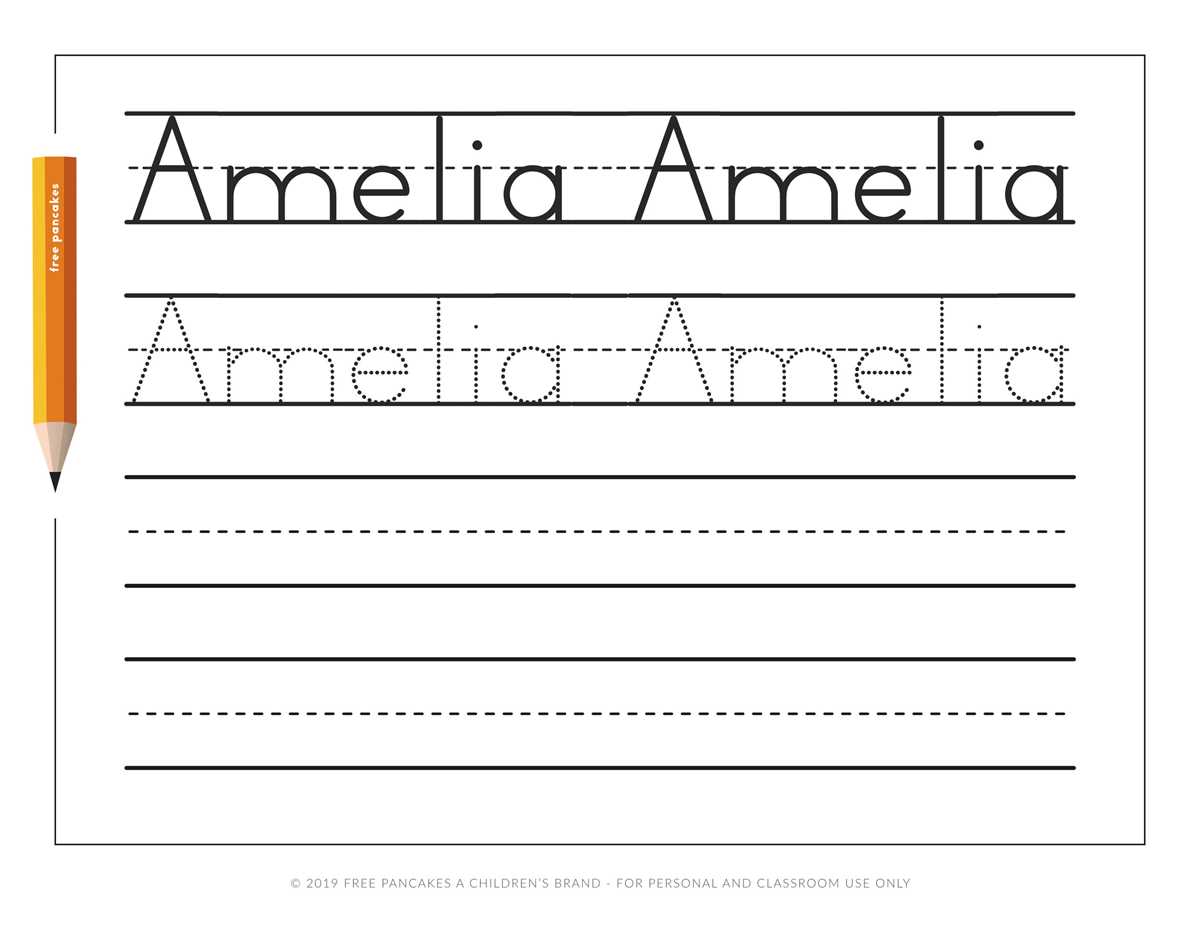
To support early learners in mastering their handwriting, start with simple exercises that allow them to practice forming letters. These activities can be highly effective in improving fine motor skills and building confidence. Begin with activities that focus on writing familiar words, like their own names, as this will make the task feel more relevant and personal for them.
One approach is to use worksheets that feature lines for practicing letter formation. These worksheets often include a guide to help children trace the letters, gradually encouraging them to write without assistance. It’s a step-by-step method that builds muscle memory and strengthens handwriting skills. Regular practice with these materials can lead to noticeable improvement over time.
How to Use Writing Exercises for Kids
To begin, choose worksheets that provide clear and easy-to-follow guidelines for children. These sheets often contain dotted letters that children can follow with a pencil. This gives them the opportunity to practice writing each letter in sequence, which helps build confidence in their writing skills.
Start with basic patterns that gradually evolve into more complex shapes. When kids first begin, simple lines and curves are a good starting point. These patterns help them develop control over their hand movements, which is crucial for proper writing technique.
Ensure that the sheets include enough space for each letter. Too little space can cause frustration, while too much space might make it harder for kids to focus on precision. Striking a balance with appropriate spacing will allow for both comfort and challenge.
Encourage kids to trace each letter multiple times. This repetition helps solidify their muscle memory and reinforces correct letter formation. Set a timer for each session to keep kids engaged and avoid fatigue from over-practicing.
Provide verbal or visual cues as needed. If a child struggles with a particular letter, give them guidance on how to position their hand or which direction to move the pencil. Encouraging comments like “Great job” or “Try this again” keep them motivated and help them track their progress.
Incorporate fun activities to make practice more enjoyable. For instance, after practicing letters, ask the child to color in the background of the worksheet or add stickers. This not only makes the task more exciting but also gives them a break from the constant focus on writing.
As the child gains proficiency, slowly reduce the amount of assistance. Transition from tracing to writing without guidance. Gradually, children will move from using dotted lines to writing letters independently, further boosting their confidence and skills.
Finally, track progress by keeping a record of completed worksheets. This allows both you and the child to see improvement over time. Celebrate small milestones like writing the full name correctly or staying within the lines to motivate continued practice.