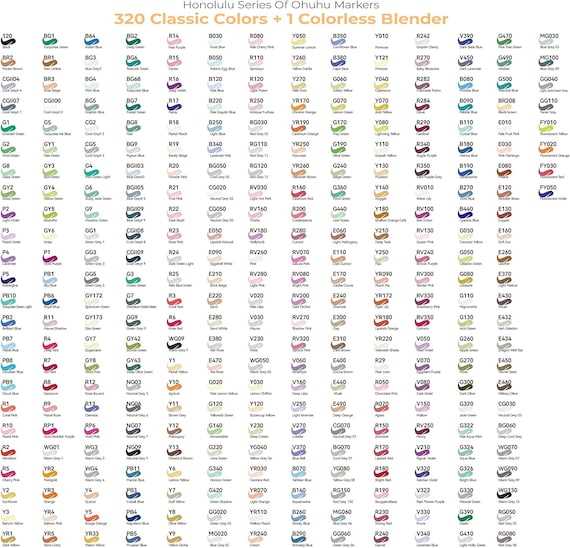
Print the swatch grid at 300 DPI on smooth 200–250 gsm marker paper to see accurate tones and prevent ink bleeding between cells.
Preparing the Swatch Grid for Accurate Color Testing
Download a high-resolution PDF layout sized for A4 or US Letter and disable “Fit to Page” in printer settings. Keep scaling at 100% so each honeycomb cell remains uniform. Use paper designed for alcohol markers; standard copy paper at 80 gsm will feather and distort color edges.
- Resolution: 300 DPI minimum
- Paper weight: 200–250 gsm
- Printer mode: High quality, no toner save
- Margins: 5–10 mm to prevent clipping
Test one corner before filling the entire sheet. Let ink dry for at least 15 seconds per cell to avoid smudging when moving your hand across the page.
Organizing Marker Codes by Color Family
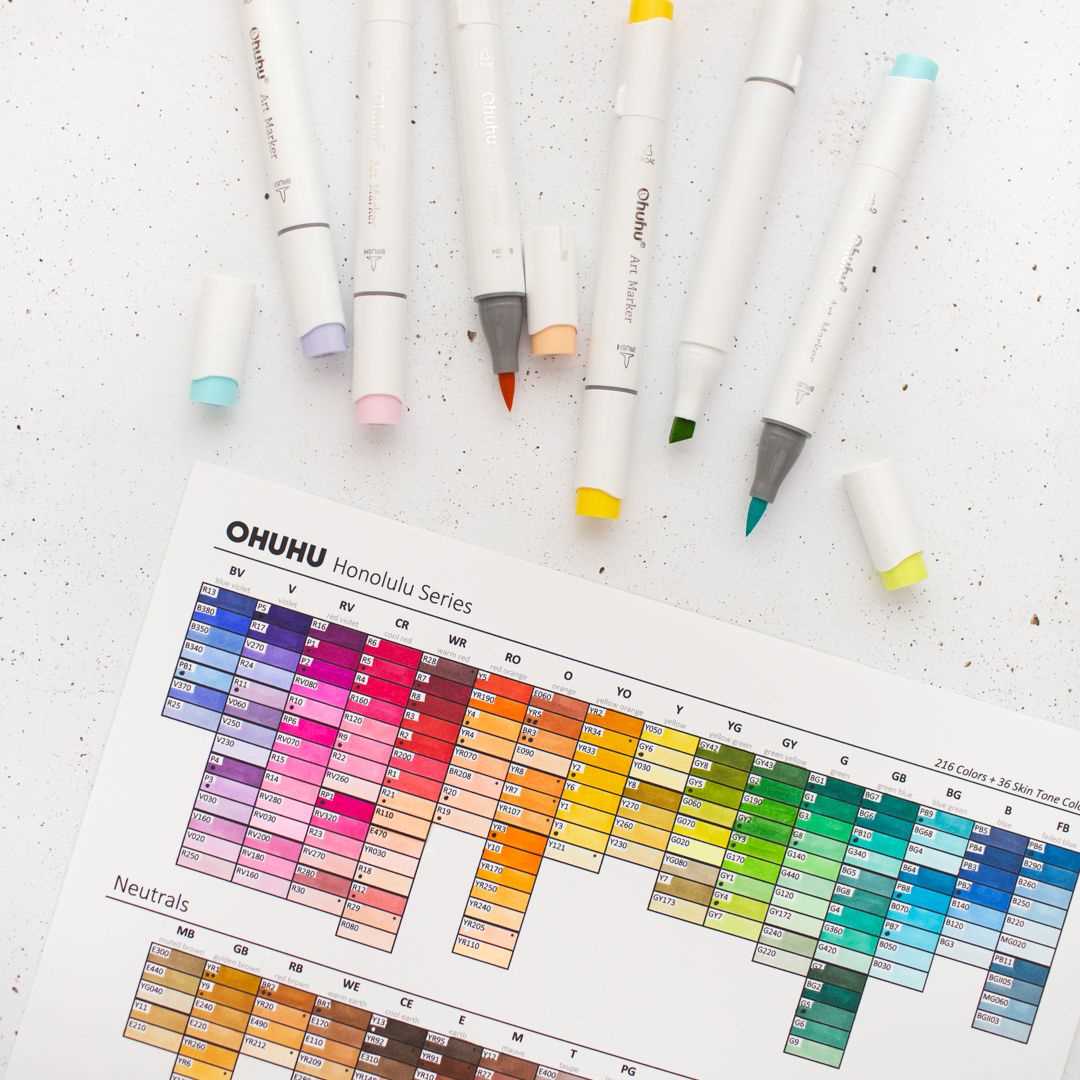
Arrange markers by code prefix, grouping similar hues together to see transitions clearly. Fill each polygon with a single, even layer using broad strokes in one direction. Add the marker number beneath each cell with a fine liner to keep the grid readable.
Layering and Blending Notes
Apply a second coat only after the first layer dries fully. Compare single-layer and double-layer fills on separate grids to understand saturation changes. This method helps identify which shades pair well for gradients.
Storage and Updates
- Store completed sheets in a clear binder with plastic sleeves
- Label each page by set size such as 48, 120, or 216 colors
- Update the grid whenever new markers are added
Keep a digital backup of the blank grid file in cloud storage and maintain a version with filled samples for reference during illustration work.
Ohuhu Hex Chart Printable
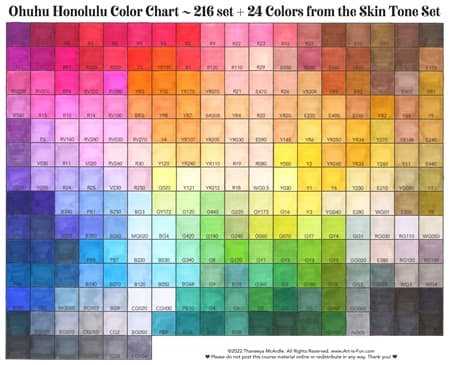
Print the swatch template at 300 DPI on 220–250 gsm bleedproof paper to prevent alcohol ink from spreading beyond each cell.
Use a PDF file with fixed proportions and set scaling to 100% in the printer dialog. Disable border adjustments and select the highest quality setting to keep grid lines sharp. A standard A4 or US Letter layout fits most binders and storage folders.
Fill each honeycomb cell with one smooth layer using the broad nib. Move in a single direction to avoid streaks. Let the ink dry for at least 10–15 seconds before touching adjacent shapes.
Write the marker code directly below or inside each polygon with a 0.3 mm fineliner. Keep handwriting consistent in size to maintain readability when scanning the page quickly.
Group shades by number prefix or color family such as R, Y, G, B, and neutral tones. Arrange similar hues side by side to visualize transitions and identify blending pairs without testing on separate scrap sheets.
Create a second copy of the grid for double-layer samples. Apply two coats in selected cells to compare saturation changes and observe how darker values shift undertones.
Store completed sheets in a ring binder with transparent sleeves. Label each page according to set size, for example 48, 120, or 216 colors, and keep unused layouts in a dedicated folder for future additions.
Maintain a digital backup of the blank template in cloud storage and update a filled version whenever new markers are purchased, ensuring your color reference system remains accurate and current.