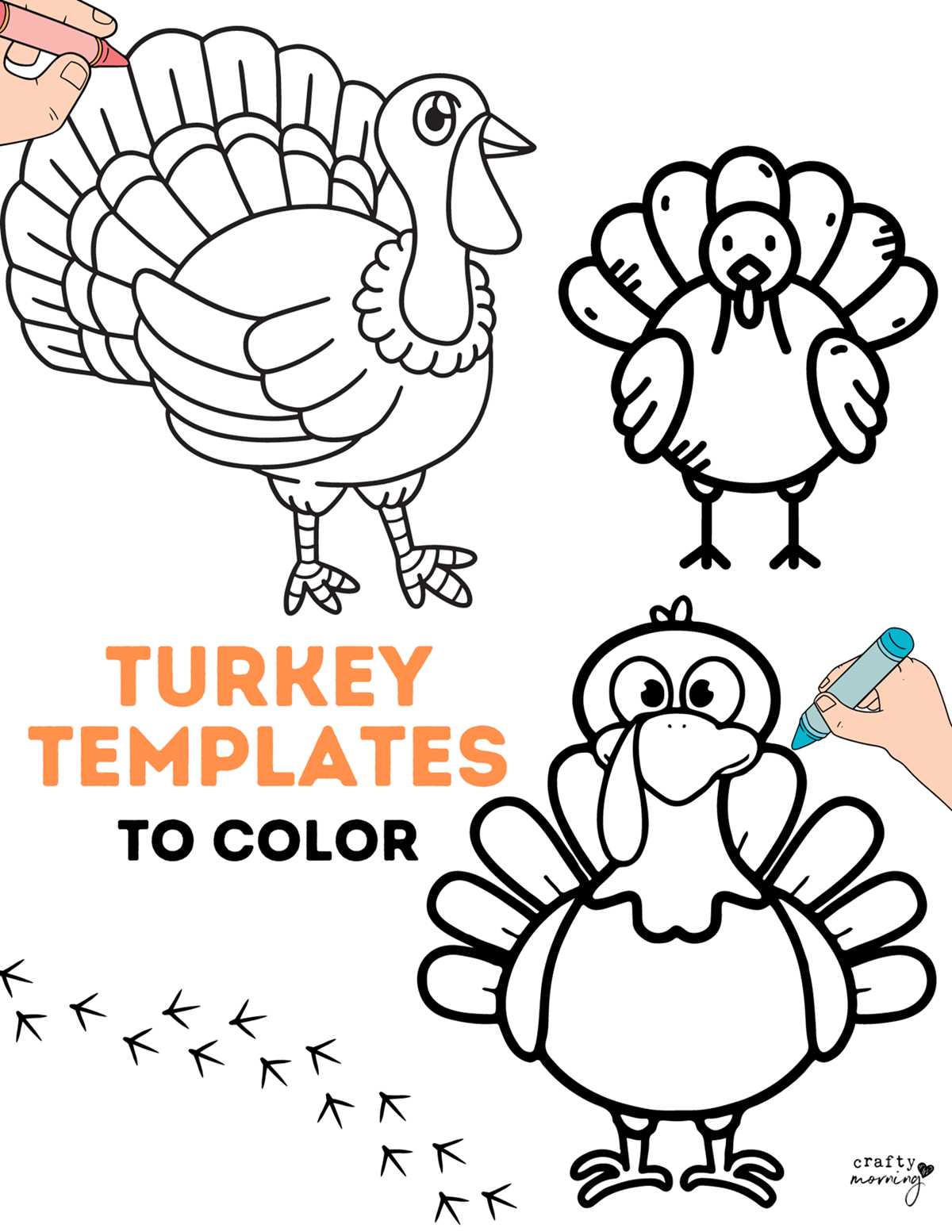
Choose a bold bird silhouette with thick contours and ample white space to keep cutting, tracing, and coloring smooth for kids and adults alike. A single-page sheet sized to US Letter or A4 reduces scaling errors and fits home printers without margin loss.
For classroom projects, select a plain fowl profile with no interior details. This supports quick duplication, consistent results across groups, and easy adaptation for crayons, markers, or paint. Educators often prefer outlines at 3–4 mm stroke width so shapes remain visible after copying.
Home decorators benefit from a download-ready craft sheet that accepts multiple uses: stencil tracing, window décor, placemat accents, and bulletin boards. Choose a neutral pose facing left or right to allow mirrored copies; this doubles layout options without extra files.
When accuracy matters, verify proportions before pressing print: a body length near 70% of page height leaves room for labels or patterns below. Save as PDF to preserve scale, and keep grayscale output to prevent ink saturation during repeated runs.
Bird Silhouette Template for Crafts and Learning
Download a high-resolution bird silhouette sheet in A4 or US Letter format (300 DPI, PDF) and print it on 160–200 gsm cardstock for clean edges and durability. Choose versions with thick outer lines (2–3 pt stroke) for preschool cutting practice and thinner lines (1 pt) for detailed coloring. Black-and-white files reduce ink usage, while grayscale shading helps children identify wings, tail fan, and beak without extra instructions.
For classroom use, prepare three difficulty levels: a simple one-piece body shape, a segmented version with detachable feathers, and a labeled anatomy variant. The segmented model supports fine motor skills by requiring precise scissor control along curved lines. Add dashed interior guides to indicate feather layering; spacing of 8–10 mm between guides prevents visual clutter and keeps the sheet readable for early learners.
Craft applications: transform the cutout into greeting cards, wall décor, or table place cards. Fold the body vertically to create a standing figure; attach paper strips (1.5 × 12 cm) as layered tail plumes using glue dots for quick assembly. For textured results, apply tissue paper squares (2 × 2 cm) with diluted PVA (1:1 water ratio). Metallic markers on the beak and feet add contrast without bleeding through 180 gsm paper.
Educational integration: pair the silhouette page with a short worksheet that asks students to label five body parts and count feather sections. In early math lessons, use the tail fan to practice symmetry by coloring mirrored segments in matching tones. For literacy tasks, have learners write a 50-word description of the bird’s habitat beneath the figure; leave a 5 cm blank margin at the bottom of the page for this purpose.
For home projects, laminate finished pieces (80–100 micron pouches) to create reusable tracing mats. Dry-erase markers allow repeated outlining practice without paper waste. Store digital files in both PDF and SVG formats; SVG enables resizing up to A3 without pixelation, useful for bulletin boards or window decorations.
Choosing the Right Contour Style and Line Weight for Printing
Select a clean silhouette with consistent stroke width between 1.2–1.5 pt for standard A4 or Letter sheets; this range prevents breaks on inkjet devices and avoids fill-in on laser units. Favor closed paths with rounded joins to keep the bird’s form readable after scaling to 70–80%.
Match line density to the intended use and paper stock by adjusting contrast and spacing rather than adding detail. Use the checklist below to avoid waste and reprints:
- For crayons or markers: single-pass strokes at 1.4–1.6 pt, no interior hatching.
- For pencils: dual-pass strokes at 0.9–1.1 pt with 3–5 mm gaps between features.
- For thick paper (160–200 gsm): increase stroke by 10% to counter fiber absorption.
- For mass hardcopy runs: avoid hairlines below 0.7 pt; they vanish after trimming.
- Export as vector PDF or SVG to keep edges sharp at any scale.