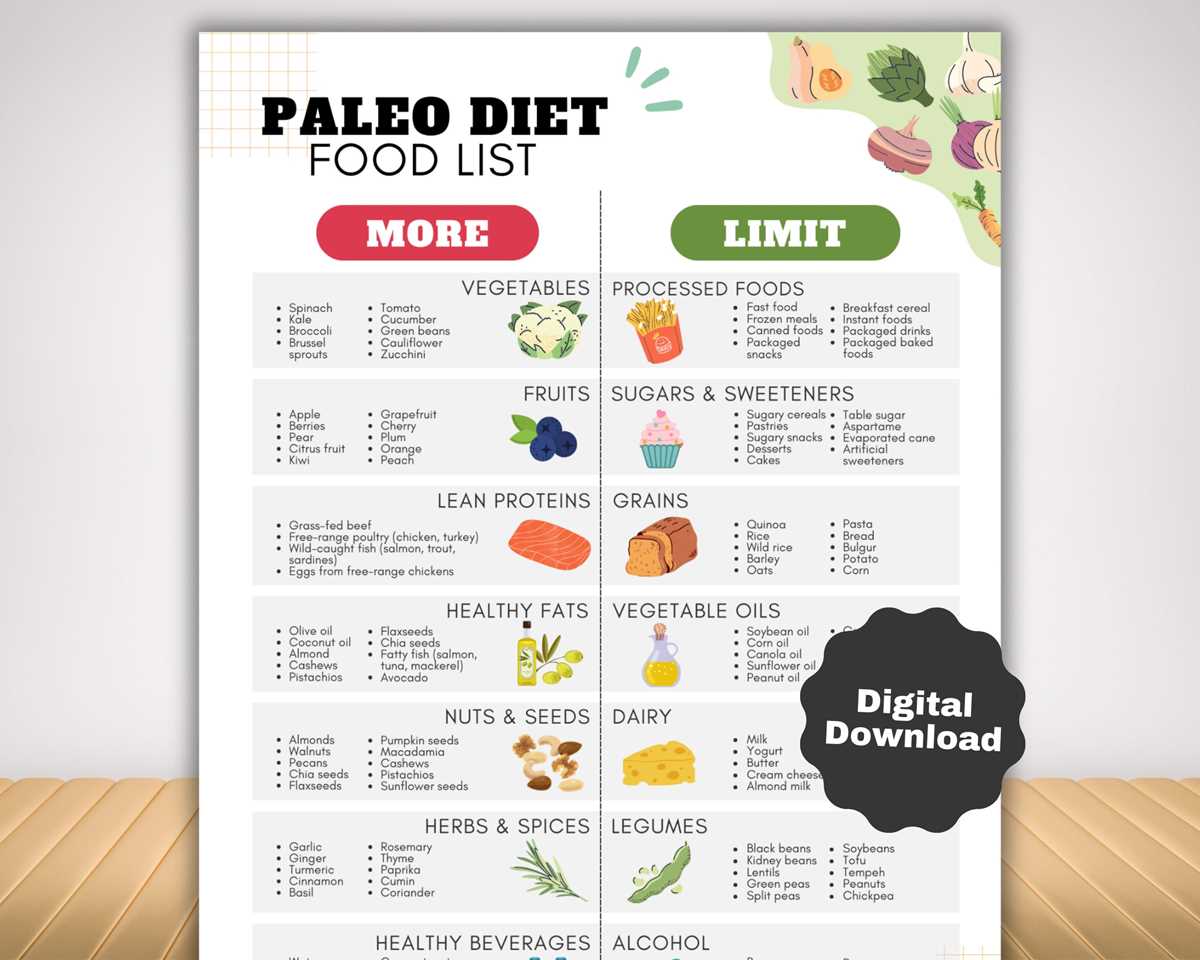
Download a clear one-page diet reference sheet and keep it on your fridge to avoid buying grains, legumes, refined sugar, and processed oils. Base your grocery choices on grass-fed meat, wild-caught fish, eggs, vegetables, fruits, nuts, and natural fats such as olive and coconut oil.
Structure your eating plan around simple ratios: fill half your plate with non-starchy vegetables, allocate 20–30% to animal protein, and add a small portion of fruit or root vegetables depending on activity level. Exclude wheat, rice, corn, soy, dairy, and packaged snacks containing additives or seed oils like canola and sunflower.
Use a categorized reference chart divided into proteins, produce, healthy fats, and excluded items to speed up shopping and meal prep. Review ingredient labels carefully and avoid products with added sugar, maltodextrin, or artificial preservatives to stay aligned with ancestral eating principles.
Paleo Printable Food List
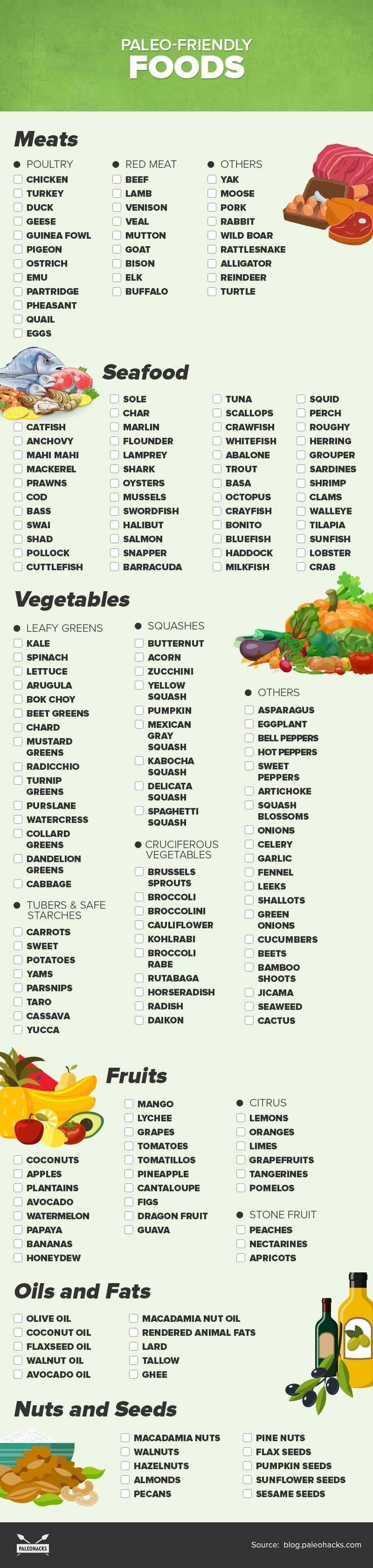
Keep a one-page ancestral diet reference sheet in your kitchen and use it during grocery shopping to avoid grains, legumes, refined sugar, and industrial seed oils. Focus purchases on grass-fed beef, pasture-raised poultry, wild-caught fish, eggs, leafy greens, cruciferous vegetables, berries, sweet potatoes, avocados, olives, nuts, and natural fats such as olive and coconut oil.
Organize your approved items chart by categories such as animal protein, non-starchy vegetables, fruits, roots and tubers, nuts and seeds, and healthy fats, while marking excluded products like wheat, rice, corn, soy, dairy, processed snacks, and products with additives like maltodextrin or high-fructose corn syrup. Review ingredient labels carefully, choose minimally processed options with short ingredient panels, and plan weekly meals around simple combinations of protein, vegetables, and natural fats to maintain dietary consistency.
Complete Breakdown of Allowed and Avoided Foods on the Paleo Diet
Build your meals around animal protein, vegetables, fruits, nuts, and natural fats while excluding grains, legumes, dairy, refined sugar, and industrial oils.
- Allowed: grass-fed beef, lamb, pork, poultry, wild-caught fish, shellfish, eggs.
- Leafy greens, broccoli, cauliflower, zucchini, peppers, carrots, sweet potatoes, squash.
- Berries, apples, citrus, bananas in moderate portions.
- Almonds, walnuts, macadamia nuts, chia seeds, flaxseed.
- Olive oil, coconut oil, avocado oil, olives, avocados.
- Avoid: wheat, oats, rice, corn, barley, soybeans, lentils, peanuts.
- Milk, cheese, yogurt, processed snacks, candy, soda.
- Canola, soybean, sunflower, and corn oil.
Prioritize minimally processed ingredients with short labels and no added sugar, maltodextrin, or artificial preservatives. Keep starchy vegetables and fruit portions aligned with activity level, and replace grain-based sides with roasted roots or extra greens to maintain dietary consistency.