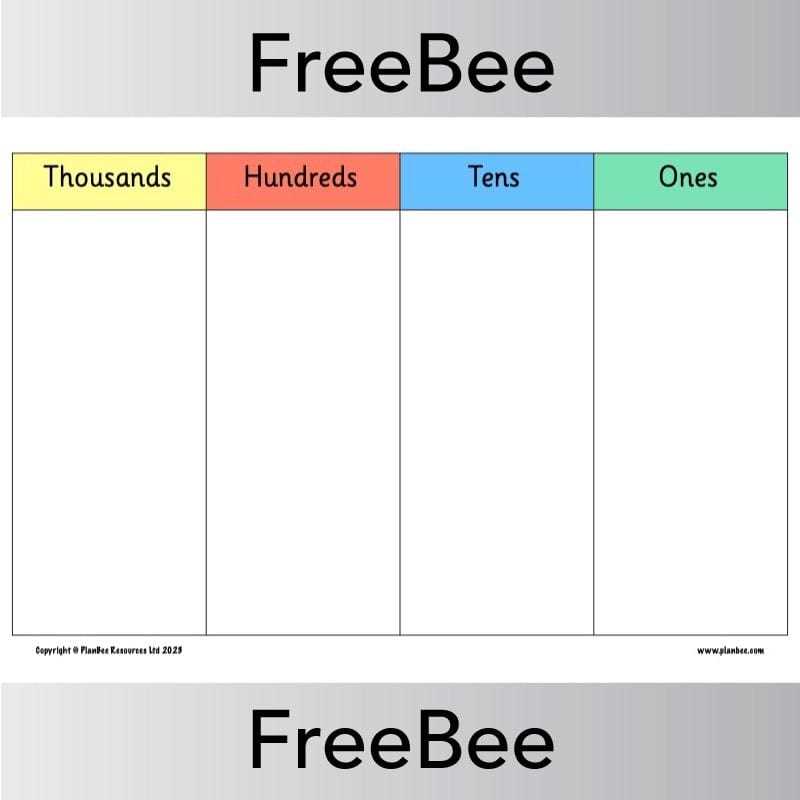
For young learners, a visual tool can greatly enhance the understanding of numerical systems and grouping. A simple grid with designated spaces for ones, tens, and hundreds allows children to physically manipulate numbers and better grasp their structure. By using counters, blocks, or other small objects, students can visually break down numbers into their components, reinforcing the relationship between individual digits and their place in a number.
To get started, find a printable version of this tool that fits your classroom needs. These templates are widely available and easy to set up. Once printed, you can laminate them for durability and reuse them during multiple lessons. The format should include clearly labeled sections, where each column represents a different place value, making it straightforward for children to organize numbers accordingly.

Using this resource regularly in math exercises helps build a solid foundation for more complex arithmetic skills. Teachers can create exercises where children fill in the spaces with numbers or objects, progressing from basic number recognition to addition and subtraction activities. It’s a simple yet effective way to introduce key mathematical concepts to students, making learning both interactive and hands-on.
How to Utilize a Learning Tool for Number Organization
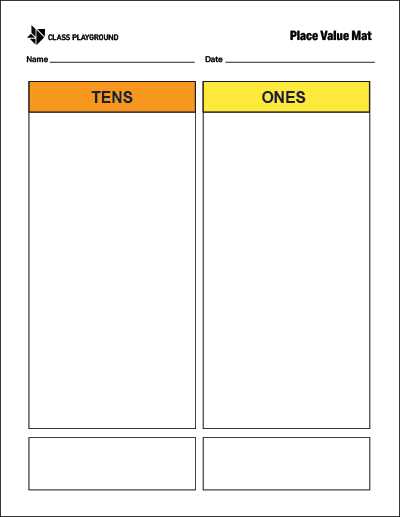
For teaching basic arithmetic and number organization, using a visual aid with designated spaces for different digit placements is very effective. Begin by downloading or creating a simple grid where each section represents a different place, such as ones, tens, hundreds, and so on. This format is ideal for breaking down multi-digit numbers and teaching students how each digit contributes to the total value of the number.
Start by showing how to break a number into its components. For example, the number 537 can be separated into 5 hundreds, 3 tens, and 7 ones. Let students place counters or markers in each section to represent these values. As they do this, they begin to visually understand the numerical structure, which reinforces their grasp of concepts like grouping and counting by tens.
This tool works well for both individual practice and group lessons. For young children, use smaller numbers and gradually increase the complexity as their understanding grows. For example, begin with numbers up to 99 and then move to 3-digit or larger numbers as they become more confident. With each level, encourage students to think about how the numbers align with their place in the grid.
Additionally, integrating colors or different objects in each column can help reinforce the lesson. Using color-coded counters, for example, can make it easier for students to distinguish between different categories and understand the place of each digit in the overall number. This method appeals to visual learners and makes the concept more engaging.
- Start with simple exercises, like breaking down numbers into tens and ones.
- Gradually increase difficulty by adding hundreds, thousands, and beyond.
- Encourage students to verbalize what they’re doing to reinforce their understanding.
Finally, create exercises that require students to manipulate the numbers. Have them move counters around the sections to solve simple addition or subtraction problems. This hands-on approach not only reinforces their understanding of number composition but also builds their confidence in basic math operations.
How to Print and Set Up a Learning Tool for Classroom Use
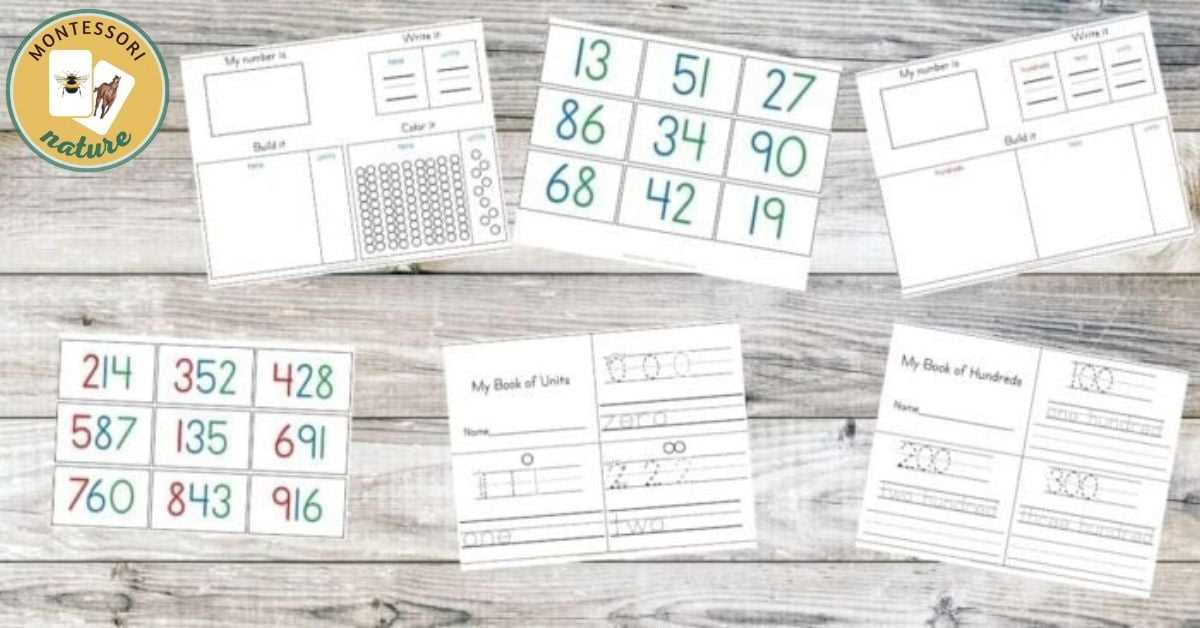
To begin, download a template of the learning tool and open it on your computer. Make sure the design fits your preferred paper size, usually 8.5 x 11 inches. Adjust the dimensions in your print settings to ensure everything aligns correctly, particularly the grid and labels. Once you have the correct size, print it using high-quality settings to make the lines sharp and legible. Use thicker paper or laminate the printout for durability if it will be used frequently.
Next, set up the tool by placing it on a flat surface or giving each student their own copy to work with. You can use small objects like counters, coins, or blocks to represent each number in the grid. Organize students in pairs or small groups for collaborative learning. This hands-on approach allows them to actively engage with the content and better understand how numbers are broken down into smaller components. Regularly reinforce the concept by providing exercises where they physically move the items into the correct sections as they solve problems.