Use structured, ready-to-print workshop templates with predefined labor fields, parts tracking tables, and authorization sections to reduce billing disputes and speed up intake by at least 20%.
Core Documents Every Garage Should Use
A well-organized documentation set keeps technicians, service advisors, and customers aligned. The following sheets should be available in paper-ready format and stored digitally for quick duplication:
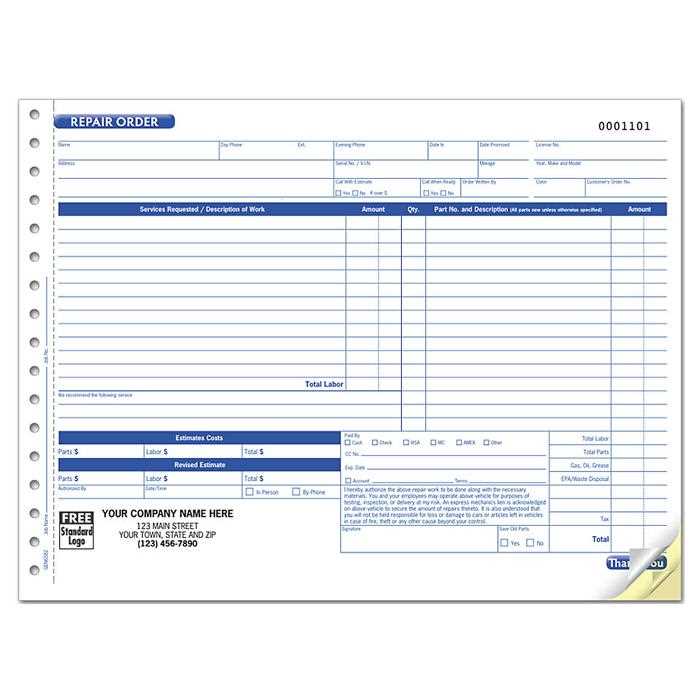
- Work Order Sheet – captures client details, vehicle identification number (VIN), mileage, reported issues, technician notes, and labor hours.
- Inspection Checklist – multi-point evaluation covering brakes, suspension, battery voltage, tire tread depth (measured in 32nds of an inch), fluid levels, and diagnostic codes.
- Parts and Labor Invoice – itemized pricing with part numbers, quantities, unit cost, labor rate per hour, tax percentage, and final total.
- Customer Authorization Document – signed approval including cost estimate, additional work consent clause, and payment terms.
- Warranty Record Sheet – details on installed components, supplier information, coverage period (e.g., 12 months or 12,000 miles), and claim procedure.
Each document should include a unique job number, date, and service advisor name to prevent confusion during audits.
How to Structure a High-Quality Workshop Template
A clear layout improves readability and reduces data entry errors. Follow these structural guidelines:
1. Client and Vehicle Identification Block
Place this section at the top. Include:
- Full customer name and phone number
- Email address
- Vehicle make, model, and year
- VIN (17 characters, validated for accuracy)
- Current mileage
- License plate number
Leave enough spacing between fields to allow handwritten completion without overlap.
2. Detailed Service Description Area
This section must provide room for both customer complaints and technician findings. Divide it into two columns:
- Customer Statement – verbatim description of symptoms (e.g., “grinding noise when braking at low speed”).
- Technician Diagnosis – diagnostic trouble codes (such as P0301), test results, and recommended actions.
Include checkboxes for common procedures: oil change, brake pad replacement, tire rotation, battery replacement, suspension adjustment.
3. Cost Breakdown Table
Use a grid format with the following columns:
- Item description
- Part number
- Quantity
- Unit price
- Labor hours
- Labor rate
- Line total
Add an automatic subtotal field, tax calculation (e.g., 7.5%), shop supplies percentage (commonly 5%), and final payable amount.
Reserve space for payment method selection: cash, credit card, bank transfer, or fleet account billing.
Technical Elements That Improve Accuracy
Professional-grade workshop documentation should incorporate measurable data fields rather than vague descriptions.
- Tire Measurements: Record tread depth individually (e.g., LF 6/32, RF 5/32).
- Battery Test Results: Include voltage (12.6V resting) and cold cranking amps.
- Brake Thickness: Specify millimeters for pads and rotor thickness.
- Fluid Condition: Mark as clean, contaminated, or low with quantity added.
Standardized measurement fields reduce disputes and provide documentation in case of warranty claims or insurance reviews.
Design Recommendations for Paper-Ready Templates
Use A4 or US Letter size with 1-inch margins. Choose a readable font such as Arial or Calibri at 10–12 pt for body text and 14–16 pt for section headers. Maintain consistent alignment and avoid dense text blocks.
Insert your garage logo at the top left corner and business registration number at the footer. Add terms and conditions in small but legible text (8–9 pt) to conserve space while remaining compliant with local regulations.
Provide duplicate copies: one for the client, one for shop records. Carbonless two-part sheets work well for handwritten processing.
Digital Storage and Version Control
Store templates in PDF and editable formats such as DOCX or XLSX. Name files using a clear structure: WorkshopName_DocumentType_Version_Date. Maintain revision logs whenever pricing tables or tax rates change.
Restrict editing rights to managers to avoid unauthorized modifications. Archive completed job sheets for at least three years to meet accounting and warranty tracking requirements.
Common Mistakes to Avoid
- Missing signature fields for customer approval
- No space for additional findings discovered during inspection
- Lack of clear labor rate disclosure
- Omitting VIN or mileage data
- Using cluttered layouts with inconsistent formatting
Accurate, structured workshop documentation protects revenue, improves workflow clarity, and builds client trust through transparent service records.
Printable Auto Repair Forms: Practical Templates for Workshops and Independent Mechanics
Use standardized service order sheets with clearly defined fields for vehicle data, labor hours, parts list, and client authorization. Each document should include VIN, license plate number, mileage at intake, customer contact details, complaint description, diagnostic notes, estimated cost, and signature lines. A structured job card reduces disputes and helps track technician productivity by recording clock-in and clock-out times for every task. For small garages handling 5–15 vehicles per day, a single-page layout with checkboxes for common services–oil change, brake pad replacement, battery test, suspension inspection–saves time and prevents omissions.
Maintenance log templates should be attached to every vehicle file and updated after each visit. Include columns for service date, performed work, replaced components, fluid types used, torque specifications applied, and next recommended mileage interval. Independent mechanics benefit from adding part numbers and supplier names directly to the record, simplifying future sourcing and warranty claims. A dedicated inspection checklist for incoming vehicles–covering exterior condition, warning lights, tire tread depth, brake thickness measurements, and visible leaks–protects the workshop from liability claims about pre-existing damage.
Billing statements must separate labor rate per hour, total labor time, parts cost with quantity, shop supplies percentage, tax rate, and final payable amount. Adding payment status (paid, partial, pending) and accepted methods (cash, card, transfer) improves accounting accuracy. For tax reporting, sequential invoice numbering and company details–business name, registration number, address, and phone–should be preprinted on each sheet. Clear formatting and consistent documentation reduce administrative errors and create a reliable paper trail for audits or customer disputes.