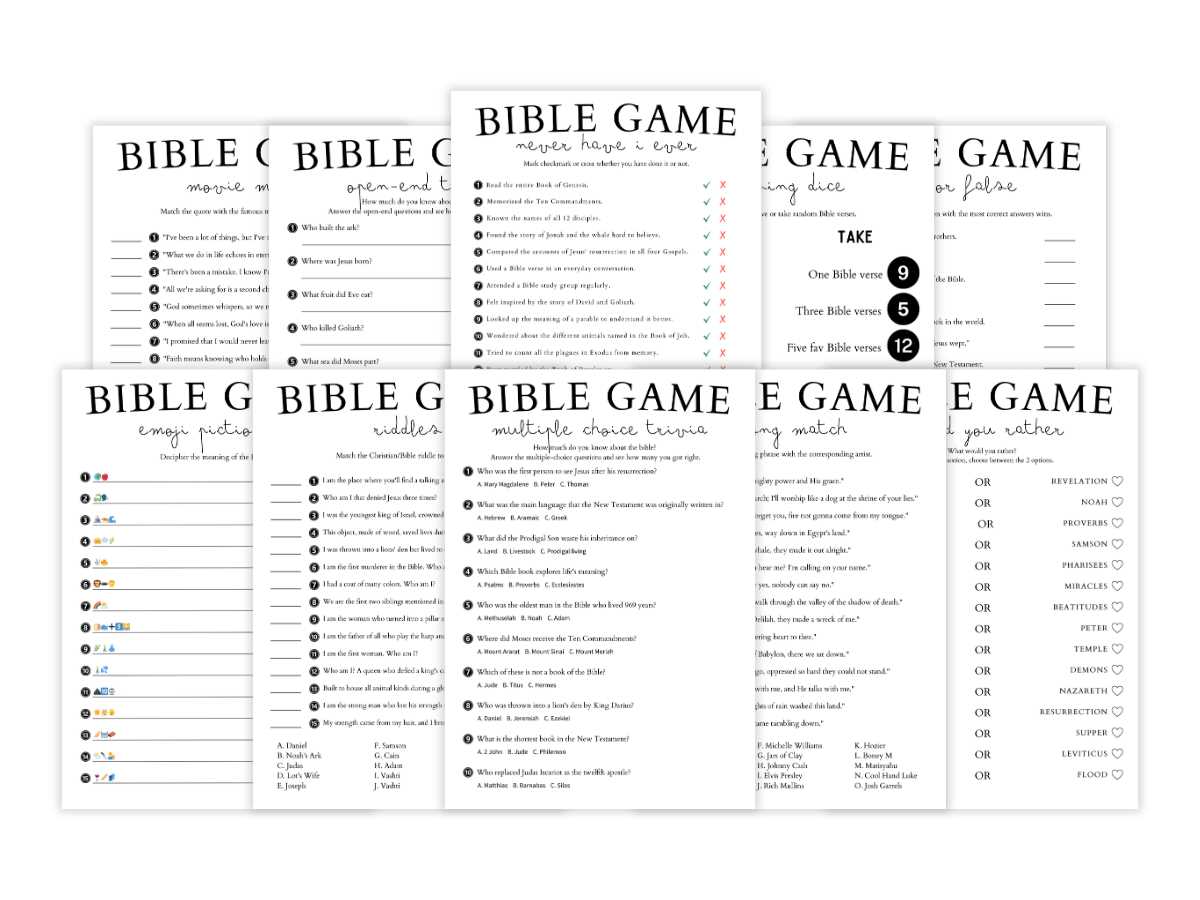
Choose press-ready activity sheets that match the reader’s age and reading level. For early learners, simple matching tasks with short verses support letter recognition and memory. Ages 7–10 respond well to crosswords, fill-in-the-blank passages, and scene-based puzzles drawn from Scripture narratives. Teens benefit from logic challenges, timeline ordering, and character analysis prompts that require close reading rather than guessing.
Prioritize formats that work on standard A4 or US Letter paper with clear fonts sized at 12–14 pt for children and 10–12 pt for older students. Black-and-white layouts reduce ink use and keep focus on content. Single-page activities suit quick lessons; multi-page sets fit weekly study plans. Answer keys on a separate page save preparation time for teachers and parents.
Rotate task types to keep attention high: verse hunts using chapter and verse cues, moral scenario cards that ask for written responses, and map labeling tied to historical locations. Mixing short tasks (5–7 minutes) with longer challenges (15–20 minutes) supports varied learning speeds without idle time.
Use themes aligned with the calendar–parables, holidays, prophets, or the Gospels–to reinforce continuity across sessions. Consistent icons and headings help students recognize patterns, while varied prompts prevent repetition fatigue. Clear instructions at the top of each sheet reduce explanation time and support independent work.
Faith-Based Activity Sheets for Learning and Engagement
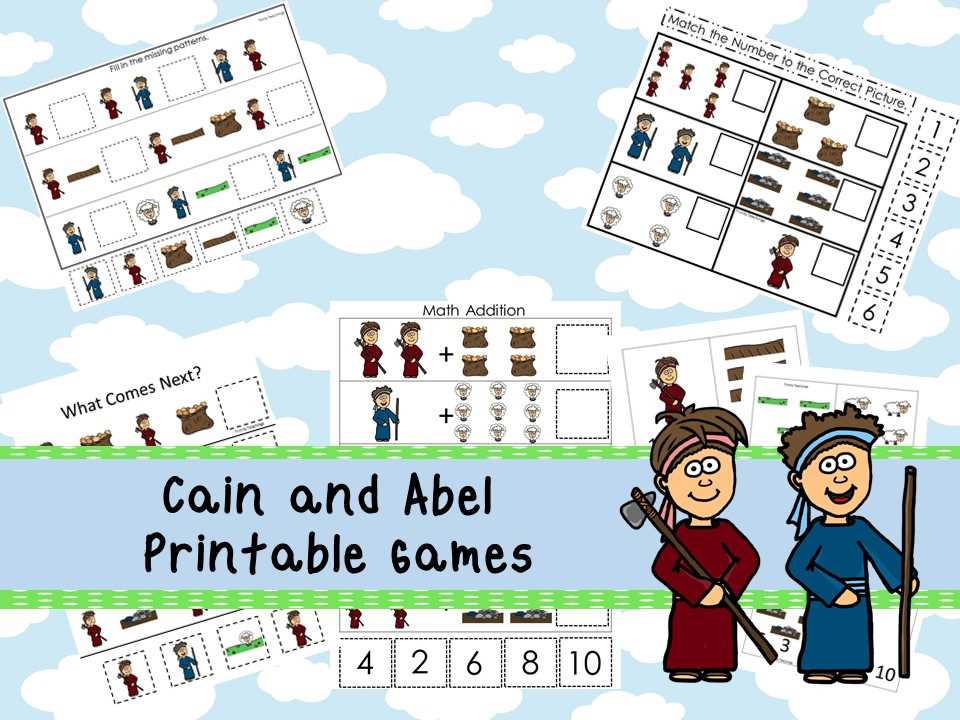
Choose activity sheets that pair short passages with task-driven prompts, such as verse matching or timeline ordering, to anchor reading comprehension from the first page. Sets with graded difficulty work best: begin with word searches for younger learners and progress to context questions that ask for chapter-and-verse identification.
Crossword layouts sharpen recall when clues cite locations, names, or key actions. Limit grids to 10–12 clues for group settings; solo study can handle 18–20. Provide an answer key on a separate page to support self-checking without interrupting focus.
Memory cards outperform long quizzes for retention. Print double-sided decks with prompts on one face and references on the reverse; rotate five cards per session to avoid overload. Laminating extends lifespan for classrooms and family study nights.
Scenario challenges increase participation by asking learners to choose responses based on short narratives. Keep each scenario under 120 words and include three options tied to cited passages. This format encourages discussion while grounding choices in text evidence.
Logic grids train analytical reading by connecting characters, places, and events. Use 4×4 matrices for beginners and 5×5 for advanced groups. Clear legends and bold headers prevent confusion and speed completion.
Color-by-number sheets linked to symbols reinforce visual learning without diluting content. Assign numbers to themes or virtues, then reveal an illustration tied to the passage once filled. This suits mixed-age groups where reading levels vary.
Assessment-ready worksheets benefit leaders who track progress. Add a brief reflection box with a word limit and a reference requirement. Scoring rubrics with three criteria–accuracy, citation, clarity–keep evaluation consistent across sessions.
Age-Specific Activity Sheets for Kids, Teens, and Adults
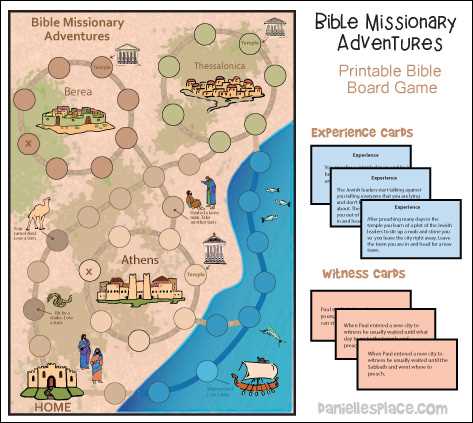
Choose age-matched faith-based worksheets that match reading level and attention span: for ages 4–7, use large-font puzzles with fewer than 20 words and clear icons; for ages 8–11, switch to clue-based challenges with short passages and visual cues; for teens, apply scenario logic and debate prompts; for adults, focus on text analysis and cross-referencing tasks.
- Kids (4–7): matching symbols to short verses, letter hunts limited to 6×6 grids, coloring prompts tied to single moral ideas.
- Kids (8–11): word scrambles capped at 12 terms, map-style timelines, fill-in-the-blank exercises with a word bank.
For teens, select materials that push interpretation rather than recall. Use role-based dilemmas drawn from sacred narratives, comparison tables between passages, and logic grids that require inference. Keep each task under 15 minutes and include one open-response question to trigger discussion without forcing consensus.
- Teens: ethical case sheets, debate cards, timeline reconstruction from mixed excerpts.
- Adults: thematic concordance tasks, parallel-text comparisons, reflective prompts with citation space.
Adult learners benefit from structured depth: limit each sheet to one theme, include references for follow-up reading, and add margin space for notes. Avoid trivia-style formats; prioritize synthesis tasks that connect passages across books and historical settings.