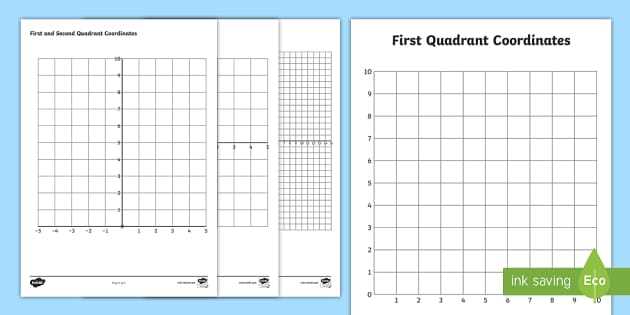
Download a high resolution PDF with clear x and y axes and print it at 100 percent scale so measurements stay accurate during lessons and assignments.
Selecting the Right Grid Style for Different Grade Levels
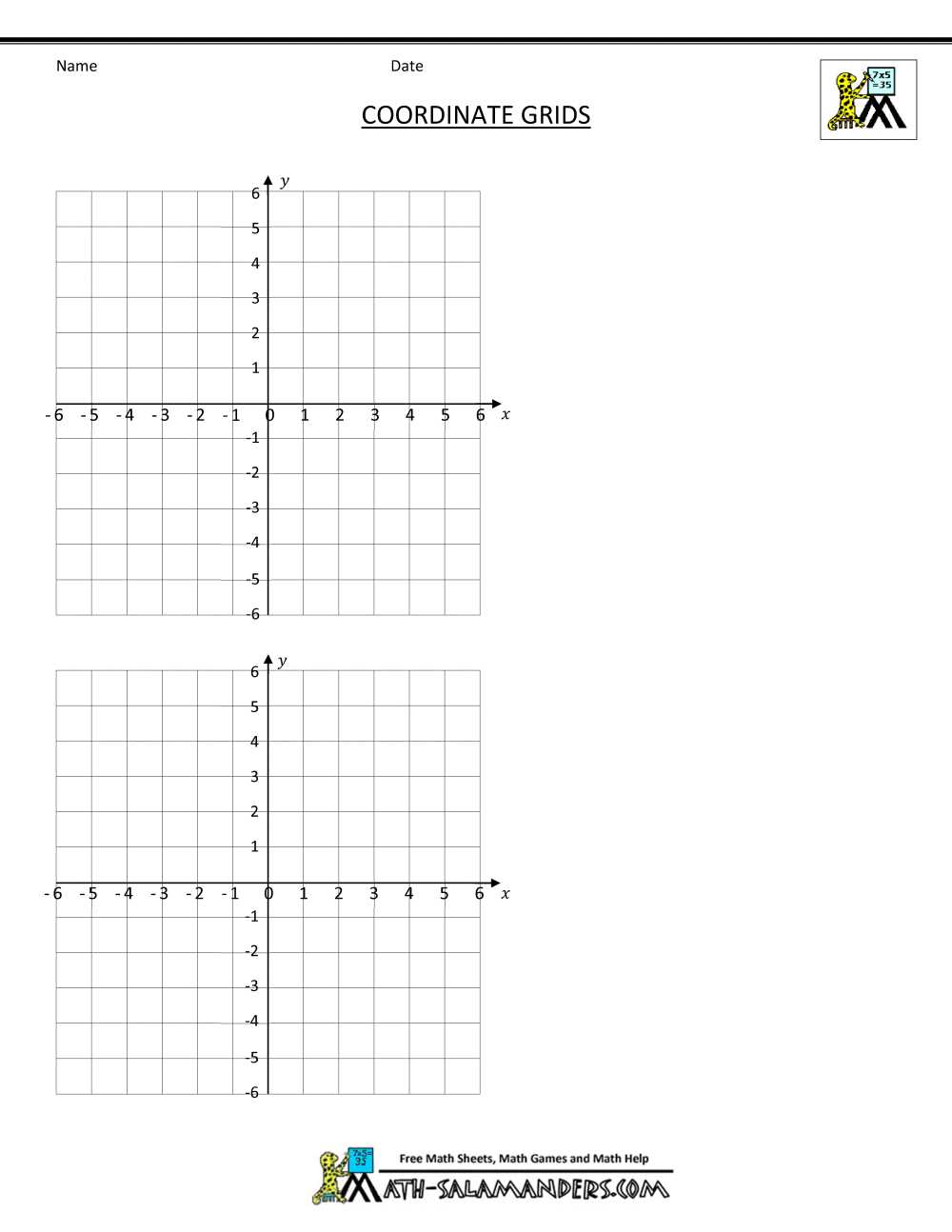
Use larger squares, such as 1 cm spacing, for beginners learning to plot ordered pairs. Smaller increments like 0.5 cm work better for algebra, transformations, and detailed graph work.
- Elementary level choose wide spacing and bold axis lines
- Middle school include numbered intervals from negative to positive values
- High school select dense layouts suited for functions and slope analysis
Check that the center intersection is clearly marked at zero so students align points correctly without counting errors.
Portrait or Landscape Layout
Portrait orientation fits standard notebooks, while landscape provides extended horizontal range for graphing equations with larger domains.
Printing and Classroom Use Tips for Long Term Handling
Choose 24 lb or 90 gsm paper for everyday assignments. For reusable classroom sets, print on heavier stock and laminate to allow work with dry erase markers.
- Set printer quality to high for sharp grid lines
- Disable page scaling to avoid distortion
- Test one copy and verify square alignment with a ruler
Store master copies in a labeled folder so replacements can be produced quickly during the school year.
Activities That Work Well With This Layout
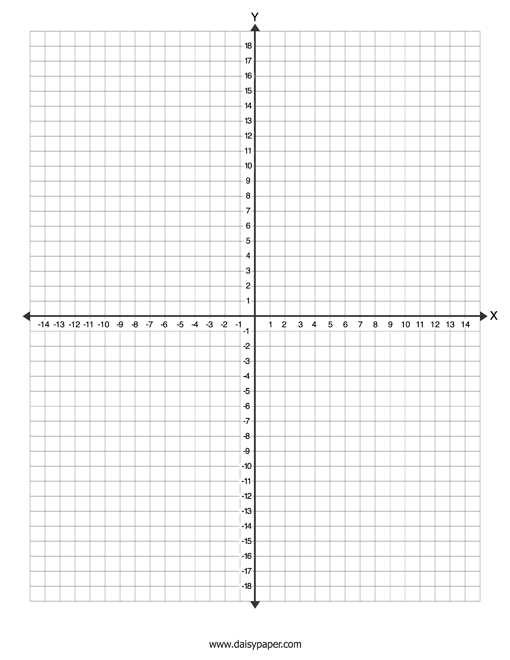
Use the grid for plotting linear equations, practicing reflections, mapping real world data, or creating geometric designs that combine math accuracy with visual structure.
Printable Blank Coordinate Plane for Classroom Graphing Activities
Use graph pages with clearly marked horizontal and vertical axes, spaced at consistent intervals, and print them at full scale so plotted points match textbook examples without distortion.
Select layouts with numbered tick marks extending at least from −10 to 10. This range supports lessons on integers, symmetry, and linear relationships without requiring additional materials.
Choose paper weight above standard copier stock when activities include repeated erasing. Heavier sheets reduce tearing and keep grid lines visible after multiple corrections.
Provide students with fine tip pencils or mechanical pencils so plotted locations stay precise and do not cover intersections, which can lead to reading errors during graph interpretation.
Laminate several master copies and use dry erase markers for demonstrations such as slope changes, translations, or reflections, allowing the same visual aid to be reused across different classes.
Store unused pages flat in a binder to prevent curling, ensuring rulers align cleanly with the grid during measurements and geometric constructions.