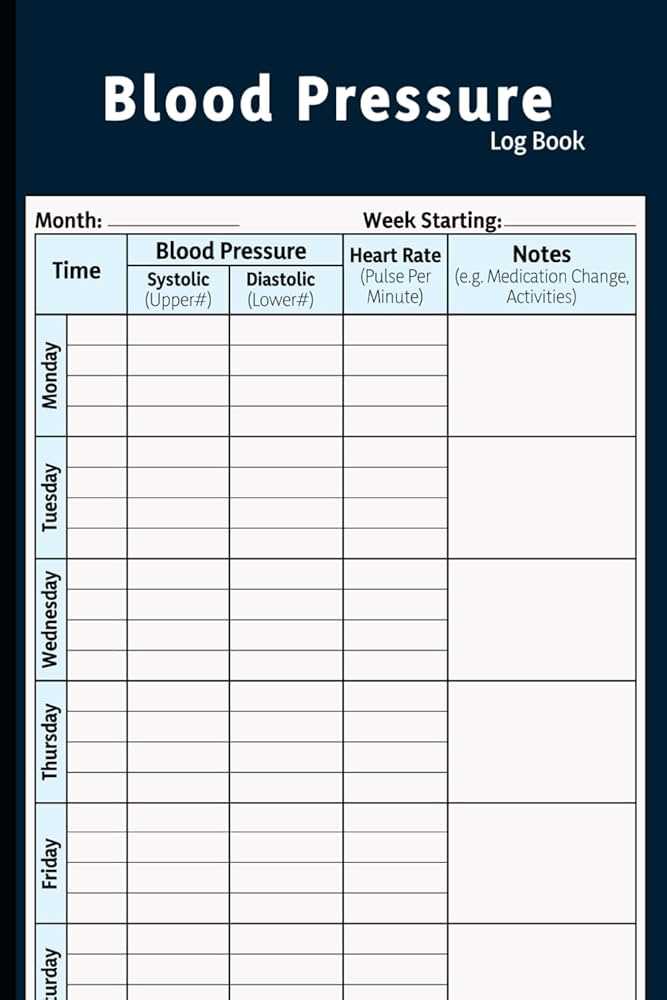
To monitor your blood pressure, use a structured sheet to record each reading. Include columns for the date, time, systolic, and diastolic values, and even note the pulse rate. This simple approach helps identify patterns and variations over time.
Make sure to log readings consistently at the same time of day. This routine allows for more accurate tracking, helping you spot trends and provide your healthcare provider with useful information during visits. It also helps in adjusting your lifestyle or medication accordingly.
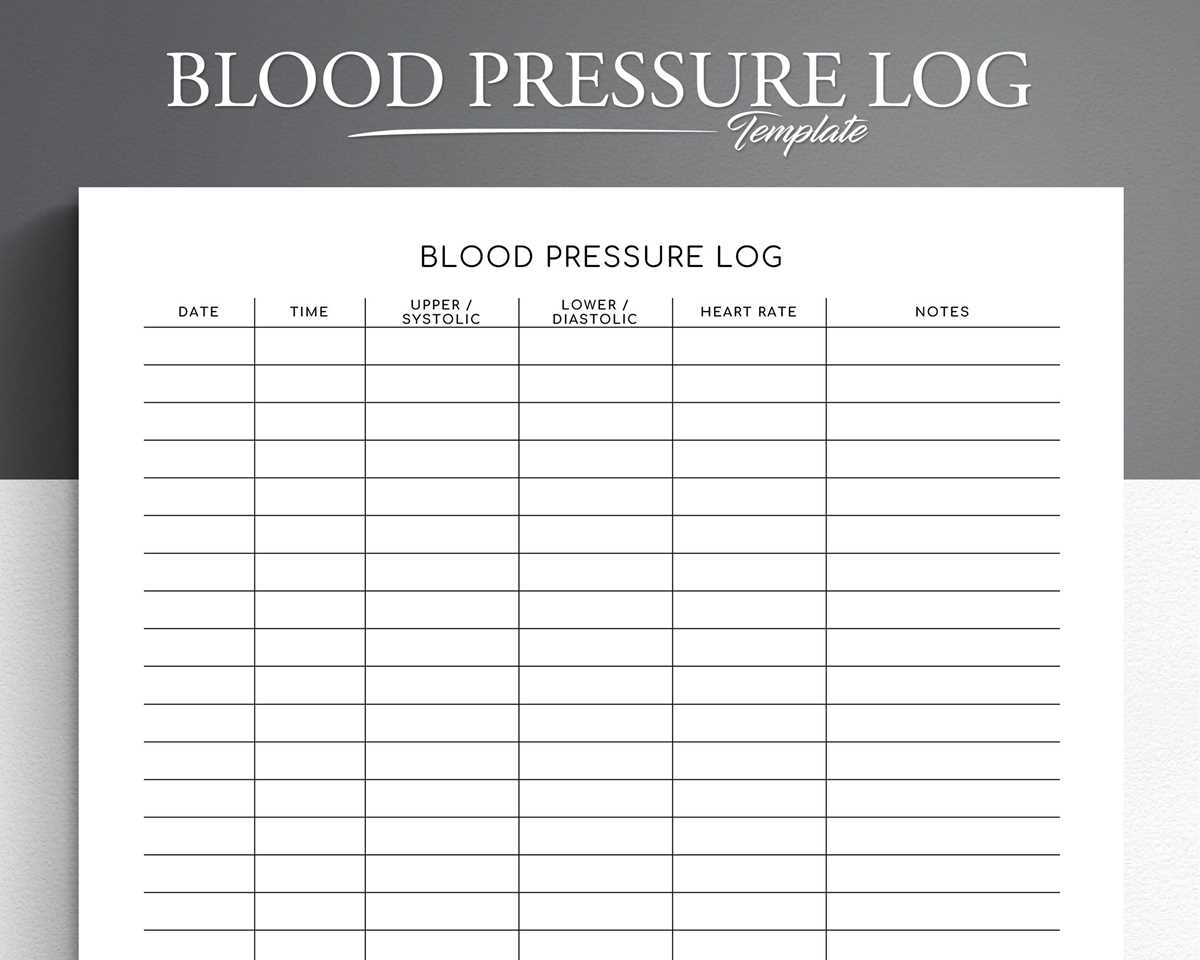
For convenience, you can either use a physical sheet or digital templates that are easily accessible from your smartphone or computer. Regular monitoring with a well-organized sheet can play a significant role in managing your blood pressure and maintaining overall health.
How to Organize and Track Your Blood Pressure Record
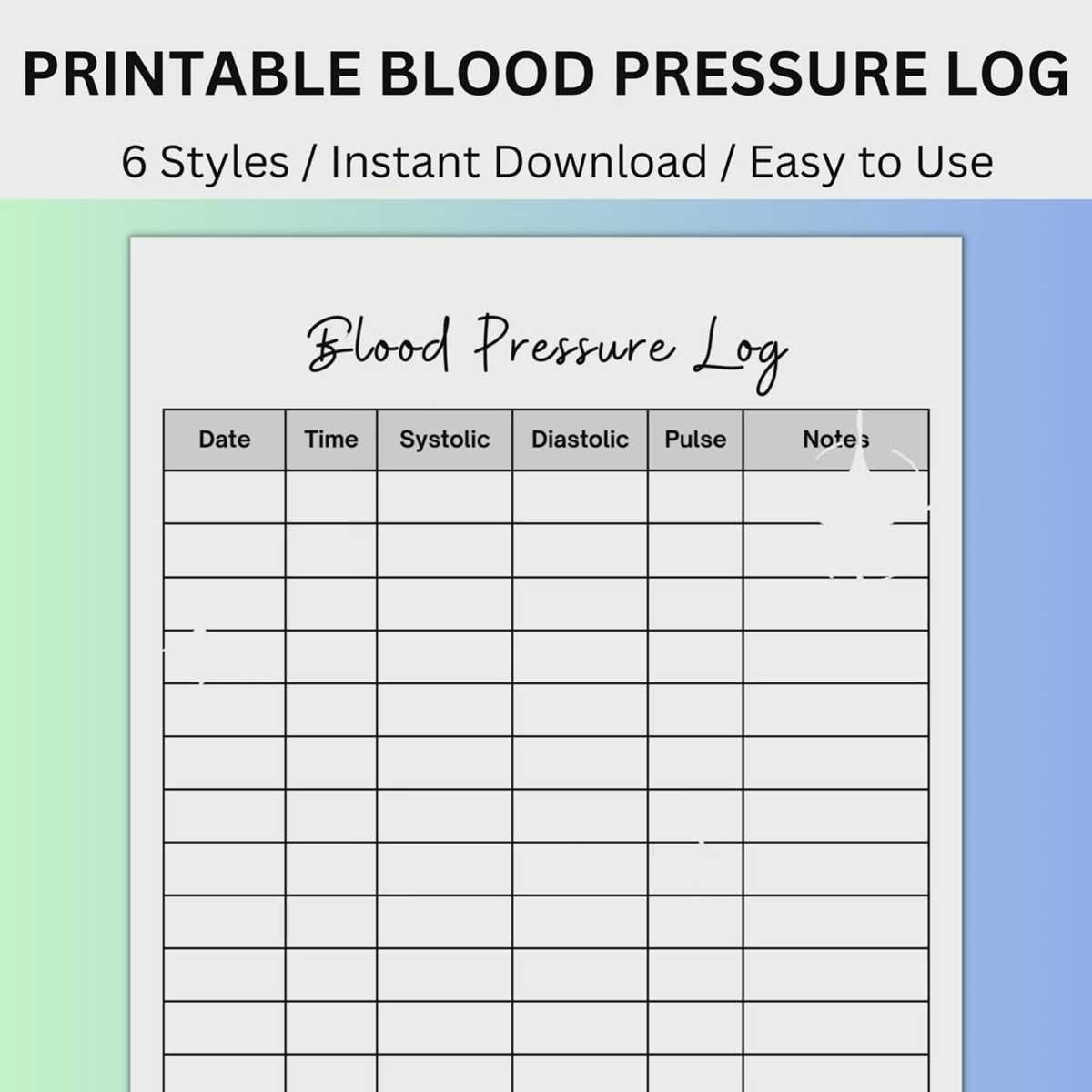
To keep track of your blood pressure, use a simple table that allows you to log each reading. Start with the date and time of the measurement in separate columns. This ensures you can easily review patterns over a specific period. Each entry should have spaces for both systolic and diastolic values, as well as heart rate if necessary.
When organizing the columns, add a space for additional notes. This can include information about your diet, medication, or any physical activity that may have influenced your reading. This extra context can help identify factors affecting your blood pressure levels.
For consistency, record your readings at the same time each day. Aim for a quiet moment before taking any medication or consuming food, as this can help produce more accurate results. Over time, you’ll begin to notice trends that can be shared with your doctor during regular checkups.
You can create the table using any word processor or spreadsheet program. If you prefer something more specific, there are many free templates available online that can be customized to fit your needs. Choose a format that makes it easy for you to fill in the information and review your progress.
If you prefer a digital option, use a spreadsheet to store your data. This allows you to quickly update and access your records from any device. You can also set reminders to log your readings regularly, making the process effortless and routine.
Once you have a few days or weeks of data, review it for any noticeable changes or inconsistencies. If you notice a pattern, such as higher readings during specific times of the day, it might be helpful to make adjustments to your routine and discuss it with your healthcare provider.
Tracking your blood pressure regularly in a well-organized way helps you stay on top of your health. With just a few minutes of effort each day, you can gain valuable insight into how your body is responding to various factors and take action before small issues become serious concerns.
How to Create a Simple BP Log for Tracking Blood Pressure
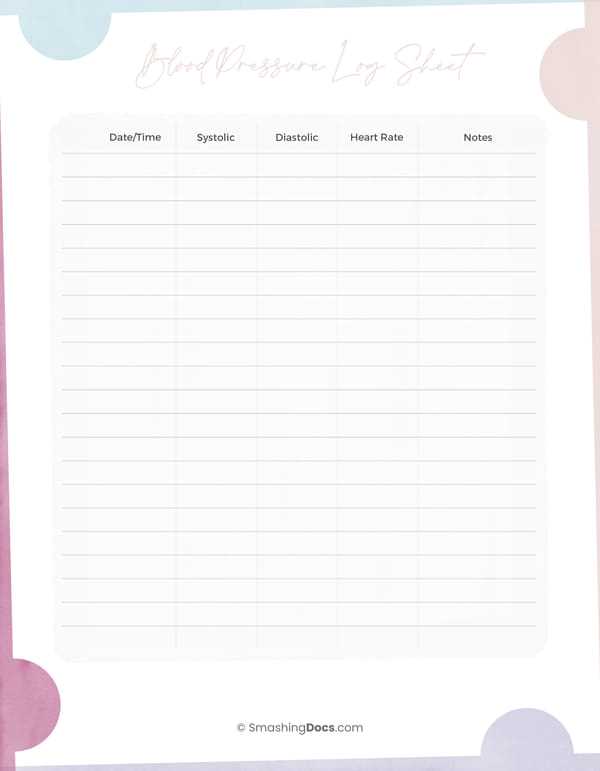
Start by setting up a basic table with columns for each reading. Include fields for the date, time, systolic and diastolic pressure, and heart rate if relevant. This format helps you organize and track important data points systematically.
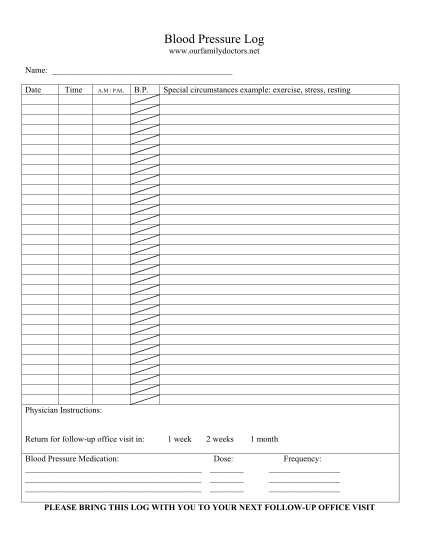
In the first column, list the date of each measurement. This allows you to track changes over time. You can either manually fill in this column or create a pre-filled calendar template to make it easier.
Next, include a column for the time of day when the measurement was taken. Blood pressure can vary throughout the day, so recording the time helps identify any time-of-day patterns that could impact the results.
Make sure to include separate columns for systolic and diastolic pressure readings. Write down both numbers for each measurement, ensuring that the systolic value comes first, followed by the diastolic value. These two numbers are crucial for assessing your heart health.
If you wish to track other metrics, such as heart rate, include an extra column for it. Monitoring pulse along with blood pressure gives a more complete picture of cardiovascular health.
Once you have set up the basic structure, consider leaving a space for any notes. You can use this section to record factors like recent physical activity, diet, medication taken, or any other external factors that might have influenced your readings.
Finally, make the process as consistent as possible. Aim to take measurements at the same time each day and update your tracking sheet regularly. With consistent data, you’ll be able to spot trends and share this information with your doctor to adjust your health plan when needed.