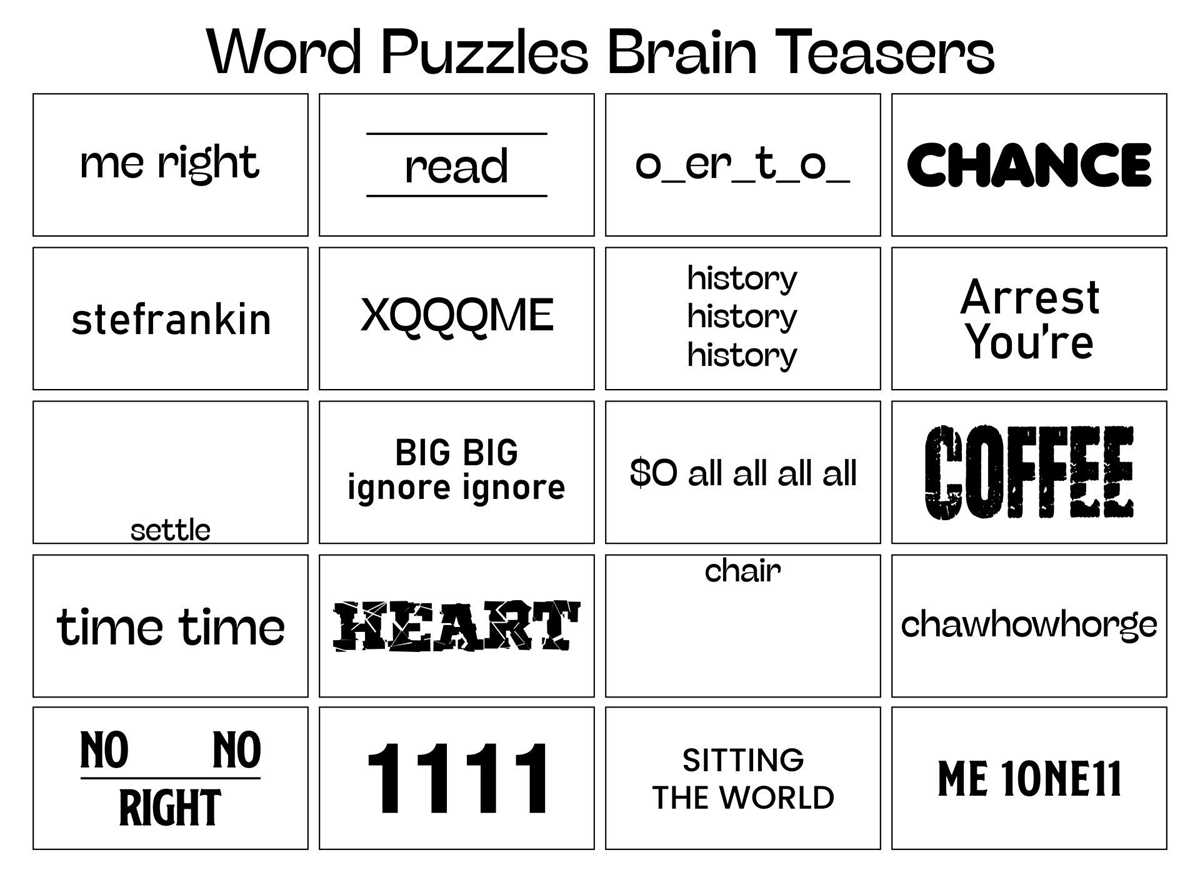
Download activity sheets in PDF format with clean black outlines at 300 dpi resolution to ensure sharp text and clear grids. Choose US Letter or A4 layout with at least 12 mm margins to prevent cropped edges during home printing.
Select tasks by skill level: simple 4×4 logic grids for ages 7–9, 9×9 number grids for teens, multi-step deduction tables for adults. Include answer keys on a separate page to support self-checking without revealing solutions too early.
Use 90–100 gsm paper for standard pen or pencil work, and switch to 120–160 gsm sheets for marker-based activities. Disable draft mode in printer settings to keep symbols, lines, and small fonts legible.
Mix task types within one packet. Combine riddles, pattern sequences, mazes, crosswords, and math challenges to train memory, reasoning, and attention span. Limit each page to one main task to avoid visual overload.
Store completed worksheets in dated folders. Tracking results over several weeks helps measure progress in speed, accuracy, and problem-solving strategies without repeating the same content.
Free Printable Brain Teasers and Logic Puzzles for All Ages
Download PDF activity sheets in A4 or US Letter format with clear 300 dpi graphics to keep text sharp and grids aligned. Select black-line layouts with high contrast to reduce eye strain during longer problem-solving sessions.
For children ages 6–8, choose 4×4 logic grids, simple mazes, picture-based riddles, and basic number patterns. Tasks should require no more than three deduction steps and include visual cues such as icons or shaded boxes to guide reasoning.
Preteens benefit from 6×6 or 9×9 number challenges, coded messages, sequence completion tasks, and short lateral thinking questions. Keep instructions under 80 words per page to maintain focus and avoid confusion.
Adults can work with multi-variable deduction tables, advanced crosswords, algebra-based problems, and timed reasoning tests. Provide a separate answer key page to allow self-checking without exposing solutions at first glance.
Print on 90–120 gsm paper for pencil use or 120–160 gsm sheets for markers. Store completed worksheets in labeled folders by difficulty level to track progress in accuracy, speed, and strategy use over time.
How to Select Brain Teasers by Age and Difficulty Level
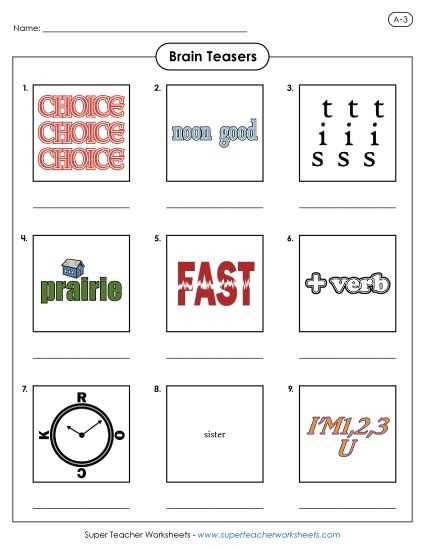
Match task complexity to reading ability and reasoning skills. For ages 6–8, choose short instructions under 50 words, 4×4 logic grids, simple mazes, and picture-based riddles that require no more than three deduction steps.
For ages 9–12, increase variables and introduce number sequences, coded messages, and 6×6 deduction tables. Limit each worksheet to one main challenge and one bonus task to maintain concentration. Use the following scale:
- Level 1: Single-step pattern recognition or matching
- Level 2: Two to four logical connections with visual clues
- Level 3: Multi-condition deduction with charts or symbols
- Level 4: Timed reasoning tasks with abstract rules
Teens and adults can handle layered constraints, algebra-based problems, advanced crosswords, and grid sizes of 9×9 or larger. Include answer keys on a separate page and track completion time to measure growth in accuracy, speed, and strategy use.