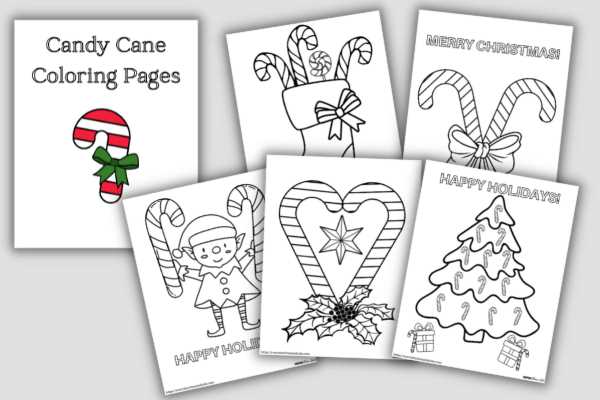
Select high-contrast black-and-white outline sheets in A4 or US Letter size and print at 100% scale on 120–160 gsm paper to prevent bleed-through from markers and gel pens.
Choose simple thick-line drawings for ages 3–5 and detailed striped designs with bows or holly for ages 6–10; keep line weight at least 2 pt so crayons stay within borders and shapes remain clear after shading.
Use standard printer settings with “best” quality enabled and disable page scaling to avoid clipped edges; for group activities, prepare 10–15 copies per design and provide red, white, and metallic pencils to create classic peppermint striping effects.
Peppermint Stick Outline Sheets for Festive Crafts
Download high-resolution black-and-white peppermint hook illustrations in A4 or US Letter format and print at 100% scale on 150 gsm matte paper to prevent marker bleed and paper warping.
Choose outline thickness based on age group:
- 2–3 pt bold lines for preschoolers using crayons
- 1.5–2 pt standard lines for ages 6–9 with colored pencils
- 1 pt detailed contours for older children adding shading and highlights
Set printer quality to “best” and disable automatic resizing to avoid cropped curves at edges. Test one sheet first to confirm stripe alignment and margin accuracy.
Provide a limited palette to maintain classic holiday style:
- Deep red for main stripes
- Bright white pencil for blending
- Silver or gold gel pen for accent lines
- Light gray for subtle shadow under curved hook
For classroom use, prepare at least 12 copies per design and store them in labeled folders by complexity level to distribute quickly during art sessions.
After decorating, cut along outer contour, laminate with 80 micron pouches, and punch a small hole near top curve to create tree ornaments or gift tags.
Store unused outline sheets flat in a dry folder to prevent curling and keep digital files organized by size and difficulty for future seasonal projects.
How to Choose Outline Complexity for Different Age Groups
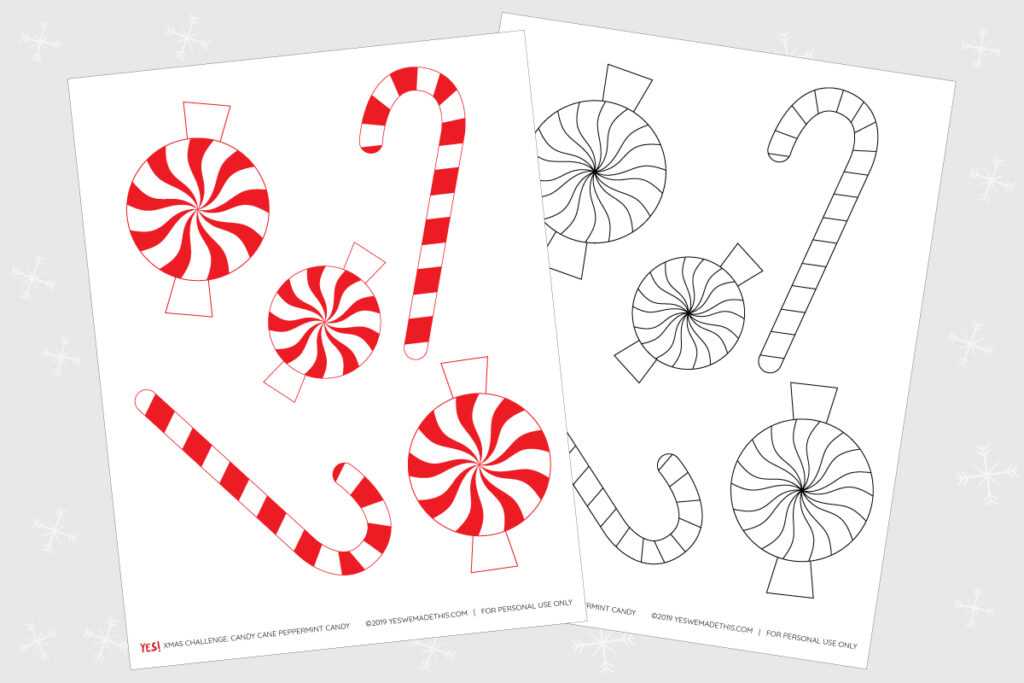
Select thick 2–3 pt contour lines with large open spaces for ages 3–5; limit each peppermint hook illustration to 3–5 wide stripes so crayons stay within borders and hand fatigue stays low.
For ages 6–8, use 1.5–2 pt outlines with 6–8 evenly spaced bands and simple add-ons such as a bow or holly leaf; keep interior details minimal and avoid overlapping elements that require precision shading.
For ages 9–12, choose 1 pt line weight and include smaller decorative elements like snowflakes, ribbon folds, or patterned stripes; provide enough narrow sections to practice blending with colored pencils while maintaining clear separation between shapes.
Measure average stripe width: at least 10 mm for preschoolers, 6–8 mm for early elementary, and 3–5 mm for older children who control fine motor movements more confidently.
Test one sheet with the intended age group before full distribution; observe whether strokes cross borders or if areas remain unfinished due to tight spacing, then adjust line thickness or spacing accordingly.
Match paper weight to complexity level: 120 gsm for simple bold designs using crayons, 160 gsm for detailed versions requiring layered pencil shading or gel pen highlights.