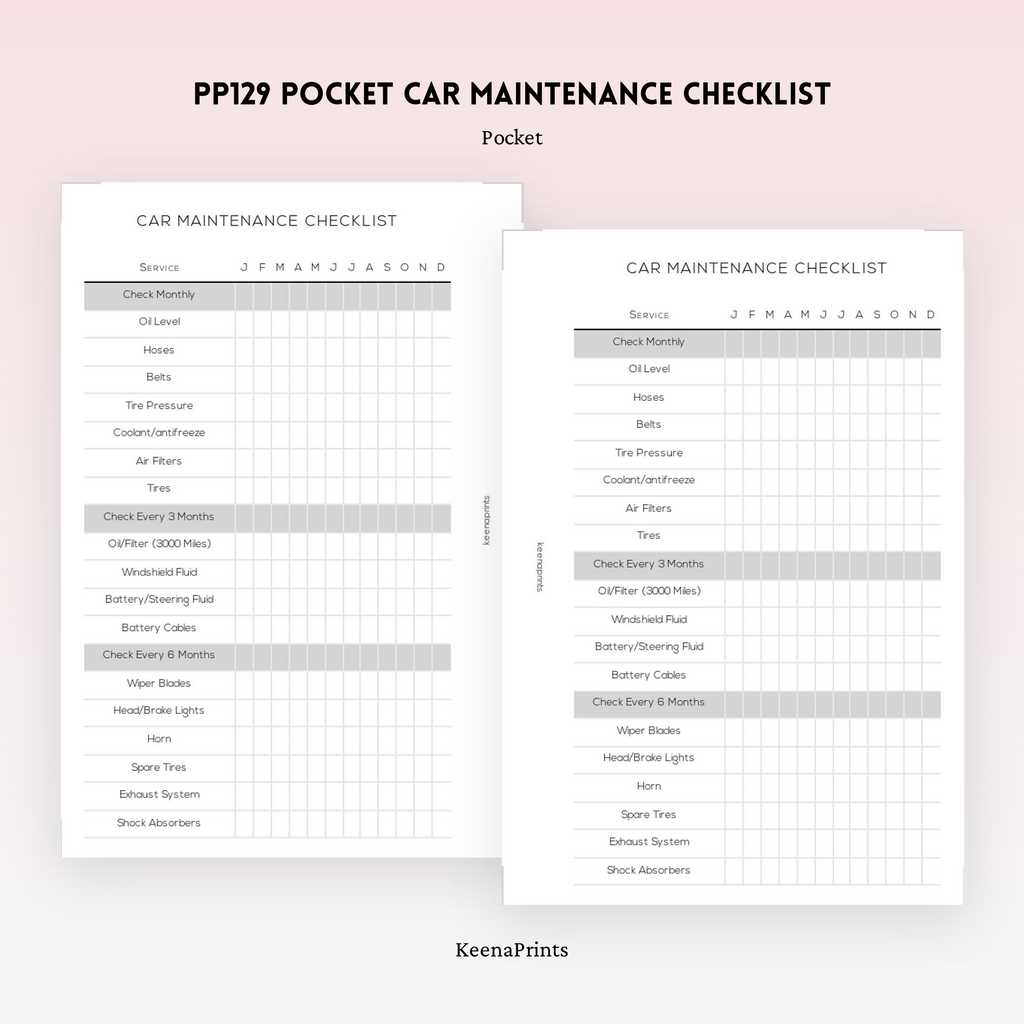
Start by inspecting tire pressure monthly. Tires should be inflated to the manufacturer’s recommended PSI. Over-inflated or under-inflated tires can lead to uneven wear and increased risk of accidents.
Next, verify the engine oil level and quality. Replace it every 3,000 to 5,000 miles, or according to your vehicle’s specifications. Low or dirty oil can cause significant engine damage over time.
Keep track of fluid levels, including brake, transmission, and coolant fluids. Top them off regularly and ensure there are no leaks. Maintaining the right levels helps prevent overheating and improves overall vehicle performance.
Inspect the air filter at least twice a year. A clogged filter restricts airflow to the engine, reducing fuel efficiency and increasing emissions. Replacing it is an easy and cost-effective way to enhance engine performance.
Check the battery for corrosion and ensure the terminals are clean. If the vehicle is slow to start, it could be a sign the battery is losing charge. Replace it every 3-5 years to avoid unexpected breakdowns.
Lastly, inspect the brakes every 10,000 miles or when you notice any unusual sounds. Brake pads and rotors wear down over time, and replacing them on schedule is necessary for safe driving.
HTML
Key Vehicle Upkeep Tasks
Regular tire inspection is necessary for safety. Check the pressure and tread depth at least once a month. Replace tires that show uneven wear or are underinflated, as they can reduce fuel efficiency and pose a safety risk.
Inspect fluid levels, including engine oil, brake fluid, coolant, and transmission fluid. These fluids should be checked every 3,000 to 5,000 miles. Low fluid levels or dirty oil can lead to engine problems and costly repairs.
- Check the engine oil for cleanliness and consistency.
- Top up brake fluid if the level is low.
- Inspect coolant levels and top up if necessary.
Replace the air filter every 12,000 to 15,000 miles or more often if driving in dusty conditions. A clogged filter can decrease engine performance and fuel economy.
Examine the brake pads and discs regularly. If the pads are worn down or the discs are damaged, they should be replaced immediately to prevent reduced braking efficiency or system failure.
- Listen for unusual noises when braking.
- Measure brake pad thickness during each inspection.
Test the battery condition and clean the terminals to ensure proper connections. A weak or corroded battery can lead to electrical issues or a failure to start the vehicle.
Inspect the belts and hoses for signs of wear, cracking, or leaks. These components are essential for engine function and should be replaced every 4 years or 50,000 miles to avoid potential breakdowns.
HTML
How to Create a Customizable Vehicle Care Plan
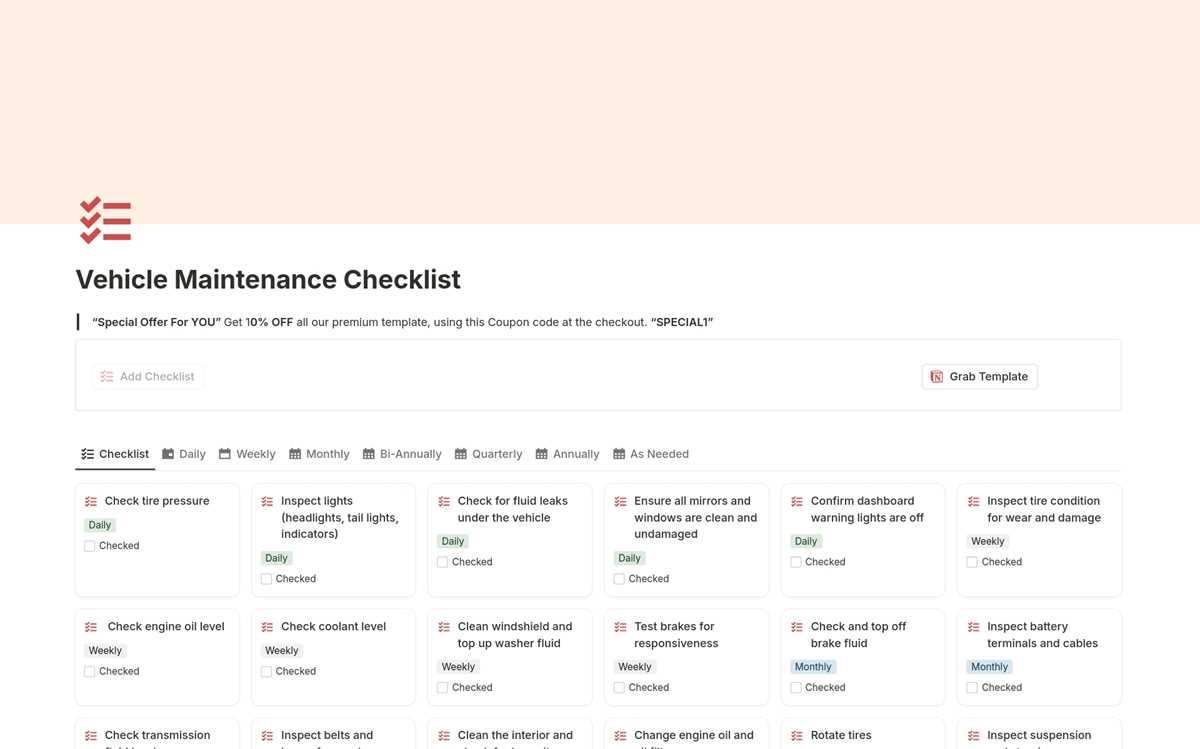
Begin by identifying key components that require regular attention based on your model’s specifications. Review the owner’s manual for recommended intervals for tire pressure checks, oil changes, fluid levels, and belt inspections. Customize this list to reflect your driving habits and the climate in which you operate the vehicle. For instance, if you frequently drive in harsh conditions, increase the frequency of filter replacements and fluid flushes. Make note of any specific parts that tend to wear faster in your region or for your usage style.
Once you’ve determined these factors, structure your tracking tool with flexible sections to adjust as needed. Use checkboxes for recurring tasks like tire rotations and fluid levels, while leaving space for occasional items such as brake inspections or cabin filter replacements. Include reminders to inspect the vehicle for external damages, especially after long trips. This allows you to adapt the plan as your vehicle’s needs change over time, ensuring you keep track of everything necessary to extend its lifespan.