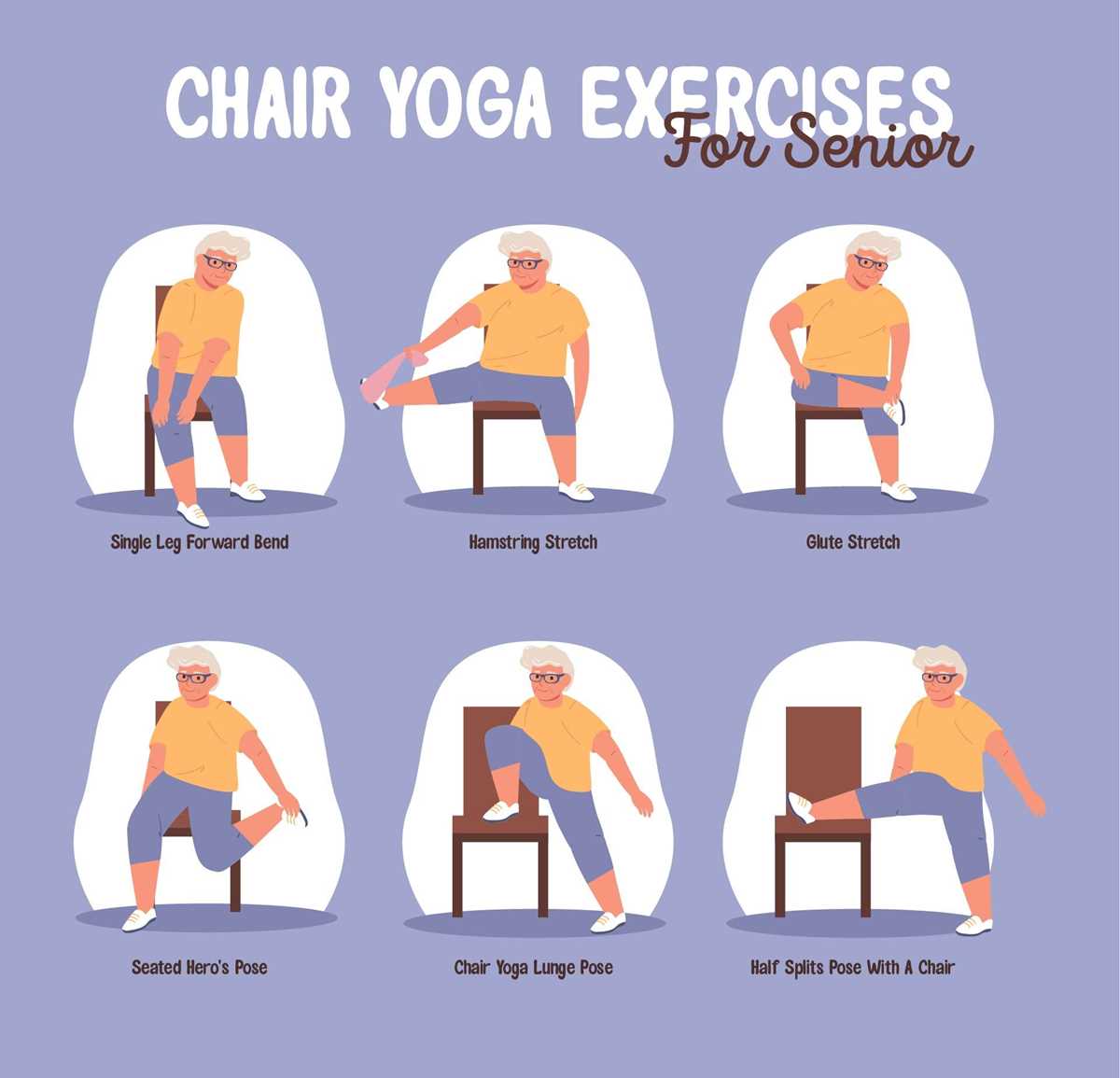
Use this ready-to-print seated routine to train major muscle groups in 15–20 minutes without standing up. Perform the sequence 3–5 times per week, maintaining controlled tempo: 2 seconds lifting phase, 1 second pause, 3 seconds lowering phase. Rest 30–45 seconds between movements.
Structured Seated Routine Overview
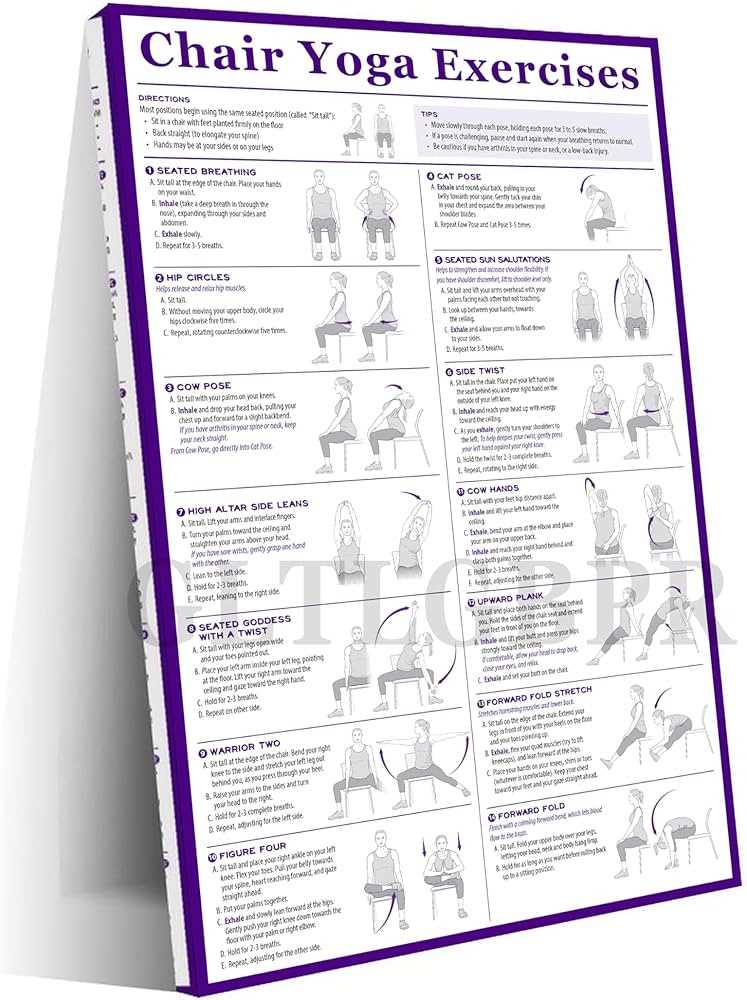
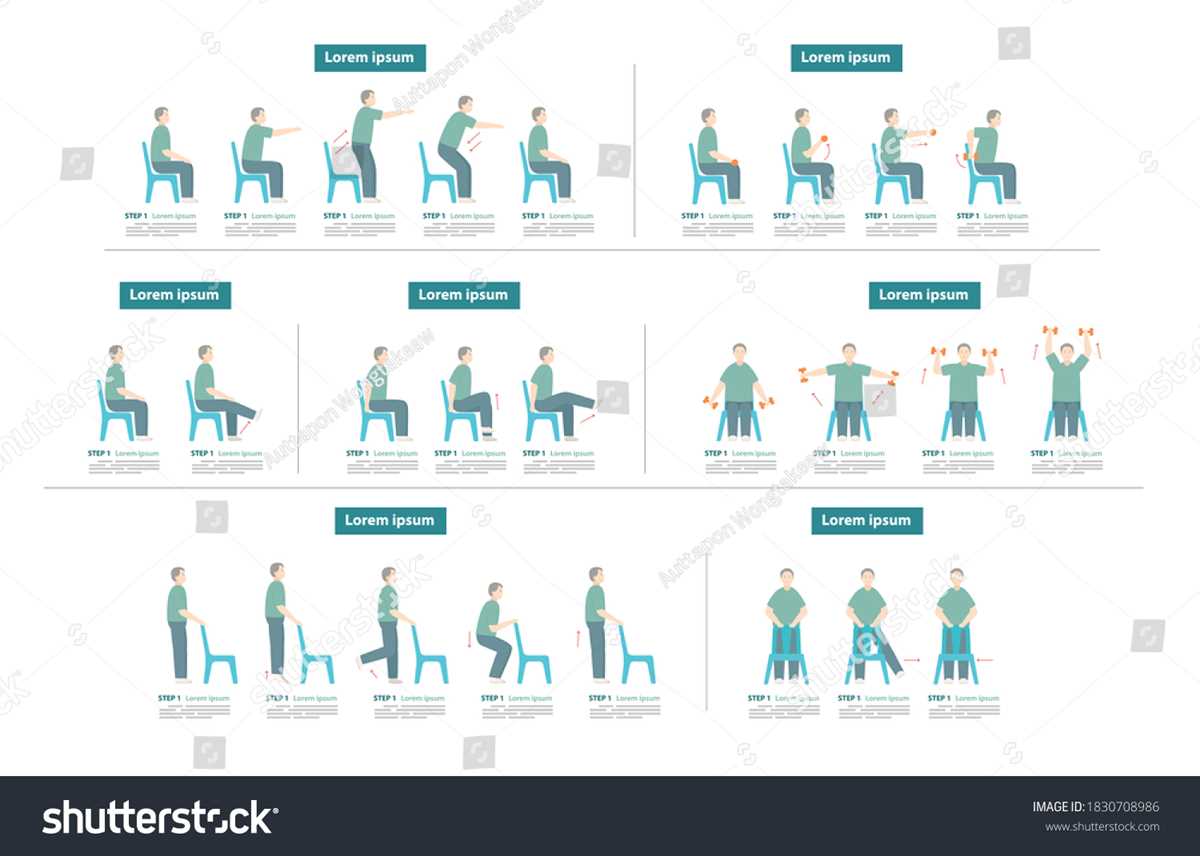
- Seated Knee Extension – 12–15 repetitions per leg × 3 sets
Sit upright, extend one leg parallel to the floor, hold 1 second, lower slowly. Targets quadriceps. Add ankle weights (0.5–2 kg) to increase load.
- Seated Marching – 20 alternating lifts × 3 sets
Lift knees one at a time to hip height while keeping torso stable. Activates hip flexors and lower abdominals. Keep spine neutral.
- Seated Arm Press – 12 repetitions × 3 sets
Hold light dumbbells (1–3 kg). Press upward from shoulder level until elbows extend fully. Works deltoids and triceps.
- Forward Torso Lean – 15 repetitions × 3 sets
Cross arms over chest, hinge forward from hips about 30 degrees, return upright. Strengthens core stabilizers.
- Heel Raise (Seated) – 20 repetitions × 3 sets
Lift heels while toes remain on floor. Pause at the top for 2 seconds. Engages calf muscles and improves circulation.
- Seated Row with Resistance Band – 15 repetitions × 3 sets
Loop band around feet, pull elbows back squeezing shoulder blades together. Focus on upper back contraction.
Weekly Progression Plan
- Week 1–2: Bodyweight only, 2 sets per movement.
- Week 3–4: Increase to 3 sets, introduce light resistance.
- Week 5–6: Add tempo control and 1–2 kg additional load.
- After Week 6: Extend session to 25 minutes or add isometric holds (10–20 seconds per rep).
Form and Safety Guidelines
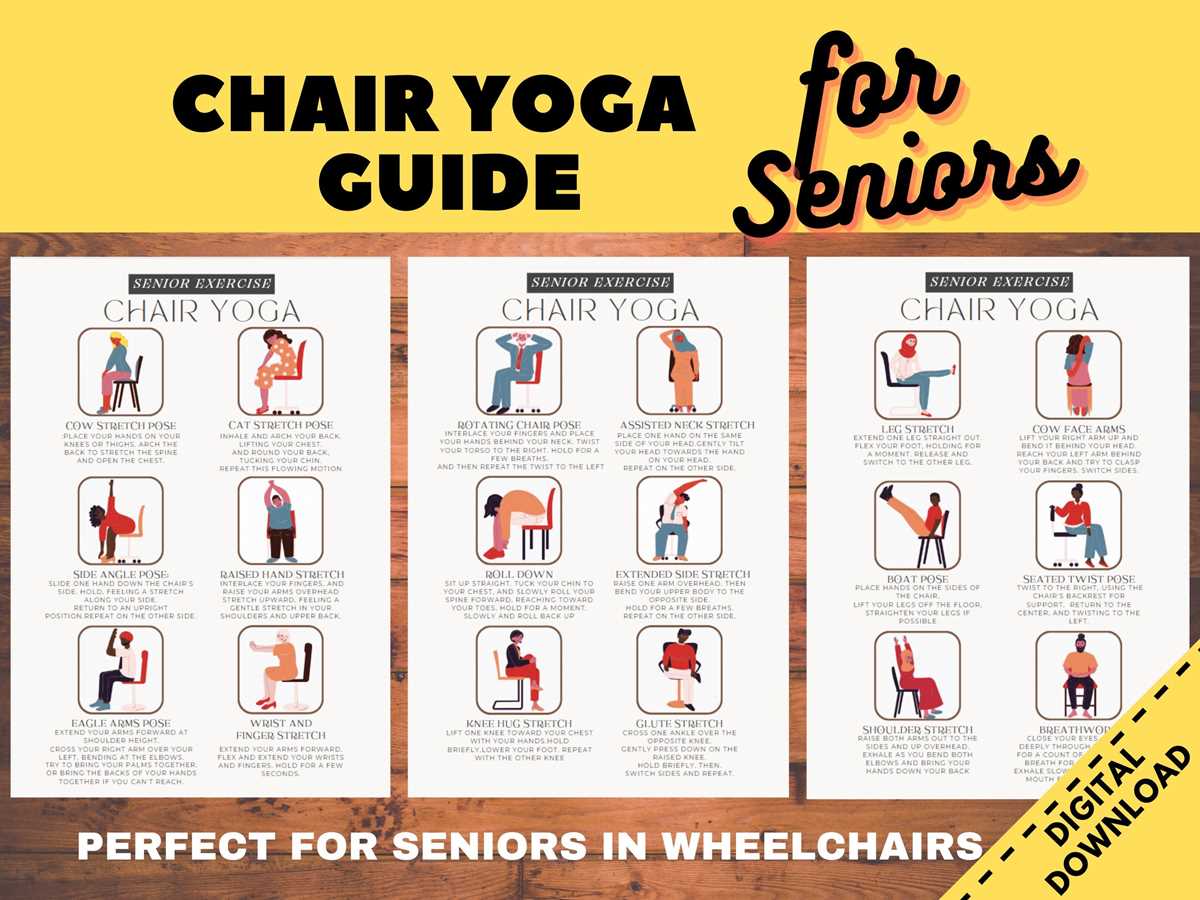
Keep feet flat unless instructed otherwise. Maintain upright posture with shoulders relaxed. Avoid locking joints at full extension. Stop immediately if sharp pain occurs. Individuals with hypertension should avoid breath-holding; exhale during exertion phase.
Adaptation for Seniors
Reduce repetitions to 8–10 per set. Use support with armrests for balance. Perform movements slowly to lower fall risk. Recommended frequency: 3 non-consecutive days weekly.
Usage Instructions
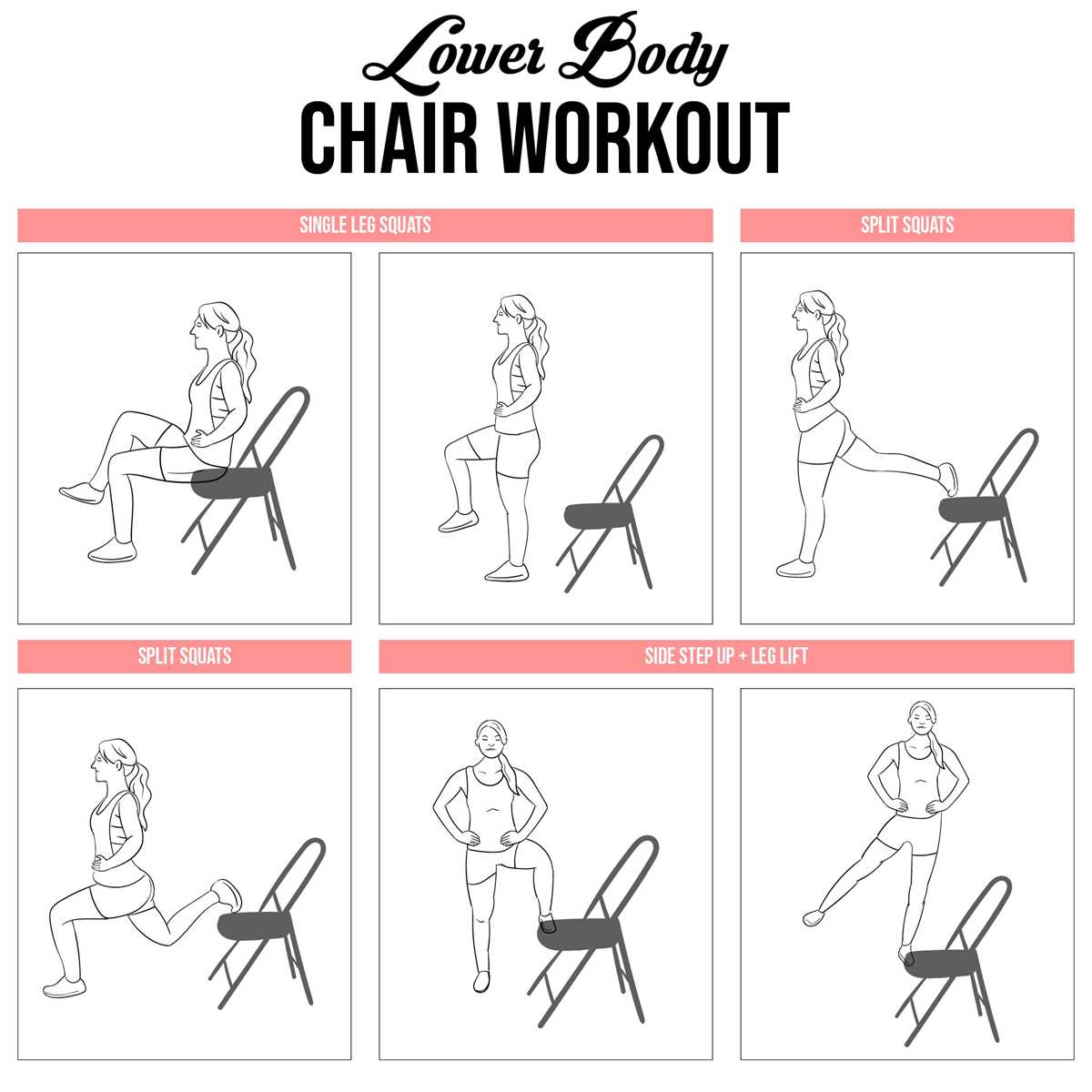
Print this routine on a single A4 sheet in portrait orientation. Place near desk or living area for quick reference. Track completion dates manually to monitor consistency and progression.
Printable Chair Exercise Chart: How to Design, Customize, and Use It at Home or in the Office
Place 6–8 seated movements on a single A4 or Letter page arranged in a 2×3 or 2×4 grid, each block containing the name, a clear line drawing, target muscles, repetitions (8–15), and tempo (e.g., 2–1–2). Use at least 14 pt font for titles and 11–12 pt for instructions so the sheet remains readable from 1–1.5 meters. Include a checkbox beside each drill and a small field for date and total minutes completed. Limit one routine to 10–12 minutes: seated knee lifts (2×12), shoulder rolls (2×10 forward/back), torso rotations (2×12), heel raises (2×15), seated marches (2×30 seconds), and desk-supported push-aways (2×10). Add a visual intensity scale (1–5) and a note such as “Stop if pain exceeds 4/10.” Print in grayscale with high-contrast icons to reduce ink usage while keeping clarity.
Customize the sheet based on context: for office staff sitting 6–8 hours, prioritize hip flexion, thoracic mobility, and scapular retraction; for seniors, enlarge illustrations to at least 5×5 cm and specify slower cadence (3–1–3) with 6–10 repetitions. Color-code sections–blue for upper body, green for lower body, orange for mobility–so users can scan quickly. Add QR codes linking to short demo clips (30–60 seconds each) hosted internally or on a private platform to avoid distractions. Provide two difficulty columns: Level A (bodyweight only) and Level B (light resistance band 1–3 kg). Leave a blank row labeled “Add your own move” to adapt to individual needs.
Use the sheet by scheduling micro-sessions every 90 minutes, setting a calendar reminder, and completing one row per break; this yields 3–5 short blocks daily totaling 15–25 minutes without leaving the workstation. Track completion with the checkboxes and review weekly to adjust volume by ±10% depending on fatigue. Store laminated copies in meeting rooms and near printers; attach with removable clips to avoid damage. Replace the routine every 4–6 weeks to vary stimulus and maintain adherence.