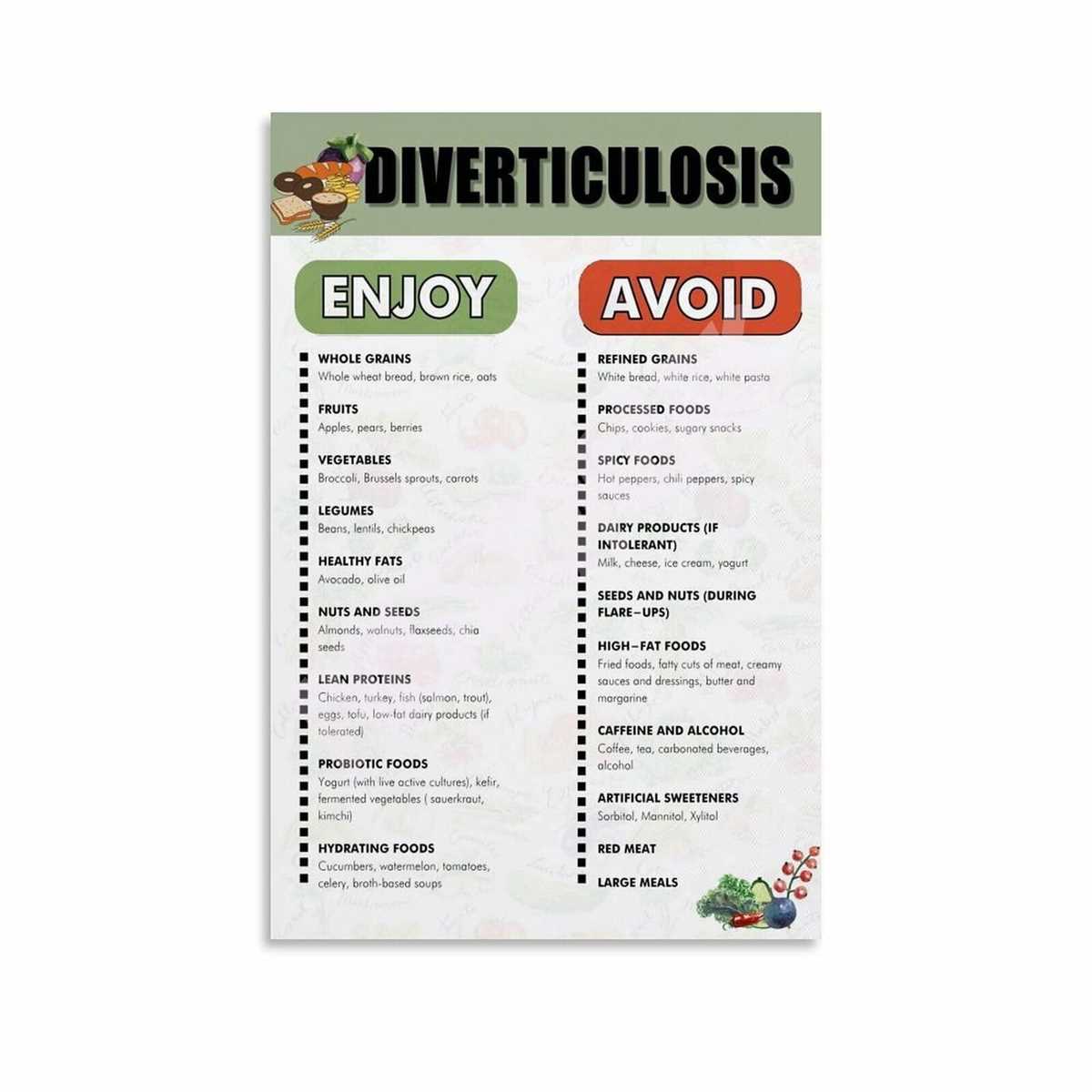
Increase fiber intake with whole grains, fruits, and vegetables. Aim for 25-35 grams of fiber daily to support proper bowel function. Gradually incorporate high-fiber foods, as a sudden increase may cause discomfort.
Include plenty of fluids in your meals. Drinking sufficient water helps fiber work effectively, preventing constipation and easing digestion. Aim for at least eight 8-ounce glasses per day.
Focus on soft, easily digestible foods if you’re experiencing flare-ups or discomfort. Opt for cooked vegetables, lean proteins, and well-cooked grains like oats and quinoa, which are gentle on the stomach.
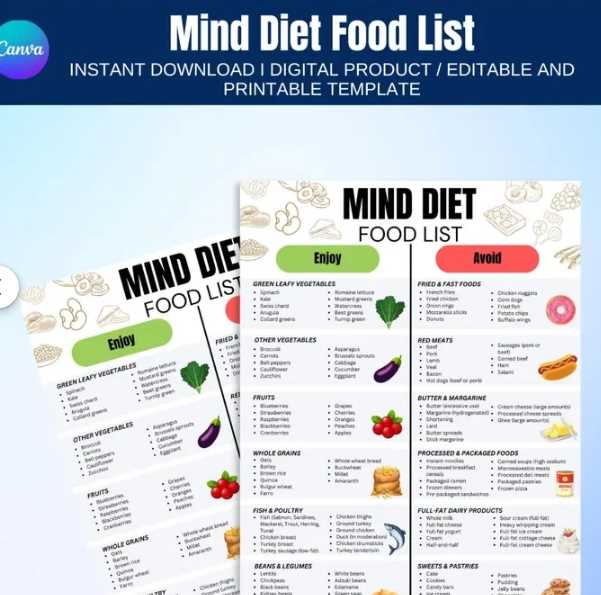
Avoid seeds and nuts during flare-ups, as small particles may irritate the digestive tract. Stick to smoother, easily chewable food options while your digestive system is recovering.
Limit processed foods that are low in fiber and high in unhealthy fats. Focus on whole, minimally processed options to promote gut health and reduce inflammation.
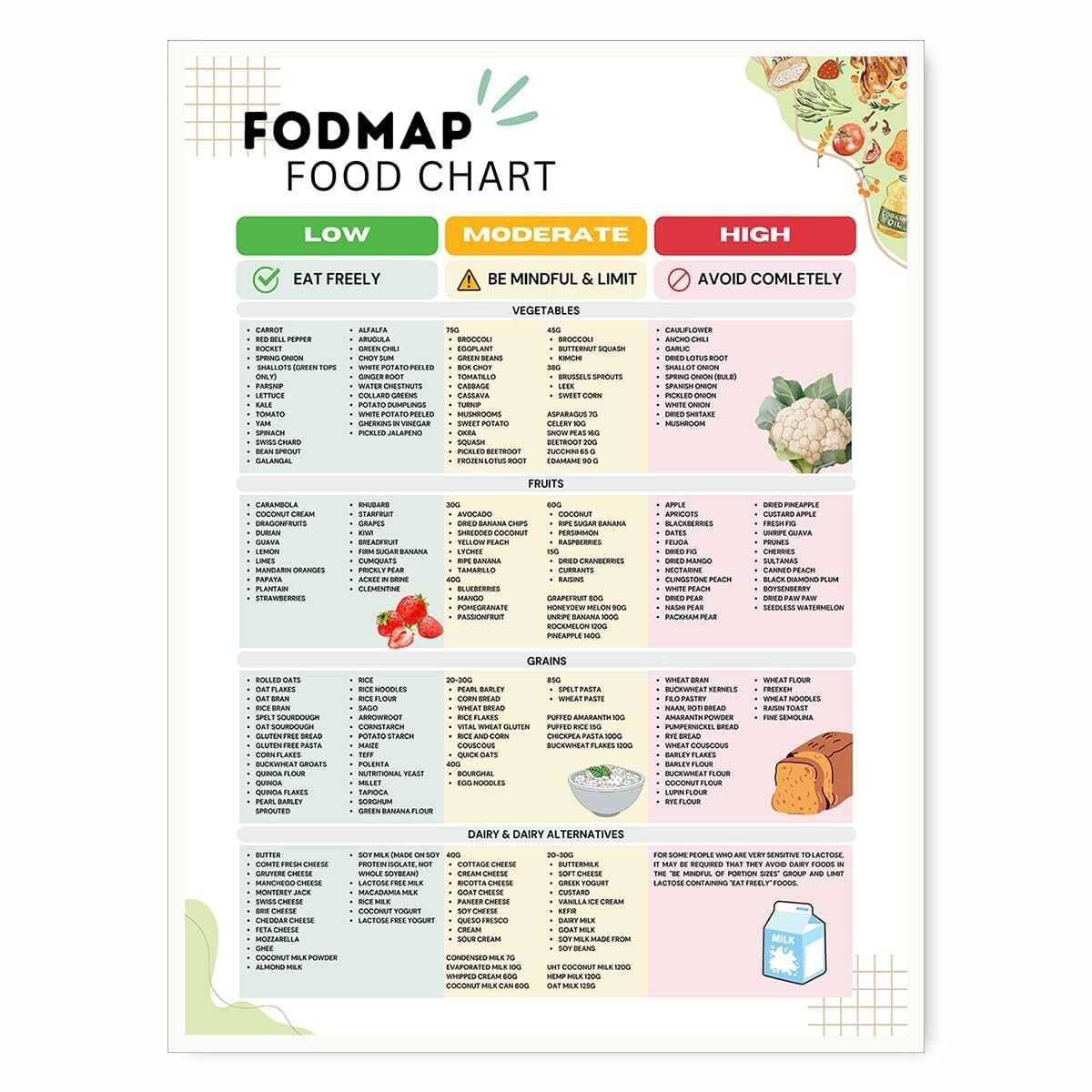
Recommended Food Choices for Digestive Health
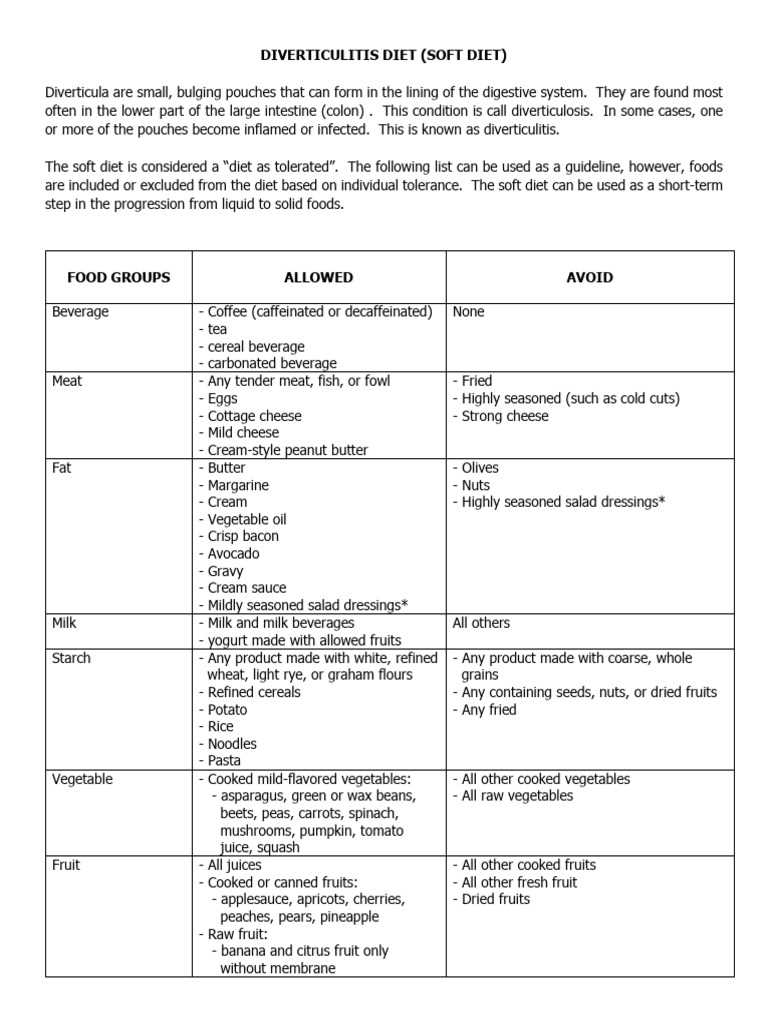
Focus on increasing fiber intake with whole grains such as oatmeal, quinoa, and brown rice. Incorporating a variety of vegetables, including leafy greens, carrots, and sweet potatoes, will help maintain bowel regularity. Legumes like beans, lentils, and peas provide a high-fiber boost, essential for softening stool and improving digestion. Fresh fruits, such as apples, berries, and pears, are also beneficial due to their high fiber content, which supports gut health.
Avoid refined grains like white bread and pasta, as they lack fiber and can exacerbate discomfort. Processed meats, such as sausages and hot dogs, should be limited, as they can contribute to inflammation and digestive strain. Fried foods, heavy on fats and oils, can irritate the digestive tract and slow down digestion. Opt for lean proteins like chicken, turkey, or tofu instead, which are easier on the stomach.
Stay hydrated by drinking plenty of water throughout the day. This will support the digestion of fiber and prevent constipation. Incorporating herbal teas like peppermint or ginger can also soothe the digestive system. Limit alcohol and caffeinated beverages, as they can lead to dehydration, making bowel movements more difficult to pass. Always listen to your body’s needs and adjust accordingly for optimal comfort.