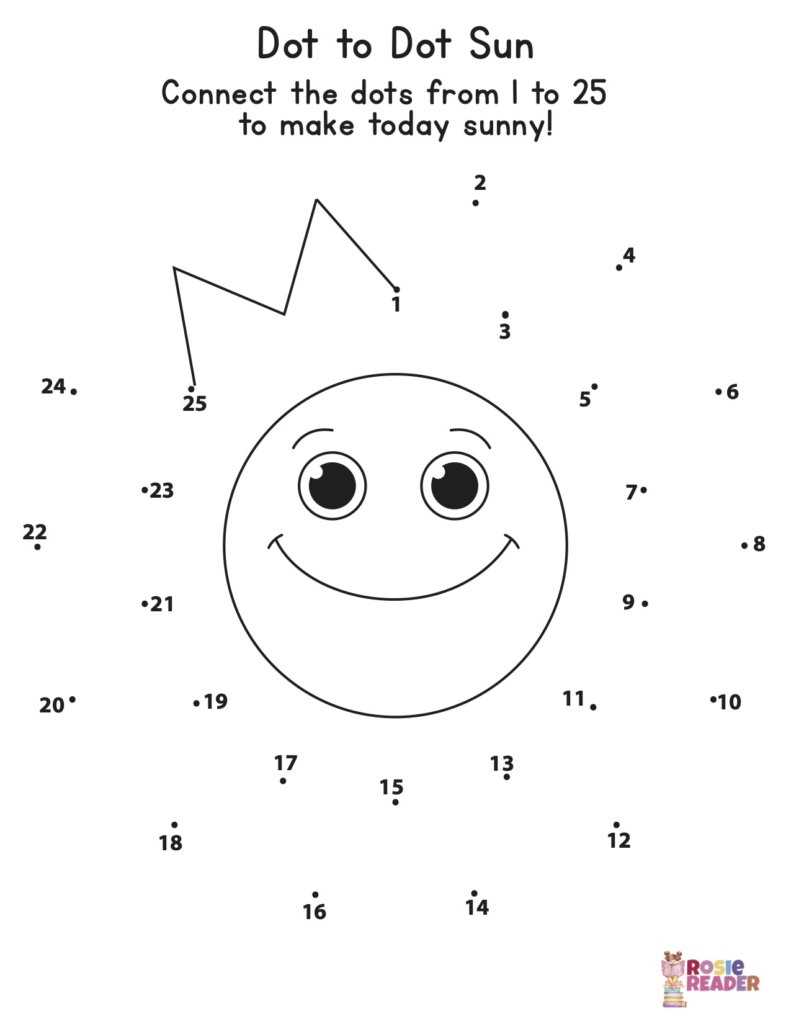
Choose connect-the-numbers worksheets with a clear sequence range that matches the child’s counting ability, such as 1–20 for preschoolers and 1–100 for early elementary students. Short sequences build number recognition, while longer chains strengthen concentration and visual tracking across the entire page.
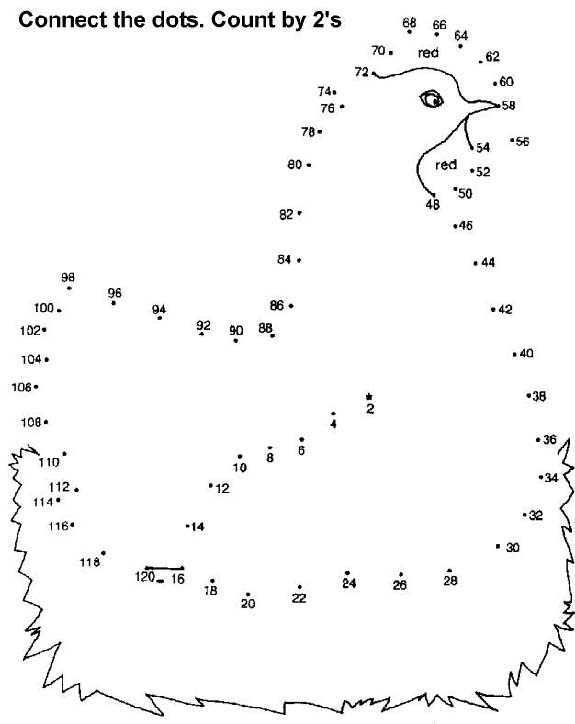
Focus on line spacing and point size. Marks spaced 0.5–1 cm apart suit younger children who are still refining pencil control, while tighter spacing increases precision demands. Sheets printed on A4 or US Letter paper at 100% scale prevent distortion and keep proportions accurate for smooth line connections.
Select themes with defined outlines that appear only after linking the numbered markers. Simple animal silhouettes or basic vehicles reduce confusion, whereas detailed scenes with overlapping paths suit older learners. For added challenge, use skip-counting patterns such as counting by twos or fives to reinforce arithmetic skills alongside hand–eye coordination.
Provide sharpened HB pencils and encourage steady strokes from one numbered point to the next without lifting the hand excessively. After completing the image, allow coloring to extend engagement and strengthen grip control. Rotating designs weekly keeps practice varied while steadily increasing numerical range and visual complexity.
Printable Dot to Dot
Select connect-the-numbers sheets with a clear numeric path that matches skill level, such as sequences up to 30 for kindergarten and up to 150 for grades 2–3. Longer chains increase attention span and require steadier hand movement across the page.
Adjust spacing between numbered markers to control difficulty. Wider gaps of 8–12 mm support beginners, while intervals under 5 mm demand higher precision and slower tracing speed.
Use the following criteria when choosing number-link activities:
- Sequential counting practice from 1 upward
- Skip counting by 2, 5, or 10 for arithmetic reinforcement
- Mixed ascending and descending sequences for advanced learners
- Hidden image complexity revealed only after full connection
Print at 100% scale on A4 or US Letter paper to prevent distortion of alignment. Thicker paper between 90–120 gsm reduces tearing during repeated erasing and keeps lines crisp after coloring.
Encourage a structured completion process:
- Locate number 1 and confirm the full sequence direction.
- Trace slowly without lifting the pencil between adjacent markers.
- Check alignment every 10–15 numbers to avoid crossing lines.
- Color the revealed figure to extend fine motor practice.
In classroom settings, group learners by sequence range rather than age. A child fluent up to 50 benefits more from a 60–80 chain than from repetitive short sets. Timed sessions of 8–12 minutes maintain focus without fatigue.
Rotate themes weekly, including animals, vehicles, landmarks, or seasonal shapes, while steadily increasing numeric range and visual density. Gradual progression builds counting accuracy, hand–eye coordination, and sustained concentration through structured number-link tasks.
How to Select Number Ranges Based on Child Age and Skill Level
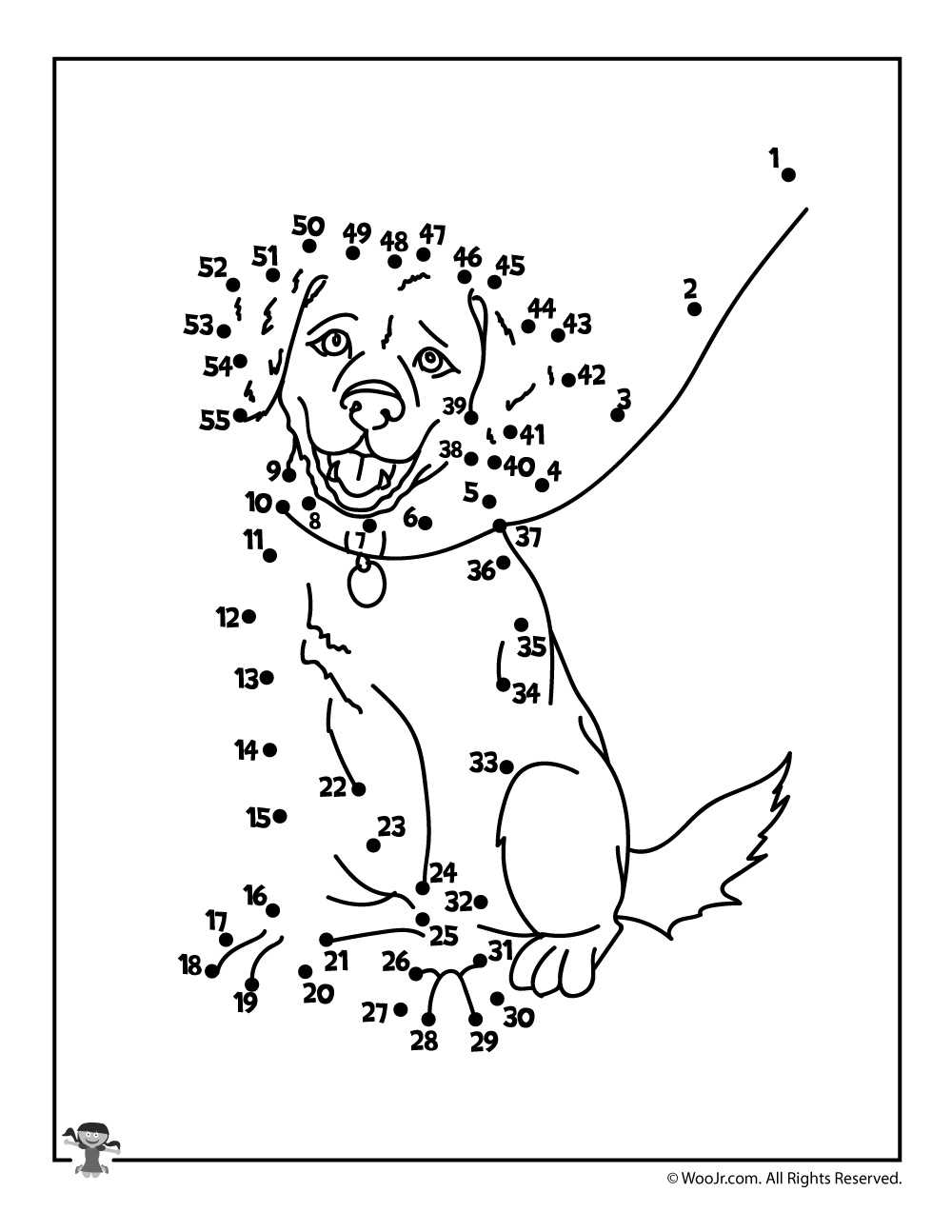
Match the counting sequence to the child’s current mastery: use 1–10 or 1–20 for ages 3–4 who are learning stable number order, 1–50 for ages 5–6 with consistent forward counting, and 1–100 or higher for ages 7–8 who can track longer chains without losing place. If a child hesitates after every few numerals or skips positions, reduce the range by 10–20 numbers and increase spacing between markers to maintain accuracy and confidence.
Adjust complexity not only by maximum value but also by pattern type. Straight ascending sequences suit beginners, while mixed intervals such as counting by twos up to 60 or by fives up to 100 challenge arithmetic recall. For advanced learners, introduce backward counting segments or hidden images requiring more than 120 connected points to strengthen concentration and visual scanning across the full page.