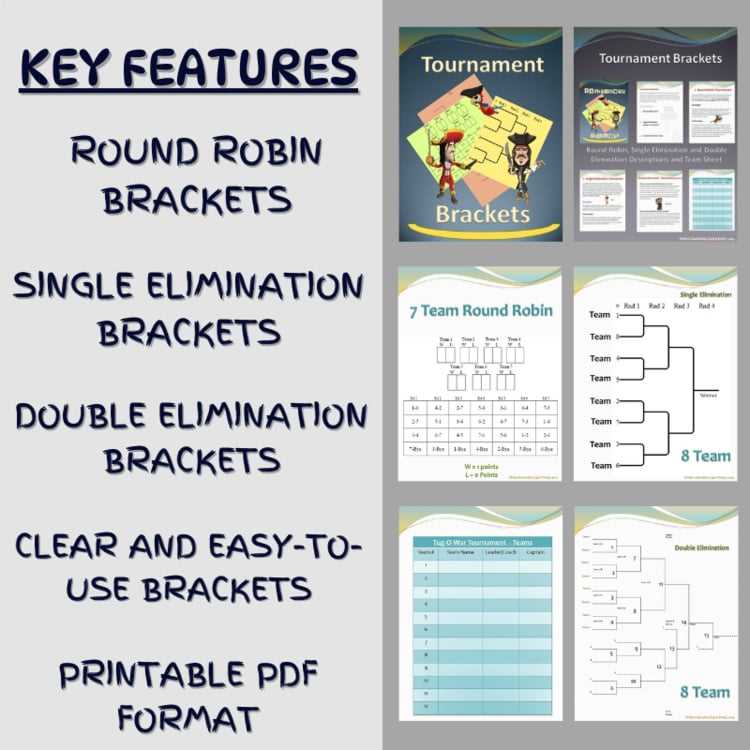
To run a smooth and engaging competition, organizing a chart for tracking match results is key. A visual layout helps participants and spectators easily follow the progression of the event, ensuring that no detail is overlooked. Setting up a structure where each participant or team has a clear chance to continue, even after a loss, maintains excitement throughout.
To get started, you’ll need a clear and simple layout that accommodates all players. Ensure your format allows for easy tracking of wins and losses, with the ability to adjust as the event progresses. This approach guarantees fairness while adding an element of suspense, since every competitor has the opportunity to play again, even after a setback.
With the right approach, you can create a competitive and organized experience for all participants, whether for a local event or a larger-scale competition. By following the proper structure, you’ll be able to quickly implement and track results, making sure the event stays on track from start to finish.
How to Use a Double Elimination Structure for Your Tournament
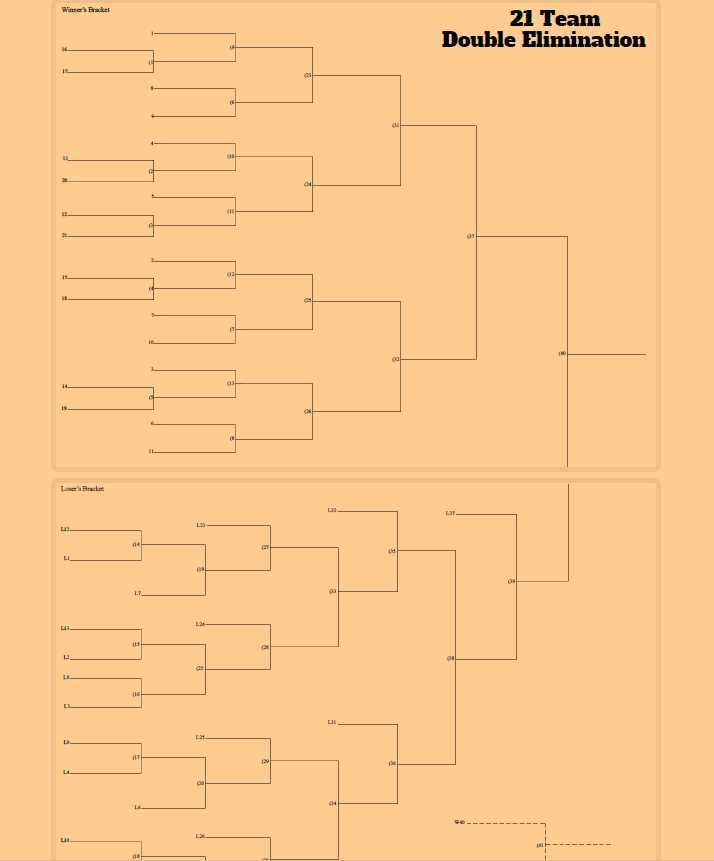
Start by determining the number of participants. For an even distribution of matches, organize them into initial matchups that fit your chart. Ensure each player is represented, with enough space to track winners and losers after every round.
For the first round, match players in pairs and assign them to the main side of your chart. As each match concludes, update the chart by placing winners in the next round’s slots and sending losers to the consolation bracket. This structure allows each player at least two chances to stay in the competition.
After each game, mark the outcome clearly and adjust matchups accordingly. The winner of each match advances, while the loser moves to the secondary side of the structure. Continue until the final stages of both the main and consolation brackets.
In the final stage, the last player remaining in the winner’s side faces the last player from the losers’ side. If the winner’s side player loses, they must face off again, giving the second-place player a final chance to win. This ensures that the tournament is fair, as no one is eliminated too early.
Update the structure regularly to avoid confusion. Keep track of all matchups, ensuring that you have accounted for all players in both brackets. This helps prevent delays and ensures a smooth flow of matches.
For larger tournaments, consider offering online tools that can automatically generate and update the chart for you. This saves time and ensures accuracy, especially in events with a high number of participants.
By maintaining this structure, you can keep the competition exciting and organized, ensuring that each player has a fair shot at the title. With every player getting at least one loss before being completely out, the format promotes extended gameplay and increases the level of engagement throughout the event.
Understanding the Structure of a Double Elimination Format
The format consists of two main sections: the winner’s side and the loser’s side. In the winner’s section, each competitor advances after a victory. After a loss, players are moved to the loser’s side, where they are given another chance to continue. Players can be eliminated only after a second defeat, ensuring each participant gets a fair opportunity to bounce back.
The final stages feature the remaining players from both sides. The last standing competitor from the winner’s side faces the survivor of the loser’s section. If the winner’s side competitor loses, a final match is played to determine the ultimate winner. This layout encourages extended competition and gives every player a fighting chance until their second loss.