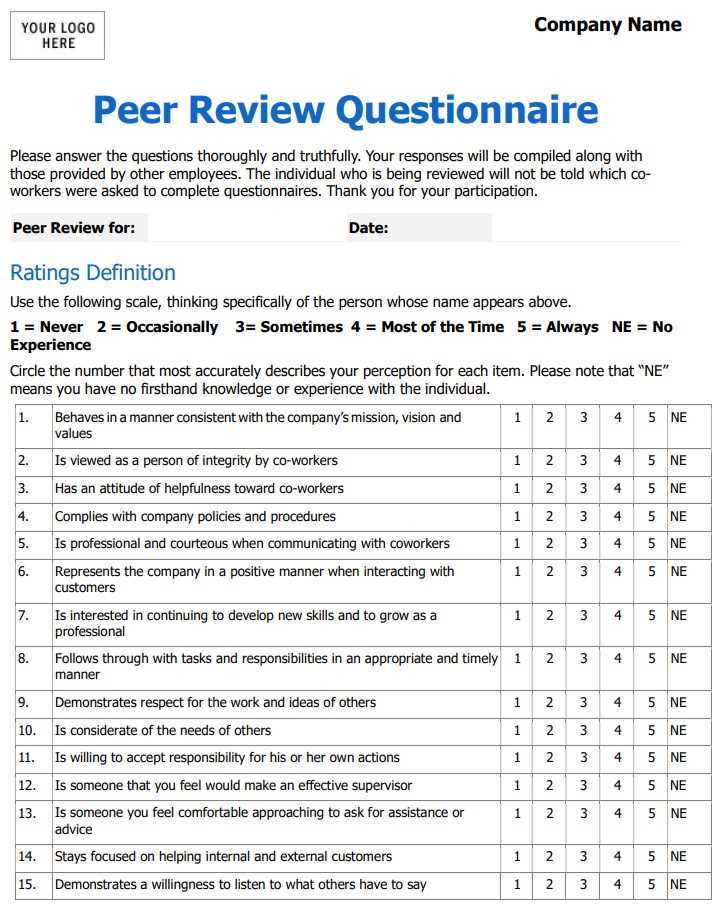
Start by defining clear categories that reflect the key aspects of job responsibilities. For example, include sections for communication skills, problem-solving ability, teamwork, and goal achievement. These sections will give a comprehensive view of an individual’s performance and areas for improvement.
Structuring the Sections for Maximum Clarity
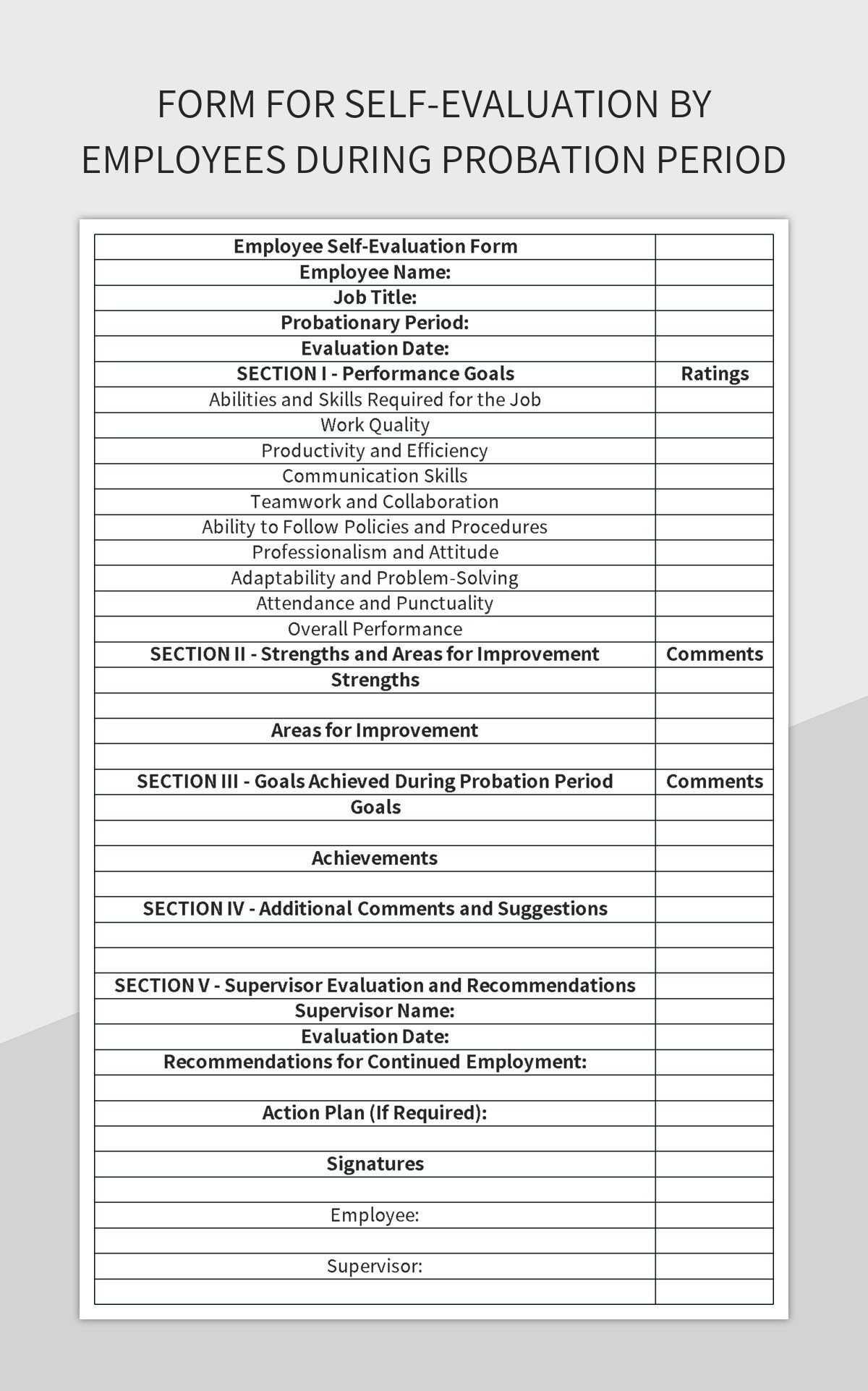
Each category should contain specific criteria or statements that the individual can assess themselves against. Use a Likert scale (e.g., 1 to 5) to allow for an easy measurement of performance. Ensure each item is concise and relevant to the tasks the person is responsible for.
For example, under communication skills, you could ask: “How effectively do you communicate with colleagues?” Follow this with a rating scale, where 1 might represent “Needs Improvement” and 5 represents “Outstanding.” This allows for consistency in responses and a more objective self-assessment.
Tips for Clear and Actionable Criteria
Make sure each criterion is specific and measurable. Avoid vague descriptions like “good communicator” and instead focus on concrete behaviors, such as “responds to emails within 24 hours” or “speaks clearly during meetings.” This helps make the evaluation process more useful.
Customizing the Tool for Different Job Roles
The categories and questions should reflect the specific responsibilities and goals associated with each position. For example, a manager’s assessment may focus more on leadership, decision-making, and managing team dynamics, while a customer service representative’s form would emphasize communication and problem resolution skills.
To further customize the form, add open-ended questions where individuals can elaborate on specific achievements or challenges faced. Questions like “What was your biggest accomplishment this year?” or “Describe a situation where you overcame a challenge” provide valuable insight beyond the rating scale.
Incorporating Goal-Setting into the Process
Encourage individuals to set personal goals for the next evaluation period. Include a section where they can write down goals they aim to achieve, such as improving specific skills, taking on more leadership tasks, or completing certain projects. This can provide clear direction and motivation for future growth.
Finalizing and Using the Assessment
Once the assessment tool is complete, ensure that it is easy to use and accessible for everyone involved. Make the tool available in both digital and printed formats, allowing for flexibility in how it is filled out. After collecting the responses, provide constructive feedback based on the ratings and comments received.
Use the assessment as a guide for one-on-one discussions, focusing on strengths and areas for development. This feedback session can lead to actionable steps for improvement and personal growth.
Creating an Impactful Performance Reflection Tool
Begin by defining clear criteria that reflect core responsibilities. Include sections for skills, accomplishments, and areas for improvement. Use simple and measurable statements to assess how well someone meets their objectives.
Incorporate a rating scale for each category. A scale from 1 to 5 helps quantify performance, making it easier to track progress over time. For example, “Ability to meet deadlines” could range from “Rarely meets deadlines” to “Always meets deadlines ahead of schedule.”
To ensure clarity, avoid vague terms. Instead of using phrases like “good communicator,” specify behaviors such as “responds to emails within 24 hours” or “shares important updates in team meetings.” This creates concrete benchmarks for assessment.
Add open-ended questions to capture detailed insights. Questions like “What was your biggest challenge this year?” or “What skills do you plan to improve?” encourage self-reflection and provide additional context for the ratings.
Consider including a goal-setting section. This allows individuals to identify specific targets they want to achieve moving forward. For example, a goal could be to improve technical skills or take on more leadership responsibilities in the coming months.
Finally, provide space for both the individual and their manager to offer feedback. This ensures a two-way conversation, with clear action steps for both growth and recognition. Use the results to create personalized development plans.