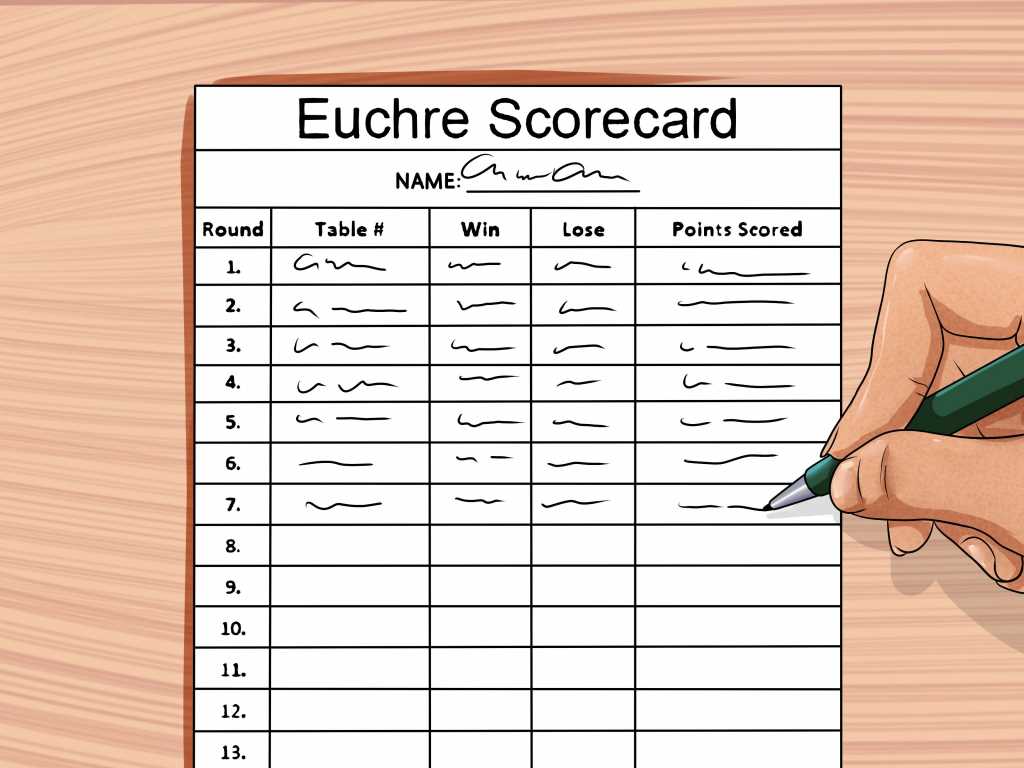
Use a landscape A4 or US Letter layout with four vertical team columns and a running total row; this format fits two tables of four and keeps all results visible at a glance.
Layout Structure for Two Tables
Create one sheet per round that lists Team A, Team B, Team C, and Team D across the top. Add rows numbered 1–12 to track individual hands. Include separate boxes for bids, tricks taken, and round points.
- Column width: at least 2.5 cm per team
- Font size: 11–12 pt for clear readability
- Totals row: bold with double border
- Maximum game points: 10 or 15, depending on house rules
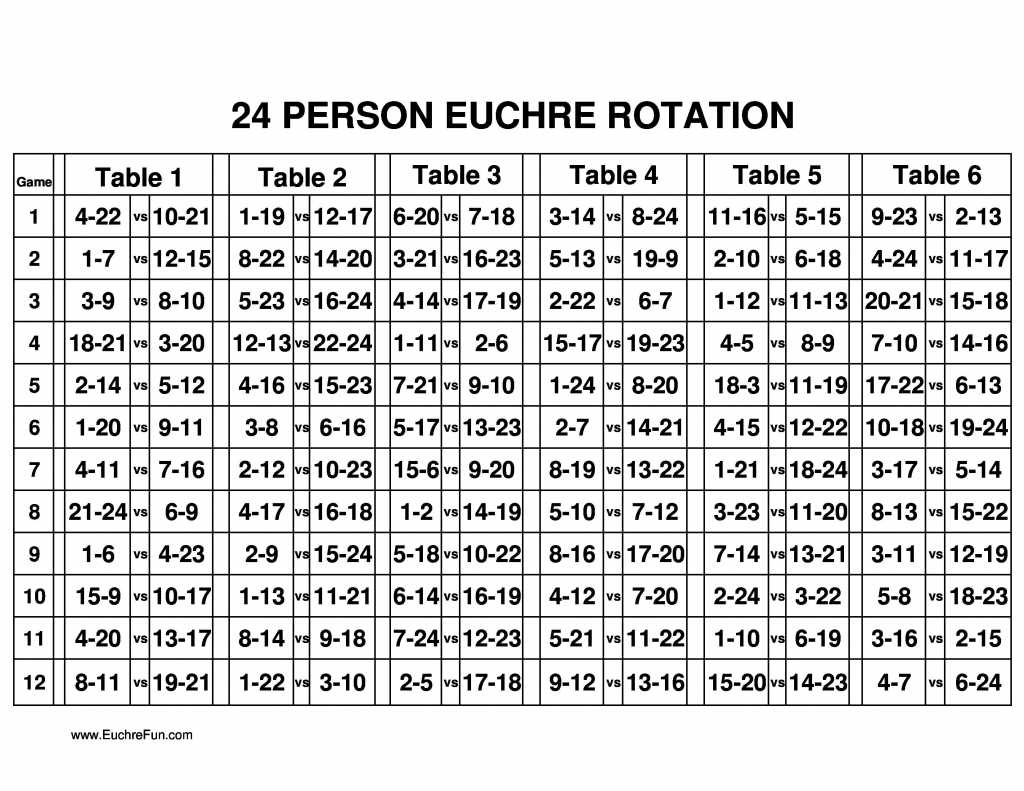
Leave a margin on the right side for rotation notes. In an eight-person setup, partners may rotate every four hands; document seat changes to prevent confusion.
Tracking Bids, Tricks, and Penalties
Add three small boxes beside each hand number: one for the calling side, one for tricks won, and one for points awarded. Standard values include 1 point for 3–4 tricks, 2 points for a march, and 2 points to defenders if the calling side is set.
Rotation and Table Management
After each mini-match to 10 points, record final totals in a summary grid placed at the bottom of the page. This grid should list team names and cumulative match wins across the evening.
Printing and Paper Setup
Select “Actual Size” at 100% scale and disable automatic scaling. Use 90–100 gsm paper to reduce ink bleed-through. Print two sheets per page and cut if hosting multiple tables.
Archiving Results
Store completed tally pages in a labeled folder by date. For league play, transfer match outcomes into a spreadsheet with columns for team name, wins, losses, and point differential.
Printable Euchre Score Cards for 8 Players
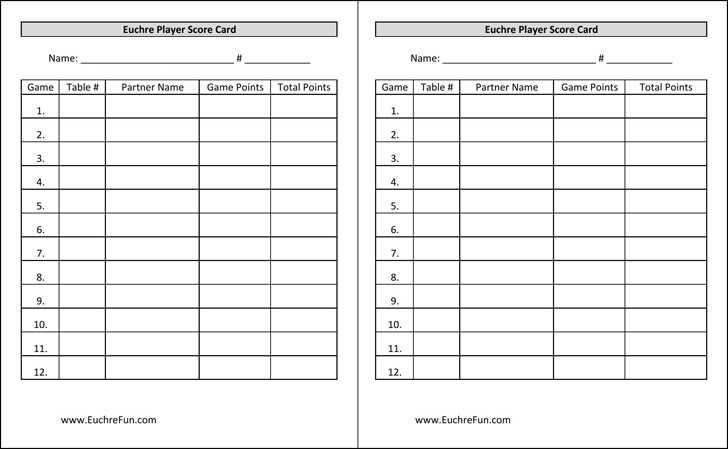
Use a landscape sheet with four team columns and numbered rows from 1 to 12; this structure supports two tables of four participants and keeps every hand recorded on a single page.
Label columns with team names rather than seat numbers to avoid confusion during partner rotations. Allocate three narrow boxes beside each hand: one marking the calling side, one showing tricks taken, and one listing points awarded. Standard allocation is 1 point for 3–4 tricks, 2 points for a march, and 2 points to defenders if the calling side is set.
Set the target total at 10 or 15 points depending on house rules. Place the running total in a bold bottom row with thicker borders so it stands out during fast-paced rounds.
Include a small notes section on the right margin to track seat changes after every four hands. In an eight-person rotation, partners often shift clockwise; documenting this prevents disputes and misattributed results.
Select 100% scaling in printer settings and disable automatic shrinking. Use 90–100 gsm paper to reduce bleed-through from pens. If hosting multiple tables, print two tally sheets per page and cut them in half to conserve supplies.
Keep handwriting consistent by assigning one person at each table to record results. Use dark ink and avoid pencil to maintain legibility across long sessions.
After the event, transfer match outcomes into a spreadsheet with columns for team name, wins, losses, and point differential. Store completed tally pages by date in a labeled folder to maintain an organized record of league or casual game nights.