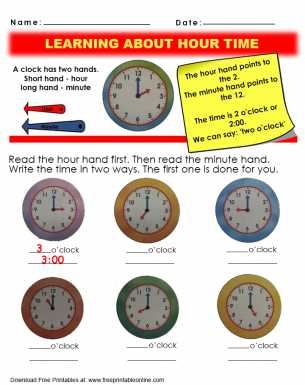
Choose clock-reading practice pages that match the child’s current skill level and include clear analog faces with minute markers. For beginners aged 5–6, use sheets that focus only on full hours and half hours. Learners aged 6–8 benefit from mixed minute intervals such as 5-minute steps, which build faster recognition of hand positions.
Use high-contrast layouts with large numerals at least 18–24 pt in size to reduce visual strain. Black hands on white backgrounds remain the easiest format for early readers. Avoid cluttered graphics; a clean page improves focus and helps children connect hand placement with the correct clock reading.
Schedule short practice sessions of 5 to 10 minutes rather than long drills. Consistent daily exposure leads to better retention than occasional long study blocks. Pair paper tasks with real clock checks during daily routines such as breakfast or bedtime to reinforce the concept in real situations.
Before producing copies, confirm the file resolution is at least 300 DPI and the page format matches your paper size, typically US Letter or A4. Proper scaling prevents blurred numbers and keeps the clock faces proportional, which supports accurate learning.
Printable Telling Time Worksheets for Kids to Practice Clock Reading Skills
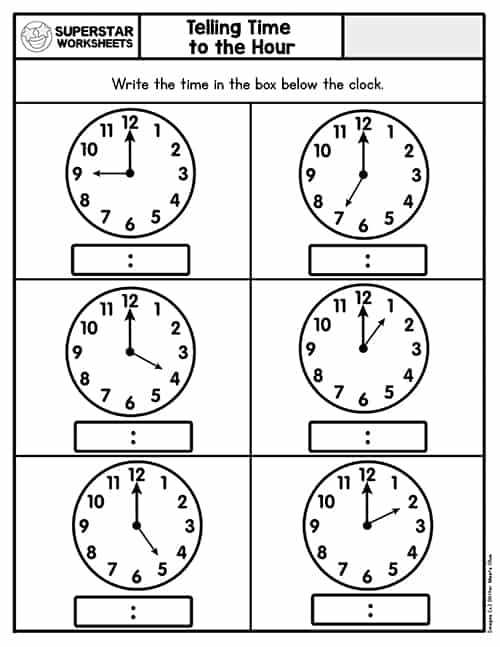
Pick clock-reading activity pages with large analog faces and clear minute ticks so children can quickly connect hand positions with the correct hour and minute. For ages 5–6, limit tasks to full hours and half hours before moving to five-minute intervals.
Use structured skill progression rather than random drills. Arrange learning sheets in this order:
- Full hour recognition (o’clock only)
- Half-hour identification
- Quarter past and quarter to
- Five-minute increments around the dial
- Mixed clock challenges
Keep each practice session short–about 7 minutes for younger learners and up to 12 minutes for older elementary students. Brief, repeated exposure improves recall and reduces frustration.
Choose page layouts with these features:
- Numbers at least 18 pt for clear visibility
- Bold hour and minute hands
- Minimal decorative graphics
- Answer space directly under each clock face
Integrate real-life checks during the day. After completing a paper task, ask the child to read the wall clock at breakfast, before school, and at bedtime. This connection between paper practice and daily routine strengthens retention.
For group settings such as classrooms, prepare mixed-difficulty packets. Include about 60% familiar problems and 40% new ones. This balance maintains confidence while still building new skills.
Before producing copies, confirm the file uses 300 DPI resolution and matches your paper format (US Letter or A4). Low-quality output can blur numerals and confuse early learners.
Store completed pages in a dated folder and review them weekly. Tracking mistakes–such as confusing minute and hour hands–helps you adjust the next set of learning sheets with targeted practice.
How to Select Age Appropriate Clock Reading Worksheets for Early Learners
Choose clock-learning pages that match the child’s current skill, not their grade label. If a learner still confuses hour and minute hands, begin with full-hour activities only and avoid mixed-minute problems.
For ages 4–5, select sheets with single large clock faces and bold numerals. Young beginners process visual information better when distractions are limited and spacing between tasks is wide.
For ages 5–6, move to materials that introduce half-hour positions. Look for layouts where the minute hand clearly points to the 6 marker and the hour hand sits between numbers, helping children notice hand relationships.
Students aged 6–7 benefit from five-minute interval practice. Pick pages that include minute marks around the dial and provide answer lines directly below each clock image to reduce eye movement.
Use this quick matching guide when reviewing learning sheets:
- Ages 4–5: full hours only, labeled clocks
- Ages 5–6: half hours and simple matching tasks
- Ages 6–7: five-minute steps and mixed questions
- Ages 7+: word problems with daily schedule context
Check visual clarity before producing copies. Numerals should remain sharp at standard home output settings (300 DPI recommended). Blurred minute ticks can lead to repeated mistakes.
Also review task density on each page. Early learners handle about 6–8 clock problems per sheet, while older elementary students can manage 12–16 without losing focus.
Reassess difficulty every two weeks by tracking accuracy rates. If the child scores above 85% across three sessions, introduce the next level of clock-reading material to maintain steady progress.