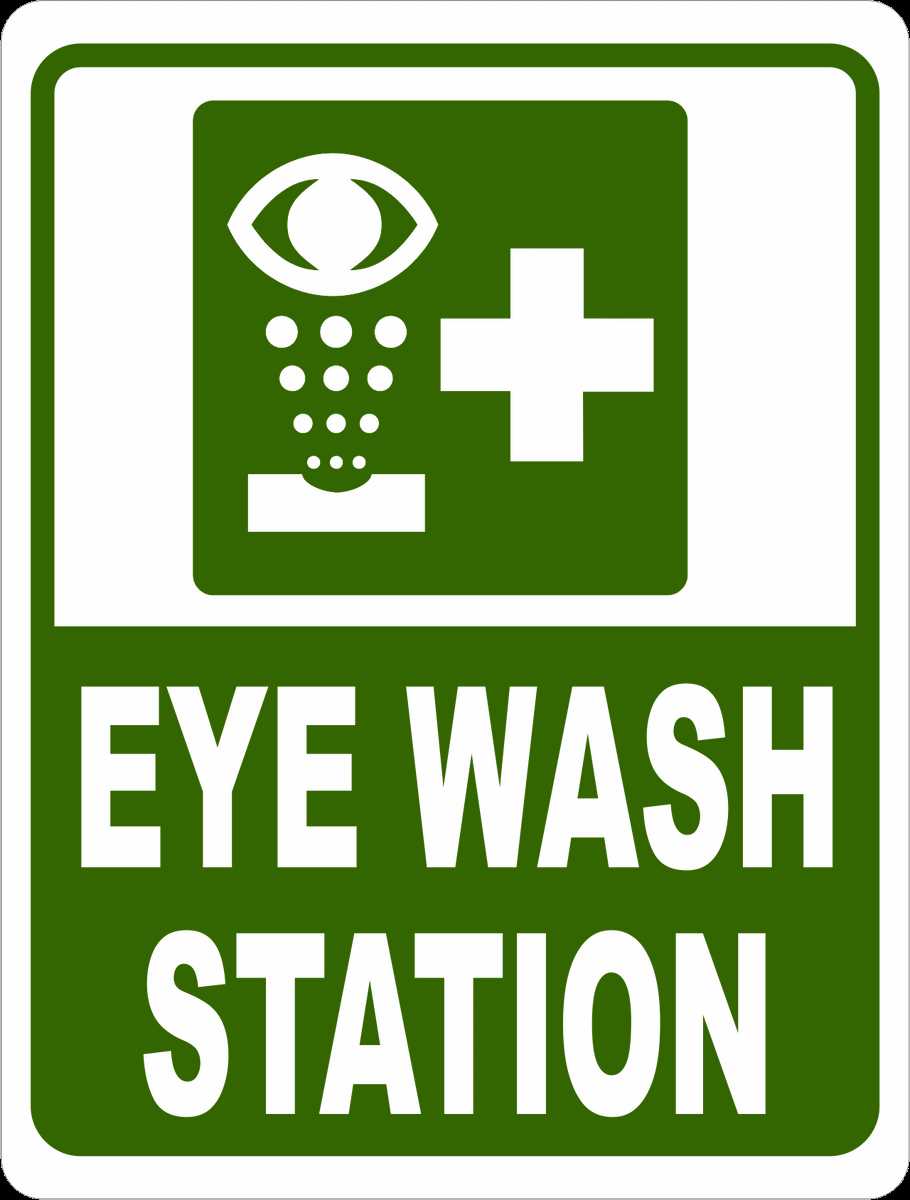
Install a high-contrast hazard marker directly above and along the access path to the eye rinsing unit so it can be identified within seconds from at least 25–50 feet away. Use bold lettering, universally recognized safety pictograms, and colors aligned with ANSI Z535 standards–typically green and white for emergency equipment–to reduce hesitation during exposure to chemicals or airborne particles.
A clear visual notice must remain unobstructed, illuminated to a minimum of 10 foot-candles in indoor environments, and resistant to moisture in areas with splashing water or corrosive substances. Facilities handling acids, solvents, or alkaline compounds should position directional indicators at corridor intersections and doorways to guide personnel from any workstation within a 10-second travel distance, matching ANSI/ISEA Z358.1 requirements.
Choose a layout with large sans-serif typography (minimum 1-inch letter height for viewing at 10 feet), a reflective or photoluminescent background for low-light conditions, and laminated or PVC material rated for industrial settings. Providing a ready-to-use downloadable template allows safety managers to replace damaged markers immediately, maintain compliance records, and standardize emergency labeling across laboratories, manufacturing floors, and maintenance zones.
Printable Eyewash Station Sign: Practical Guide for Workplace Safety Compliance
Place a clearly visible emergency eye rinse marker within a 10-second travel distance from hazardous work areas and mount it at 80–96 inches above floor level so it remains visible above equipment and shelving. Use green and white color coding aligned with ANSI Z535.1 and ensure lettering height matches viewing distance–at least 1 inch per 10 feet.
Comply with OSHA 29 CFR 1910.151(c) by marking all plumbed and self-contained eye flushing units with durable identification graphics that can withstand moisture, cleaning agents, and temperature fluctuations. In production zones handling acids, caustics, or solvents, directional arrows must be installed at corridor turns and door frames to guide employees without hesitation.
Select materials based on exposure conditions:
- Laminated polyester sheets for laboratories with frequent washdowns
- Rigid PVC boards (3–6 mm) for manufacturing floors
- Photoluminescent panels for low-light warehouses
- UV-resistant coatings for outdoor chemical storage areas
Design layout elements to prioritize legibility over decoration. Avoid clutter and use:
- Universal emergency eye wash pictogram
- Bold sans-serif typeface
- High contrast ratio above 70%
- Arrow indicators where direct line of sight is blocked
Integrate inspection tracking by placing a small writable area on the bottom corner for monthly activation checks required by ANSI/ISEA Z358.1. This allows safety officers to document flushing tests lasting at least 3 minutes for self-contained units or weekly activation for plumbed systems.
Standardize file templates across departments so replacement graphics can be reproduced immediately after damage or relocation of emergency wash fixtures, reducing gaps in hazard communication and supporting audit readiness during regulatory inspections.
Mandatory OSHA Requirements and ANSI Standards for Eyewash Station Signage Placement and Visibility
Install a clearly identifiable emergency eye rinse marker wherever hazardous chemicals are handled and ensure it is visible from any approach path without obstruction. OSHA 29 CFR 1910.151(c) requires suitable facilities for quick drenching or flushing of the eyes; this obligation includes unmistakable visual identification of the flushing unit so workers can locate it within seconds.
Position the identification panel above the eye flushing fixture at a height between 80 and 96 inches from the floor, keeping it outside splash zones yet directly aligned with the equipment. The travel path must remain free of barriers, and directional indicators should be mounted at hallway intersections or large production areas where line of sight is interrupted.
ANSI/ISEA Z358.1 specifies that emergency eye wash equipment must be reachable within 10 seconds, typically interpreted as roughly 55 feet on the same level. Visual markers should support this requirement by using high-contrast green and white coloring, standardized pictograms, and letter heights scaled to viewing distance–approximately 1 inch of character height per 10 feet of visibility.
Lighting levels around the identification display should not fall below 10 foot-candles in indoor settings. In warehouses or areas subject to power interruptions, photoluminescent or externally illuminated panels provide continuous recognition. Outdoor chemical storage zones require UV-resistant materials to prevent fading that could compromise readability.
Inspection documentation should confirm that visual identifiers remain legible, securely mounted, and unobstructed during weekly or monthly equipment activation checks mandated by ANSI. Any relocation of eye flushing fixtures must be accompanied by immediate replacement or repositioning of the corresponding hazard notice to maintain regulatory alignment and audit readiness.