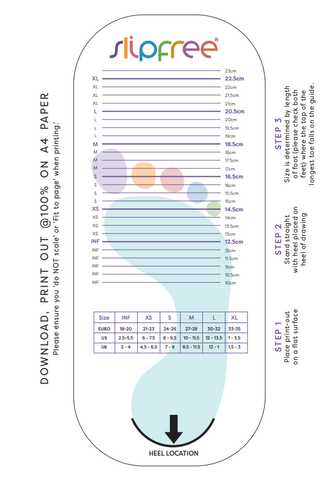
Download a full-scale PDF sizing guide and set your printer to 100 percent with scaling disabled to obtain accurate length readings in centimeters and inches.
How to Prepare and Calibrate the Sizing Guide
After printing, verify accuracy by placing a physical ruler against the reference line marked 5 cm or 2 inches. If the printed scale differs by more than 1 mm, adjust printer settings and reprint. Use A4 or US Letter paper and place the sheet on a hard floor against a wall to keep alignment straight.
Secure the page with tape to prevent sliding. The heel should touch the wall while standing upright with full weight distributed evenly. Measure both feet, as differences of 3–5 mm are common.
How to Determine Length and Width for Shoe Selection
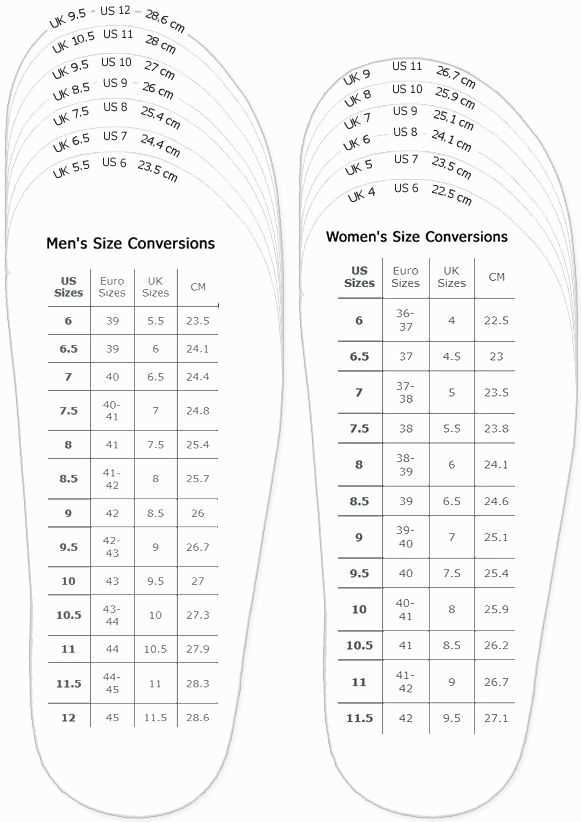
Mark the longest toe with a pencil held vertically. Read the measurement at the farthest point to determine length. Add 5–10 mm for comfort allowance before matching the value to brand size tables.
For width, use the horizontal guides across the widest part of the sole. Compare the recorded width with manufacturer charts labeled narrow, standard, wide, or extra wide.
- Measure in the evening when feet are slightly expanded.
- Wear the same type of socks intended for the shoes.
- Repeat measurement twice to confirm consistency.
Store the calibrated sheet for future checks, especially for children whose sizes may change every 3–6 months.
Paper Shoe Size Guide for Accurate Home Fitting
Set your printer to 100 percent scale and disable page resizing before producing the size ruler sheet to maintain correct proportions in centimeters and inches.
Place the paper against a wall on a hard surface and secure it with tape to prevent shifting. Stand with your heel touching the wall and distribute body weight evenly. Mark the longest toe with a pencil held upright to avoid angled lines that distort length readings.
Measure both feet separately and record the larger value. Differences of 2–6 mm are common and should guide final shoe selection. Add a 5–10 mm allowance to the recorded length to provide space for movement inside the shoe.
Check width using the horizontal reference lines across the forefoot area. Compare the measured width to brand-specific size tables labeled narrow, standard, wide, or extra wide to reduce sizing errors.
Take measurements in the evening, as feet tend to expand slightly during the day. Wear the same thickness of socks intended for regular use to maintain consistency.
Store the calibrated ruler sheet in a flat folder for repeated checks, especially for children whose shoe sizes may change every few months.