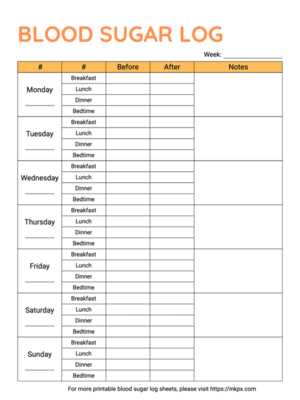
For consistent monitoring of blood sugar levels, using a structured sheet is one of the simplest ways to track changes over time. Recording values regularly ensures you can spot patterns, identify potential issues, and share accurate data with healthcare providers.
Start by choosing a template with space to log readings, time, and notes about meals or activities that may influence blood sugar. This approach allows for quick and easy tracking, making it possible to keep a detailed record without overwhelming yourself.
By having a ready-to-print template, you can always stay prepared, whether at home or on the go. These sheets are especially useful for those who need to monitor their condition closely and make adjustments to medication or lifestyle as necessary. Download and print a template that fits your needs for long-term health management.
Tracking Blood Sugar Levels with a Structured Sheet
For consistent tracking of blood sugar, it’s best to use a chart that allows you to log values at various times throughout the day. The most effective logs will include fields for the date, time, blood sugar reading, and any relevant notes about food or activity. This helps identify patterns and correlations that can inform your health decisions.
Templates can be customized based on your needs. Some may include columns for medications taken or insulin doses, which can be helpful for adjusting treatment plans. Be sure to select a layout that fits your lifestyle, whether you prefer to track once a day or multiple times a day. This makes it easier to stay on top of your health without feeling overwhelmed.
Having a printed chart on hand ensures that you don’t have to rely on apps or digital devices for tracking. It’s also a more straightforward way to share your progress with healthcare providers during appointments. The simplicity of writing down each reading helps keep your focus on maintaining consistent care.
How to Use a Printable Glucose Log for Daily Tracking
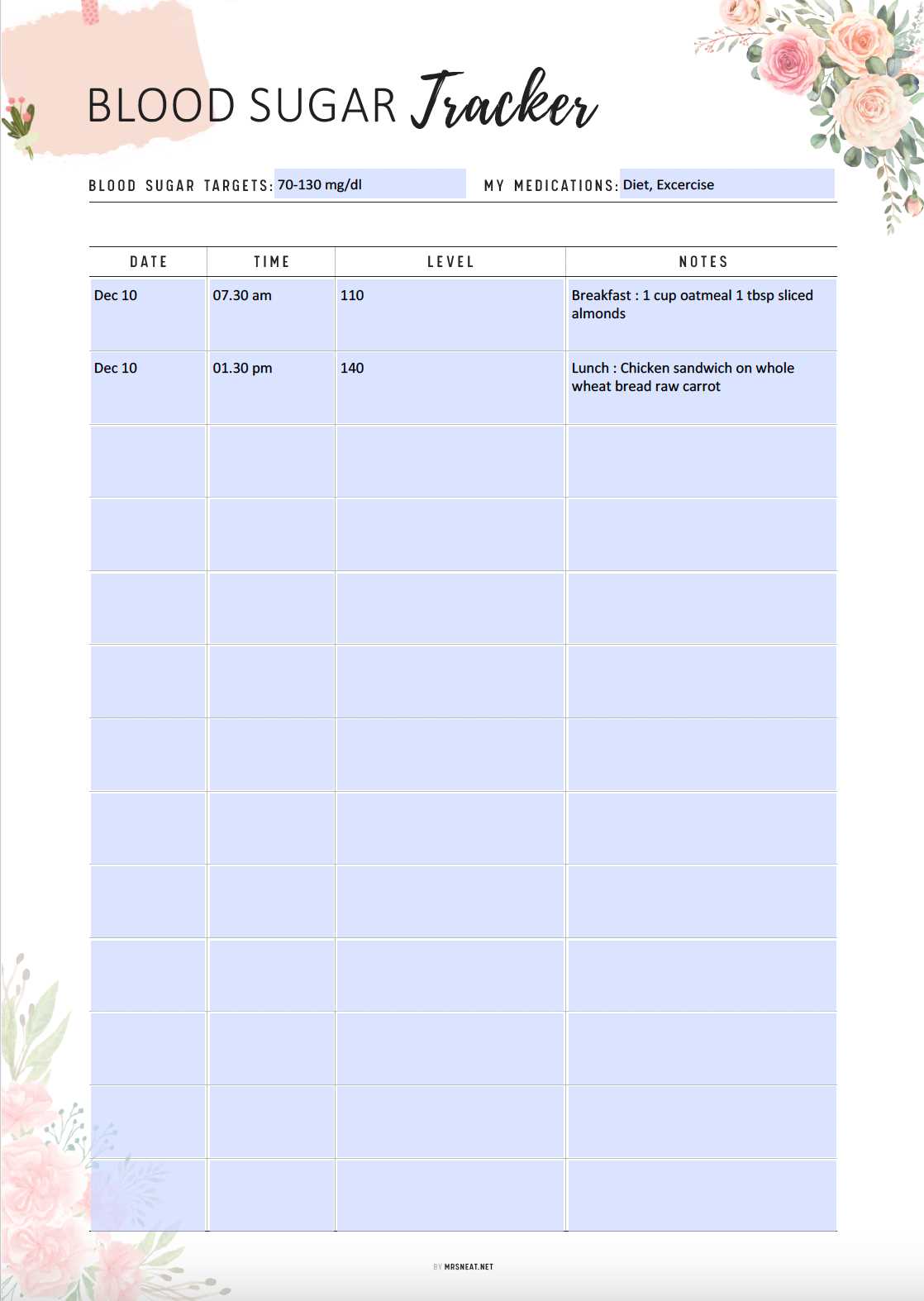
To track your levels effectively, start by filling in the time of day for each entry, whether it’s before or after meals or at specific intervals. Record your reading immediately after testing, noting any important factors like meals, physical activity, or medication changes that could affect the reading. This helps create a comprehensive picture of how different factors influence your measurements.
Review your recorded data regularly to identify trends or irregularities. For instance, if certain foods or times of day consistently show higher or lower readings, it may indicate a need for dietary or medication adjustments. Keeping a detailed log makes it easier to discuss these trends with your healthcare provider, ensuring better, personalized management of your health.