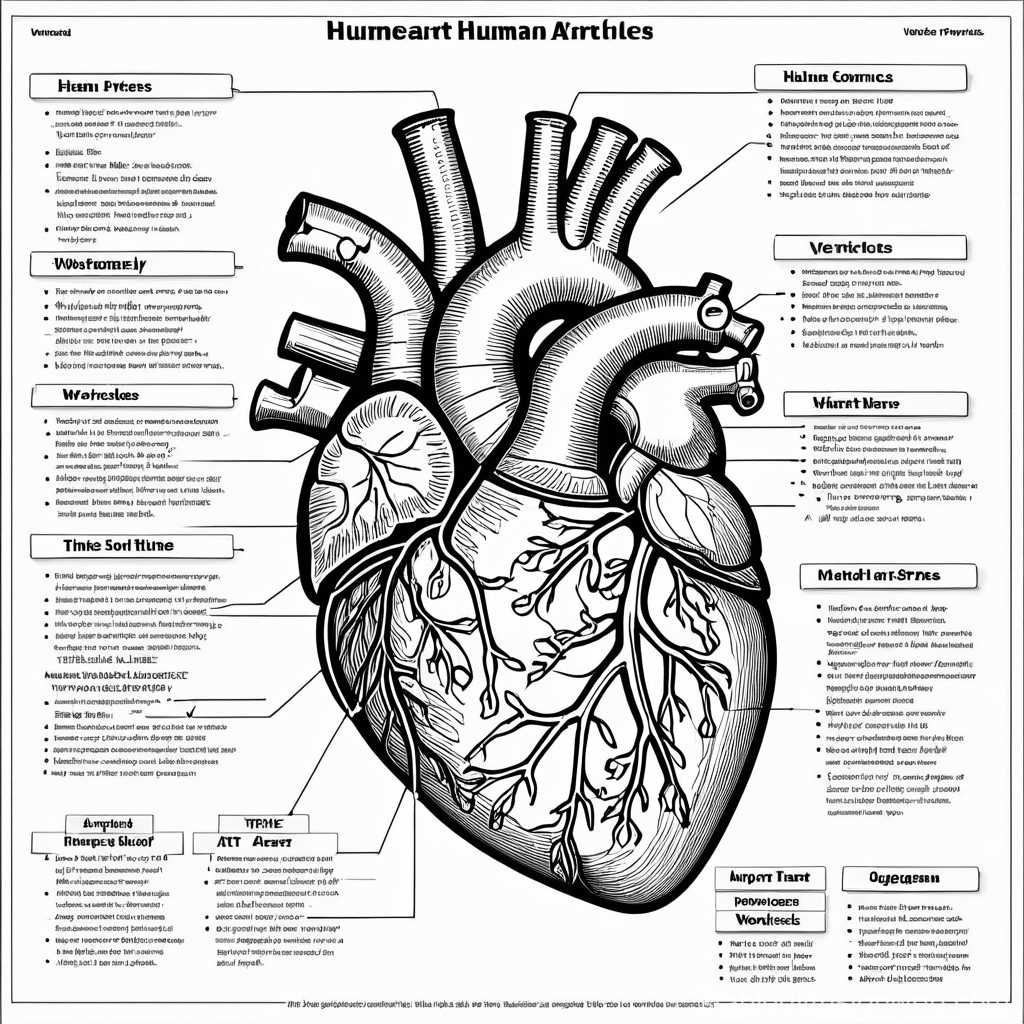
Download black-and-white diagrams with clear vessel outlines sized for A4 or US Letter, then print at 100% scale so chamber proportions remain accurate for study tasks.
File Formats and Line Quality
Choose PDF for fixed margins and consistent scaling; use SVG if you plan to resize or edit labels in vector software. Target line weight 1–1.5 pt for outer contours and 0.5–0.75 pt for internal valves and arteries. Resolution for raster files should be at least 300 DPI to avoid blurred borders after printing.
- Outer silhouette thickness: 1.2 pt
- Valve flaps and septum: 0.6 pt
- Coronary vessels: 0.4–0.5 pt
- Margin padding: 10–12 mm
Label Sets and Educational Markers
Use dual versions: one blank for student notation and one with reference terms. Include the following structures to match common biology curricula:
- Right atrium and right ventricle
- Left atrium and left ventricle
- Interventricular septum
- Aorta with arch branches
- Pulmonary trunk and arteries
- Superior and inferior vena cava
- Mitral and tricuspid valves
Paper and Printer Settings
Select 120–160 gsm matte paper to prevent bleed-through when using markers. Disable “fit to page” in the print dialog, enable “actual size,” and set grayscale mode to preserve sharp borders. For classrooms, duplex printing allows answer keys on the reverse side.
Activity Variations

- Color-code blood flow: blue for deoxygenated paths, red for oxygenated routes.
- Numbered labeling drills: replace text with digits and provide a separate term list.
- Timed identification: 3–5 minutes per sheet to build recall speed.
Source Reliability Checks
Verify diagrams against medical atlases published after 2015, confirm vessel placement symmetry, and avoid stylized cartoons that distort chamber size ratios. A correct left-to-right wall thickness difference should appear roughly 3:1 on the lower chambers.
Printable Heart Anatomy Coloring Pages for Study and Classroom Use
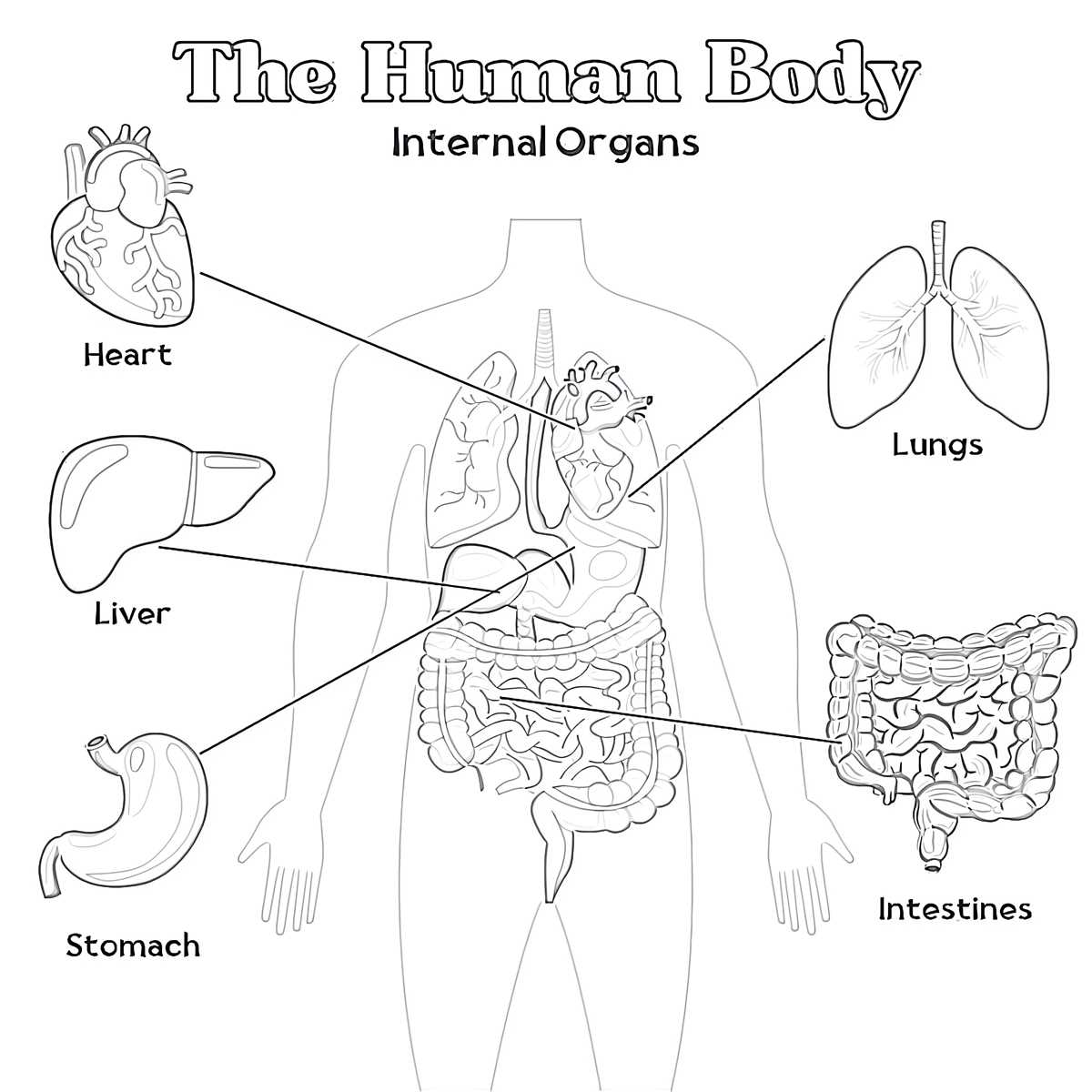
Use A4 or US Letter black-line diagrams of the cardiac organ with chamber borders at 1–1.2 pt thickness and vessel lines at 0.5 pt, printed at 300 DPI on 140 gsm matte paper so students can shade regions without bleed-through and still read labels such as atria, ventricles, aorta, pulmonary trunk, and vena cava; keep margins at 12 mm and disable page scaling to preserve proportions for quizzes and board explanations.
Provide two worksheet variants–one blank scheme for independent labeling and one reference sheet with numbered markers–and rotate tasks like flow tracing with red and blue pencils, timed identification drills of valves and septum, and pair checks where learners compare wall thickness ratios of lower chambers near 3:1, which helps teachers grade faster and keeps group activities structured without additional materials.