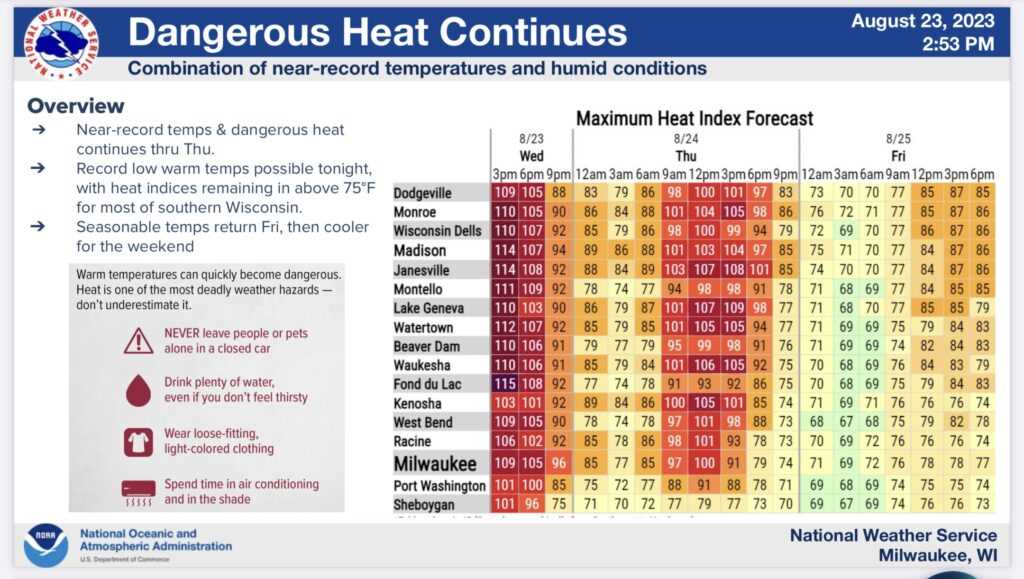
Use a temperature–humidity reference table before outdoor work or training: match the air temperature with relative humidity to estimate perceived strain on the body and adjust schedules, hydration, and rest intervals immediately. For example, at 95°F with 60% humidity, perceived stress rises sharply; limit continuous activity to short intervals and increase water intake to at least 1 liter per hour.
This download-ready table converts two measured values into a clear risk range, helping supervisors and athletes decide when shade, cooling breaks, or schedule changes are required. Color-coded bands and numeric ranges allow fast decisions without calculations. Keep a paper copy near work sites, sports fields, and first-aid stations so guidance remains available during power outages or device restrictions.
Accuracy depends on proper inputs: measure air temperature in the shade at head height and humidity with a calibrated sensor. Wind and direct sun can raise perceived stress beyond table estimates; add a safety margin by moving one risk level higher during calm or cloudless conditions. For prolonged exposure, plan rest ratios such as 15 minutes off per hour once readings enter the high-risk band.
For home, school, or workplace use, select a format optimized for quick scanning: large numerals, clear contrast, and durable paper. Laminated sheets withstand moisture and repeated handling, while letter-size layouts fit standard binders. Update copies seasonally to keep thresholds visible where decisions are made.
Thermal Stress Table: Practical Use Guide
Use a temperature–humidity grid before outdoor work: match air temperature with relative humidity and act on the resulting risk band to schedule breaks, hydration, and clothing choices.
For daily planning, read the grid at the hour of peak sun exposure, typically 1–4 p.m. A shift from 40% to 60% humidity at 90°F raises perceived strain by roughly one risk tier, which signals shorter work intervals and shaded rest every 30–45 minutes.
- Low strain band: normal activity with water every 20–30 minutes.
- Moderate strain band: reduce pace, add shade, water every 15–20 minutes.
- High strain band: frequent pauses, loose light fabrics, buddy checks.
- Severe strain band: postpone strenuous tasks; emergency symptoms monitoring.
Apply the table to gear selection: moisture-wicking tops, wide-brim hats, and breathable footwear lower skin moisture buildup; avoid impermeable layers once humidity exceeds 55% at temperatures above 88°F.
- Record forecast temperature and humidity from a local source.
- Locate the intersecting cell on the grid.
- Choose the action set tied to that cell.
- Recheck conditions every two hours or after weather shifts.
How to Read Temperature and Humidity Values on a Printable Heat Index Chart
Match the air temperature on the horizontal scale with the moisture percentage on the vertical scale, then read the perceived warmth value at their intersection on the reference sheet. Use degrees Fahrenheit or Celsius exactly as labeled; mixing units leads to wrong conclusions. For example, 90°F aligned with 60% moisture yields a felt temperature far higher than the air reading, signaling elevated strain during outdoor activity.
Read temperature bands as ranges rather than single points to avoid misinterpretation. A band labeled 85–90°F groups similar outcomes, so choose the midpoint when your thermometer fluctuates. If your reading is 88°F and the table shows 85°F and 90°F rows only, interpolate visually instead of rounding down; this keeps risk assessment conservative.
Follow moisture increments precisely because small jumps amplify perceived warmth. A shift from 40% to 50% at 95°F can add several degrees to how hot it feels, while the same shift at 75°F changes little. When values fall between columns, trace diagonally to estimate rather than snapping to the nearest column.
Use the resulting felt temperature to guide behavior thresholds. Values above 100°F call for shortened exposure and frequent hydration; beyond 105°F, postpone strenuous tasks and seek shade or cooled spaces. For workplaces, schedule breaks based on this value, not the air reading alone, and recheck after weather changes or cloud cover shifts.