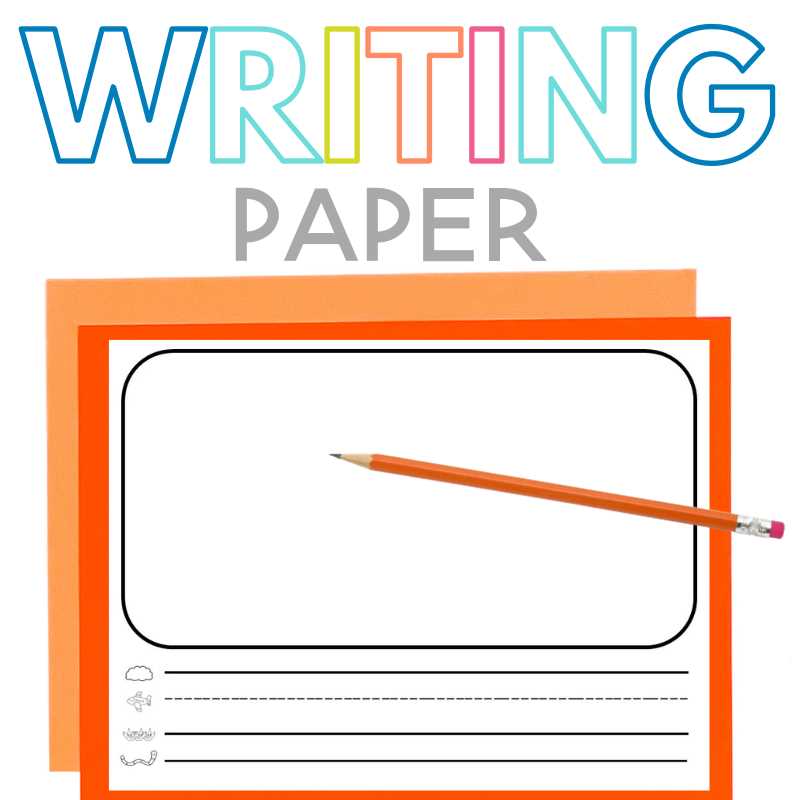
To help young learners master their penmanship, use structured formats that include large, easy-to-follow lines. The spacing between lines should be sufficient for beginners to practice writing without feeling cramped. Look for templates that feature a wide top line for capital letters, a smaller middle line for lowercase letters, and a dashed bottom line to guide proper letter formation.
Choosing the Right Format for Developing Handwriting
Selecting the right layout is key. Templates with extra-wide lines are ideal for children just starting to form letters, as they provide enough space to practice control. A common format includes two solid lines at the top and a dashed line in the middle, which makes it easier to distinguish between upper and lower case forms. Ensure that the height of the lines is appropriate to match the child’s writing size, helping to build consistency in stroke width.
Using the Right Tools to Support Writing Practice
The type of writing tool you provide can influence the quality of practice. Begin with thicker crayons or markers to encourage proper grip and control. As children develop more precise movements, shift to using pencils or pens. Consistent practice with different tools can help improve muscle memory and dexterity, supporting better handwriting habits.
Be sure to rotate the templates with increasing difficulty. Once a child becomes comfortable with basic shapes and letters, gradually reduce the line height and introduce more complex words. This method will build confidence while advancing their writing abilities.
How to Choose the Best Format for Early Writing
When selecting a format for early writing practice, focus on line spacing that accommodates beginner strokes. Large lines allow children to control their pencil while forming shapes. Ideal templates will have wide spaces between lines to let the child freely practice letter formation, giving enough room for letters without being squished. A good rule is that the height of the lines should be about 1 to 1.5 inches, depending on the child’s ability to write comfortably.
Line Structure for Letter and Word Formation
To help kids learn proper letter formation, choose a layout that clearly distinguishes between uppercase and lowercase letters. A typical format includes two solid lines at the top and bottom, with a dashed middle line. This provides clear guidance for the size of letters, helping children distinguish where each letter starts and ends. The dashed middle line helps with alignment, ensuring that the letters don’t become too large or small.
The dashed lines are crucial for helping young learners understand how to form letters with consistency. For example, when forming lowercase letters such as “a,” the bottom part should fall right on the dashed line. This subtle reminder helps kids internalize the shapes they are forming.
Gradually Reducing the Line Height as Skills Improve
Once children become more comfortable with letter formation, consider gradually reducing the space between lines. This helps to refine their control and precision. As the child progresses, they can move on to smaller line height templates, which will challenge them to be more accurate and write within a smaller space.
Reducing line height is a natural next step in their development, pushing them to focus on writing neatly within restricted boundaries. For children who are ready, this move will also prepare them for writing in standard-sized notebooks in the future.
Using the Right Writing Tools
Different writing tools can also impact a child’s learning process. Start with thicker markers or crayons that are easier to grip. These tools allow children to get used to controlling their hand movements while also offering good visibility. As their writing skills progress, introduce pencils or thinner markers. This gradual change helps children build hand strength and muscle memory.
Including Letter Tracing and Word Formation
Incorporate tracing exercises into templates to guide children in replicating letters and words. Tracing is a good method for developing fine motor skills, and it will help children understand letter formation. Offer both uppercase and lowercase letter tracing options, followed by word tracing to introduce basic spelling. This approach also adds variety to their practice, keeping the learning process interesting.
Adding Fun and Interactive Elements
Make the learning process fun by adding engaging elements to the templates. Use illustrations, simple patterns, or numbers that relate to the child’s daily experiences. Incorporating fun images, like animals or toys, can motivate children to complete writing tasks while keeping them entertained. This can turn a boring task into an exciting learning opportunity.