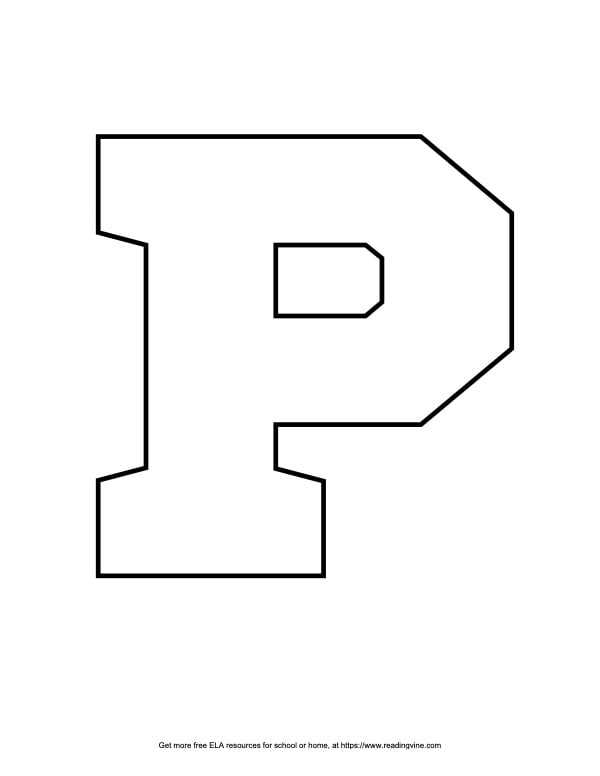
The shape of the letter “P” plays a key role in both uppercase and lowercase fonts. To create a perfectly proportioned “P” for educational purposes or design work, it’s important to understand both its construction and styling options.
Design and Proportions
When creating the “P” for print, consider its vertical line, which must be evenly aligned and extend from top to bottom. The circular part, typically referred to as the bowl, should be positioned in the upper half of the vertical stroke. The size of the bowl should be about half the height of the letter, allowing it to maintain balance with the overall height of the vertical stroke.
Space and Alignment
- Vertical Stroke: The line must be straight and the same thickness throughout.
- Bowl Size: It should not be too large or small in comparison to the overall height of the “P”. A proportional bowl creates harmony.
- Spacing: Adequate space around the “P” helps maintain legibility, especially in larger paragraphs or blocks of text.
Different Variations
Depending on the typeface or artistic choice, you can adjust the angle of the vertical stroke or make the bowl more circular or elliptical. Different fonts may add slight flourishes or curve the base slightly, but the core structure remains the same.
Common Variations
- Serif P: Includes small lines at the end of the vertical stroke for a more formal look.
- Sans-Serif P: A cleaner, more modern appearance, with the bowl typically more circular.
- Italic P: The vertical stroke leans forward, adding a sense of movement to the character.
Practical Applications
The “P” character is widely used in fonts, signage, and branding. Its versatility allows it to work across many different mediums, from printed materials like brochures and flyers to digital text on websites. Make sure to adjust the spacing and size to fit the overall style of your project. Additionally, test the letter’s legibility in different sizes, especially for smaller text, as the bowl can become less distinct in cramped settings.
Tips for Effective Use
- Choose fonts where the “P” does not blend in with other characters, ensuring it remains clear and recognizable.
- When designing custom fonts, experiment with different proportions to see how the character interacts with adjacent letters.
How to Create a Simple “P” for Kids to Trace
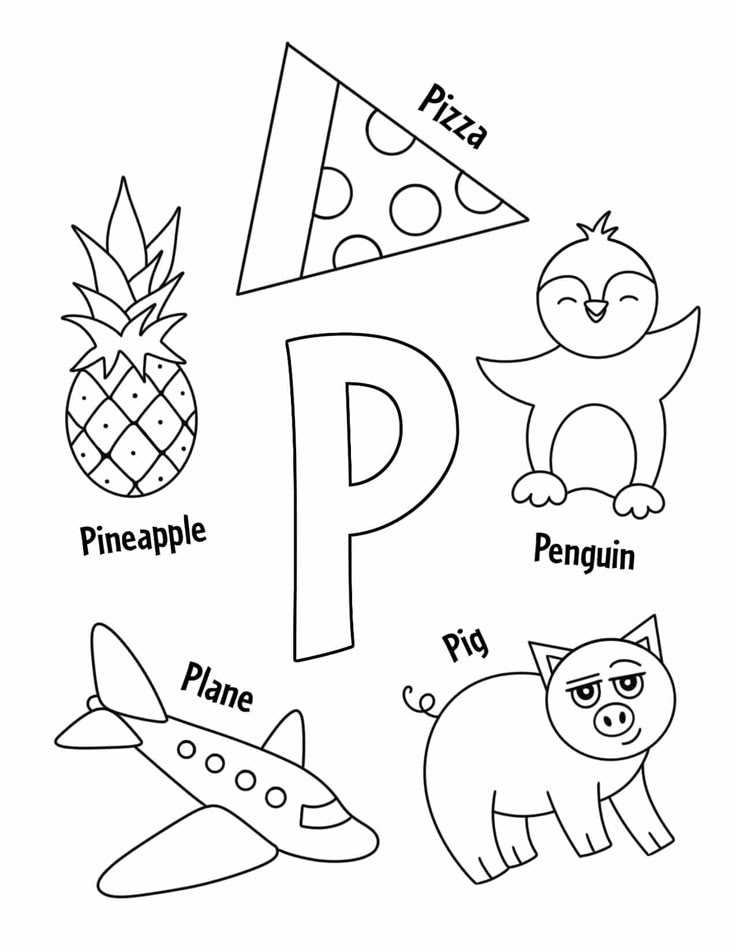
Prepare a clean and easy-to-read version of the character “P” by using basic shapes like straight lines and curves. Use bold, clear fonts to ensure it’s easy for young learners to trace. Consider choosing a rounded style to make the tracing activity smoother for their hand movements.
Make sure to provide a few lines of the symbol in different sizes, ranging from large to small, so the child can practice writing it at various scales. This approach improves muscle memory and increases confidence in forming the shape correctly.
To further engage young minds, print the character with dotted lines or an outline, which allows them to visually understand the structure of the symbol. Additionally, using a fun, colorful template will add a layer of creativity, helping to hold their attention longer.
Introduce an accompanying activity where kids can draw objects starting with “P”, such as a “Penguin” or “Pineapple”, next to the outlined shape. This helps connect the letter to real-world examples, reinforcing the concept and making it memorable.
For older children, offer multiple variations, like cursive or slanted versions of the same character. This gives them the opportunity to practice writing it in different contexts, aiding in long-term retention and improvement in their handwriting skills.