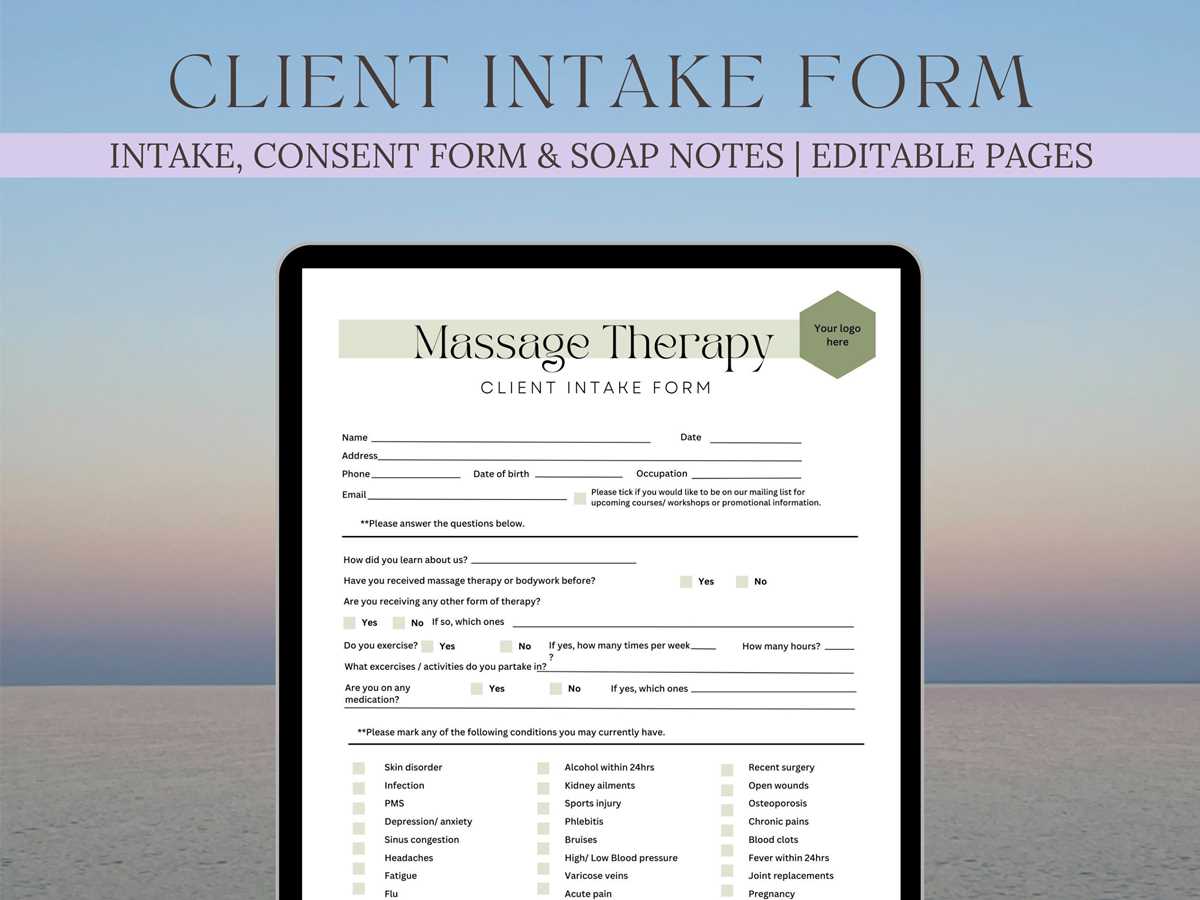
Streamlining Client Assessment
A well-structured document gathering critical details from clients is key for tailoring treatments. This sheet should include fields such as personal information, medical history, and preferences for the session. These data points guide the practitioner in customizing the approach for each individual, ensuring the best possible outcome during the therapy.
Key Sections to Include
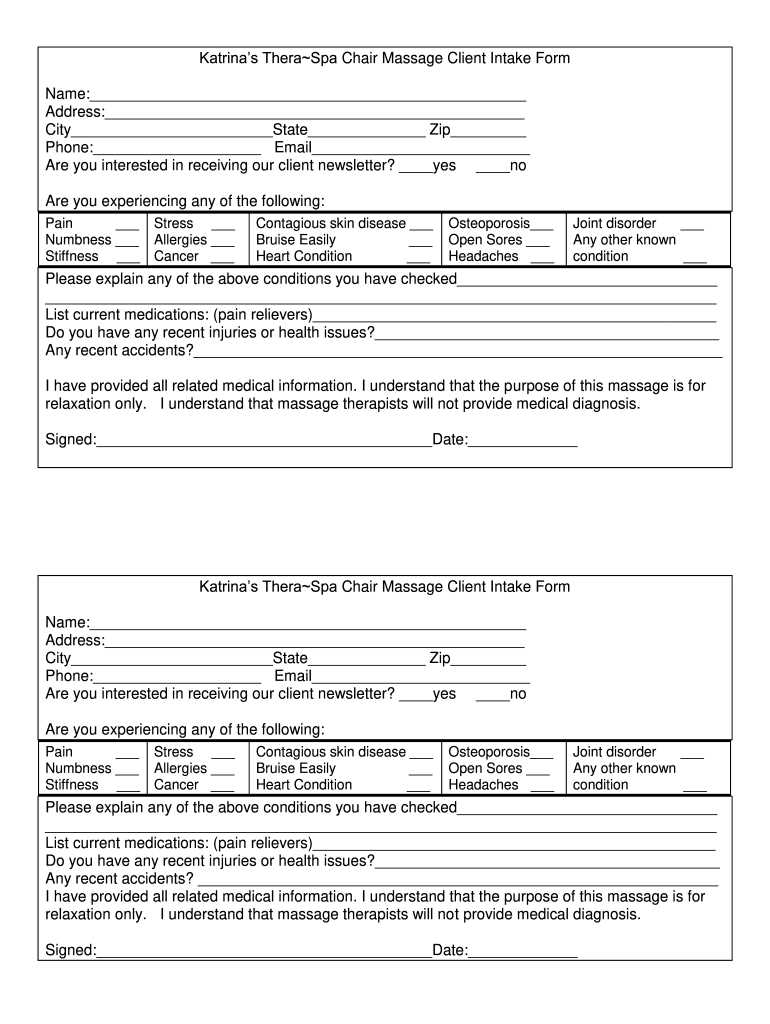
- Personal Information: Full name, contact details, age, and emergency contact.
- Health Background: Specific conditions like injuries, surgeries, or ongoing treatments should be recorded. Include any allergies or sensitivities that might affect the session.
- Goals and Preferences: Ask the client about the areas they want to focus on, as well as preferred pressure levels or any discomfort to avoid.
- Physical Activity: Include questions about exercise routines, posture, and any activities that could impact the body.
- Consent and Release: Include a section for the client to acknowledge their understanding of the session and consent to receiving treatment. This ensures clear communication and legal protection.
Why These Elements Matter
Collecting health history and understanding a client’s needs helps avoid potential complications and ensures that the session is both safe and effective. Knowing if a client has any injuries or sensitivities allows the practitioner to adapt their methods accordingly, avoiding aggravation of existing conditions.
Additionally, discussing goals ahead of time provides clear expectations and helps guide the session toward the desired outcome. Whether the aim is relaxation or pain relief, setting a mutual understanding increases client satisfaction and treatment success.
Practical Tips for Creating the Document
- Make it user-friendly: The form should be easy to complete, with clear instructions for the client.
- Maintain privacy: Ensure that the document is securely stored and that the information remains confidential.
- Update regularly: Review the form regularly to ensure it remains relevant and covers all necessary aspects of health and well-being.
Providing clients with a simple yet comprehensive sheet can streamline the intake process, save time during sessions, and most importantly, foster better communication and understanding between both parties. A tailored approach leads to more effective treatment and a stronger relationship between the practitioner and client.
Client Health Questionnaire for Therapy Sessions
Ensure every new client fills out a detailed questionnaire before their first session. This document serves as a critical tool for understanding health background, addressing potential risks, and offering customized treatments. It should cover basic information like medical history, allergies, and current physical conditions.
Incorporate questions about any chronic pain, injuries, or previous surgeries. This allows for a better understanding of specific areas of concern and helps therapists create a safe and targeted approach. Include checkboxes or scales for pain levels to make it easier for clients to communicate their issues.
Ask clients about their lifestyle and daily activities. Knowing whether they have a sedentary job or engage in frequent physical activities can help adjust the treatment plan to their needs. This information helps identify whether muscle tension is a result of stress or physical exertion.
Don’t overlook questions regarding mental health. Stress, anxiety, and sleep issues often manifest as physical tension. Including these questions ensures the therapist is aware of emotional triggers that could affect the body’s response to treatment.
Ensure the questionnaire addresses current medications. Certain drugs may influence how the body responds to physical therapies, so understanding this aspect can prevent adverse reactions. Ask for both prescription and over-the-counter medications.
Make sure the document asks if the client has any preferences for pressure or specific areas they’d like to focus on during the session. It’s key to establish comfort and clarity right from the start to avoid any misunderstandings during the treatment.
Provide a consent section that clearly outlines the scope of services, any potential risks, and the client’s rights. Consent should be informed, and clients need to feel comfortable with the therapist’s approach. Include a reminder for clients to update their details regularly to keep the information current.
Lastly, use clear and concise language, ensuring that the questionnaire is easy to understand. Avoid medical jargon and ensure the client feels comfortable disclosing all relevant health information. A well-designed document can contribute significantly to the success of each session.