
Start by selecting relevant exercises that align with the student’s current understanding and needs. Choosing worksheets that cover various topics like addition, subtraction, multiplication, and division will give a well-rounded review of basic operations.
Next, ensure the questions are varied in difficulty, ranging from simple calculations to word problems. This approach helps in assessing the learner’s ability to apply their knowledge to different scenarios. You can easily find or design assessments with multiple-choice, true/false, and fill-in-the-blank questions to increase engagement and test comprehension.
Additionally, consider including problems that encourage critical thinking and problem-solving. Introducing puzzles or exercises that involve multiple steps can provide a better sense of the learner’s ability to tackle more complex tasks.
Once the assessment is selected, print and organize the materials for easy distribution. If you’re using these tools for home practice, ensure the environment is quiet and free of distractions to help the student focus effectively on the work at hand.
Printable Math Test Guide
Start by organizing the exercises based on the student’s current learning level. Focus on core concepts, such as basic operations, fractions, and simple problem-solving. Select questions that align with the topics covered in class to make the assessment more relevant.
For variety, include a mix of question types. Multiple-choice questions help test recognition of correct answers, while open-ended questions assess the ability to explain reasoning. Word problems are valuable in examining how well the student can apply mathematical concepts in real-life situations.
Adjust the difficulty as needed by providing easier questions at the start and gradually progressing to more challenging ones. This helps students gain confidence and ensures that they don’t feel overwhelmed during the assessment.
Before giving the student the assessment, ensure that the environment is conducive to focus. Limit distractions and set a time limit to simulate exam conditions. Once completed, review the answers carefully and use them to identify areas that require further practice.
How to Choose the Right Math Test for Different Skill Levels
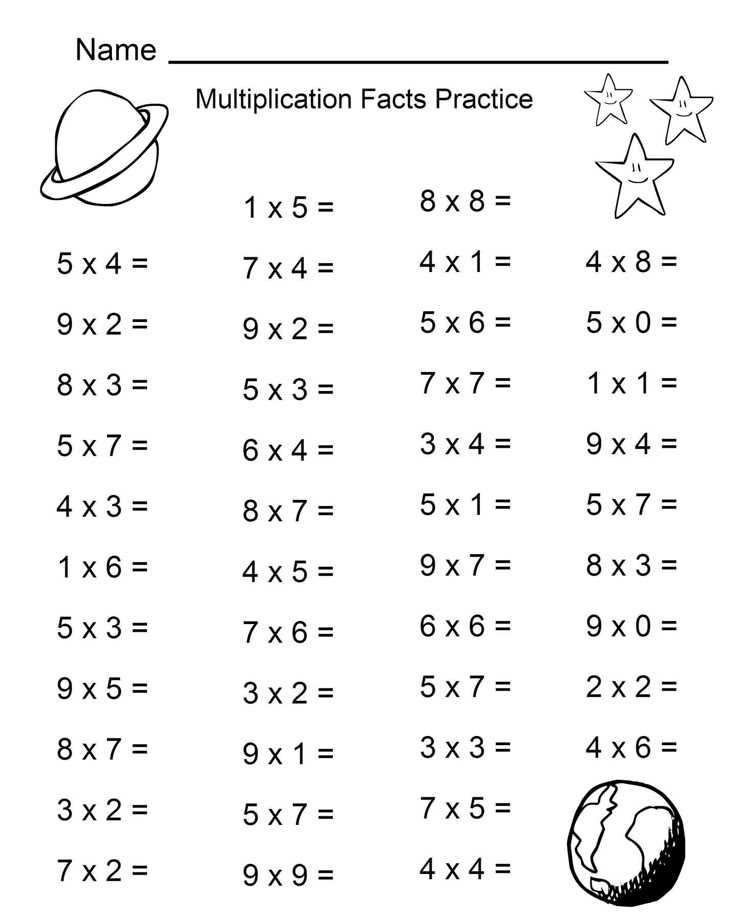
For beginners, focus on fundamental concepts like addition, subtraction, and simple multiplication. Choose problems that involve small numbers and reinforce number recognition. The goal is to build confidence and ensure basic operations are mastered before moving to more complex problems.
As skill level increases, introduce more advanced operations like division, fractions, and simple algebra. Use a mix of question types to gauge understanding: word problems, simple equations, and comparison problems are all effective ways to assess how well students apply their knowledge in varied contexts.
For intermediate students, include more challenging problems that require multi-step solutions. These can test a student’s ability to think critically and apply concepts across different areas. The complexity should be adjusted to ensure that students are still being pushed without becoming discouraged.
For advanced learners, focus on higher-level topics such as geometry, advanced algebra, and problem-solving with real-world applications. These tests should be more rigorous and include complex scenarios that require deep logical thinking and the ability to reason through multiple steps.